


The Vatican continues to expand the memory of the new martyrs and witnesses of the faith of the 21st century, an ecumenical initiative that collects cases of Christians from different denominations who died because of the Gospel throughout the world. To the approximately 1,700 testimonies collected up to last year, between 100 and 150 new notifications have been added, received through dioceses, episcopal conferences, nunciatures, religious congregations, movements and lay associations.
The new data were made public this Thursday by Monsignor Fabio Fabene, secretary of the Dicastery for the Causes of Saints and president of the Commission of New Martyrs–Witnesses of the Faith, during the presentation in the Holy See Press Office of the congress The 21st Century: A New Time of Martyrs?. The meeting will be held on September 15 at the Pontifical Patristic Institute Augustinianum in Rome and will address the persecution of Christians in different regions of the world.
Fabene explained that the Commission “continues to collect notifications and information about Christians who died because of the Gospel in all parts of the world.” In addition to cases transmitted by ecclesial structures, some are identified directly by the Commission from information published in the media, an area in which the work of the Fides agency was particularly highlighted.
A memory that includes Christians of other denominations
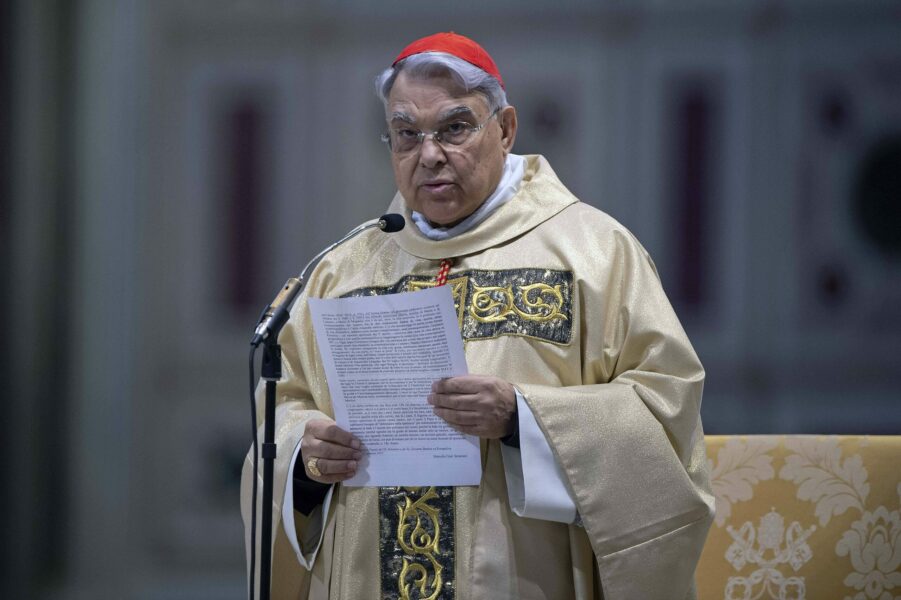
Cardinal Marcello Semeraro, prefect of the Dicastery for the Causes of Saints, stressed during the presentation that the ecumenical dimension has been part of the initiative since its origins.
The Commission is tasked with compiling a catalogue of all those who “have shed their blood for confessing Christ and bearing witness to the Gospel.” Its work is not limited to Catholics, but also preserves the memory of Christians belonging to other Churches and ecclesial communities who died for their faith.
Semeraro placed this dimension in continuity with Saint John Paul II and the encyclical Ut unum sint. In it, the Polish Pope noted that, despite the divisions still existing among Christians, the witness of those who give their lives for Christ already constitutes a profound form of communion.
The prefect also recalled that Pope Francis wished to include some non-Catholic martyrs in the Roman Martyrology.
This ecumenical dimension was especially visible on September 14, 2025, when Leo XIV presided in the Basilica of Saint Paul Outside the Walls the commemoration of the martyrs and witnesses of the faith of the 21st century together with representatives of other Churches and Christian communities.
“We cannot, we do not want to forget. We want to remember,” Leo XIV said at that time, also recalling the words of Tertullian according to which “the blood of the martyrs is the seed of new Christians.”
The catalogue does not equate to canonization
Semeraro also clarified the scope of the Commission’s work. The inclusion of a name in the catalogue does not mean that the person has been beatified or canonized, nor does it automatically imply the opening of a cause.
“The grace of holiness in the Church is signified, but not exhausted by canonizations,” he explained.
The cardinal added that it is not excluded that, in some of the cases included in the catalogue and when the required conditions are met, a process of beatification and canonization may subsequently be initiated.
The objective of the initiative is broader. Semeraro linked it to the “high standard of ordinary Christian life” proposed by Saint John Paul II in Novo millennio ineunte and to the “holiness next door” later indicated by Francis.
“We need witnesses, martyrs”
The prefect also addressed what he called the “anthropological value of Christian holiness,” drawing on Benedict XVI’s encyclical Spe salvi.
Semeraro recalled the German Pontiff’s reflection on the human capacity to suffer with others and for others, as well as out of fidelity to truth, justice and love.
“We need witnesses, martyrs,” he recalled, citing Benedict XVI. In Spe salvi, the Pope noted that the capacity to suffer for love of the truth constitutes a measure of humanity and that this capacity depends on the hope each person carries within.
“A new century of martyrdom”
Historian Andrea Riccardi, vice-president of the Commission, placed the current project in continuity with the work begun by Saint John Paul II to preserve the memory of the martyrs of the 20th century.
Riccardi recalled that Wojtyła considered himself a “companion of martyrs and witness to martyrdom” after having personally experienced the totalitarian regimes that marked Europe during the last century. The Pope wondered why he had survived while so many others had died.
During the commemoration held in the Colosseum in the year 2000, Riccardi explained, John Paul II found an answer in the responsibility of bearing witness to “so much pain, so much grace” and to the resistance unto the giving of life of men and women of all ages and conditions.
From that experience arose the initiative to preserve the memory of the martyrs of the 20th century. Twenty-five years later, the Commission asks whether the new century is reproducing that reality.
For Riccardi, the answer is affirmative.
“To the question of whether we are facing a new time of martyrdom, we must answer yes,” he stated. “A new century of martyrdom, strongly intuited by Pope Francis. The time of martyrdom continues.”
According to the historian, this conclusion does not come solely from news about persecutions, but from “a profound awareness matured in the Church.” For this reason, he explained, next Tuesday’s congress will not only have a scientific character, but will offer a “theological, spiritual and historical” reflection.
Africa, the Holy Land, Asia, America and Europe
The September 15 meeting will examine the situation of Christians in different regions of the world. Among the participants will be Cardinal Fridolin Ambongo, archbishop of Kinshasa, who will address contemporary martyrdom and its relevance, while Cardinal Pierbattista Pizzaballa, Latin Patriarch of Jerusalem, will speak on the Christian presence in the Holy Land in a time marked by force and weapons.
The Christian witness in Asia, America and Europe will also be studied, as well as the experience of religious sisters in South Sudan, the defense of the poor, dialogue in multireligious societies, justice and peace.
The congress is held one year after the ecumenical commemoration presided over by Leo XIV at Saint Paul Outside the Walls. The following day, September 16, the speakers and participants will be received by the Pope in a special audience.
The up to 150 new notifications received during the past year will now become part of the documentation work of a Commission that is not limited to preparing future causes of canonization. Its catalogue seeks to preserve the memory of Catholics and Christians of other denominations who have lost their lives for their witness to the Gospel, extending into the 21st century an initiative that was born with Saint John Paul II so that the martyrs of the 20th century would not be forgotten.