


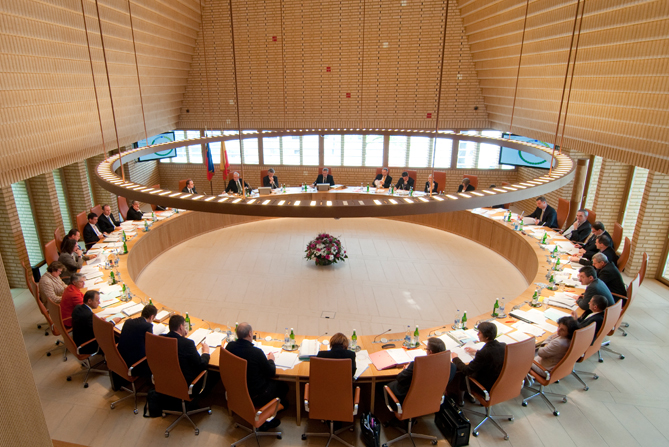
The Parliament of Liechtenstein has approved by 13 votes against 12 an initiative that would allow abortion during the first twelve weeks of pregnancy, despite the opposition of Hereditary Prince Alois, who exercises the functions of head of state and had already announced his intention not to sanction a reform of this kind in defense of the protection of life. The measure cannot yet enter into force.
According to Vatican News, the vote took place on September 2 and passed by the narrowest possible margin in the Landtag, which is composed of 25 deputies. Subsequently, the chamber also rejected by 13 votes against 12 a proposal to submit the text to a referendum, leaving the decision now in the hands of the Hereditary Prince.
The initiative proposes that abortion not be punished during the first twelve weeks, eliminate the prohibition on providing information about this practice, and that its costs be covered by health insurance. The proposal reached Parliament after gathering 4,970 signatures, nearly a quarter of the electorate and well above the 1,000 required to process a popular initiative.
Read also: Liechtenstein, a principality that resists turning abortion into a right
Current legislation in Liechtenstein maintains abortion as a criminal offense and provides for penalties of up to three years in prison for doctors who perform it. Exceptions exist when there is considered to be a serious danger to the life or health of the mother, when the pregnancy is the result of a sexual crime, or when the pregnant woman became pregnant before turning 14 years old. The regulations also restrict the dissemination of information about abortion and about available services to obtain it in other countries.
The reform now requires the sanction of Hereditary Prince Alois, who has exercised the functions of head of state since 2004, when his father, Prince Hans-Adam II, delegated his powers to him. Alois has six months to sanction the text. If he does not do so before March 2027, the reform will be considered rejected.
The possibility of this happening had already been anticipated by the Prince himself. In an interview given months ago to the Liechtensteiner Vaterland, Alois announced that he would not sanction a general regulation of abortion during the first weeks of pregnancy and appealed to the «central legal good of the protection of life».
The situation has a direct precedent. In 2011, another initiative aimed at liberalizing abortion was submitted to a referendum and rejected by 52.3% of voters. At that time, Alois had also announced that he would resort to his constitutional prerogatives to prevent its entry into force if it received support at the ballot box.
The Church recalls «the intrinsic dignity of the unborn»
The Catholic Church has also intervened in the debate. The apostolic administrator of the Archdiocese of Vaduz, Benno Elbs, published a statement on August 21 in which he recalled the Church’s teaching on the protection of human life from its beginning.
«The unborn possesses an intrinsic and inalienable dignity from the beginning and therefore deserves the same protection granted to all human life,» Elbs stated, who also recalled the words spoken by Saint John Paul II during his visit to the principality in 1985.
The bishop maintained that the goal must be to build «a society in which women and couples are not left alone and in which saying yes to life is possible.»
Elbs also drew attention to a particular circumstance in Liechtenstein: the country has been without a maternity unit for several years, which forces women to travel abroad to give birth. In light of this situation, he questioned that at the same time the possibility of enabling abortion within the national territory is being considered.
«I am concerned that, on the one hand, women seek hospital care for maternity in neighboring countries, while on the other, the possibility of creating conditions for the termination of pregnancy at the national level is being discussed. It seems to me that something is not working,» he noted.
The apostolic administrator concluded by calling for a response that protects the child and accompanies families in difficulty: «My wish is that together we can build a society in which every child is welcomed and every mother and every father receive the necessary support to make the right decision for their child.»
«A society that protects life,» he added, «must also be a society that does not abandon people in difficulty.»