


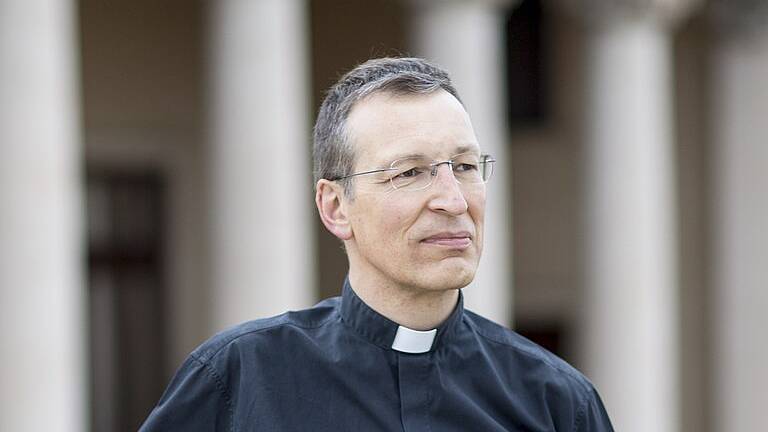
Nearly twenty years after the historic speech delivered by Benedict XVI at the University of Regensburg, German Jesuit and Islamologist Felix Körner has described that intervention as an “objective mistake” and maintains that the Pope presented Christianity at the time as a religion of rationality in contrast to an Islam portrayed as a form of irrational faith.
“It was an objective mistake. But afterwards it produced good things,” Körner stated in remarks to the German Catholic news agency KNA. The Jesuit, professor of Theology of Religions at Humboldt University in Berlin, believes the crisis sparked by the speech ultimately fostered dialogue between Christians and Muslims.
Körner’s critique of Regensburg
Benedict XVI delivered his magisterial lecture on 12 September 2006 during a meeting with academic representatives at the University of Regensburg in Germany. Entitled Faith, Reason and the University: Memories and Reflections, the Pontiff addressed the relationship between Christian faith, reason and Western culture.
Körner now argues that Benedict presented Catholicism as the religion of rationality and contrasted this conception, among others, with an Islamic form of faith characterized as irrational.
In the Jesuit’s view, it would have been more appropriate to explain Christianity’s particular relationship with reason without establishing that contrast. He also believes Benedict XVI underestimated the impact his words would have among Muslims worldwide and the possibility that they would be received as a provocation.
The controversy arose from a quotation the Pope used in his argument. Benedict recalled a late-fourteenth-century dialogue between the Byzantine emperor Manuel II Palaeologus and an educated Persian on Christianity and Islam.
The emperor addressed his interlocutor with particularly harsh words about Muhammad and the spread of faith through violence. The quotation provoked protests in numerous majority-Muslim countries.
Benedict XVI: “It does not express my personal conviction”
Körner’s interpretation of the speech must be read alongside the explanations Benedict XVI himself later offered about the meaning of those words.
The Pope explained in the general audience of 20 September 2006 that he had not intended to make the accusation voiced by Manuel II Palaeologus his own.
Benedict noted that the negative words spoken by the medieval emperor did not express his “personal conviction” and explained that his intention had been to start from Manuel II’s subsequent reflection on the rationality that must accompany the transmission of faith.
The then-Pontiff summarized the purpose of his intervention by stating that “not religion and violence, but religion and reason go together”.
He also clarified the object of his lecture: “The theme of my lecture—responding to the mission of the University—was, therefore, the relationship between faith and reason.”
The Regensburg text itself concluded with a call to recover the breadth of reason against its positivist reduction. For Benedict XVI, that recovery was precisely a necessary condition for establishing genuine dialogue between cultures and religions.
Körner believes the crisis ultimately favored dialogue
Although he considers the speech an “objective mistake,” Körner maintains that the subsequent crisis ended up having positive consequences.
After Regensburg, a group of 38 Muslim authorities and scholars addressed an open letter to Benedict XVI. In 2007 came the initiative “A Common Word Between Us and You”, initially signed by 138 Muslim intellectuals, clerics and scholars and directed to various Christian leaders.
The initiative sought to establish common ground between Christians and Muslims on the basis of the commandments to love God and neighbor and contributed to the development of new channels of dialogue between the two religions.
Among its consequences was the establishment of the Catholic-Muslim Forum, whose first seminar took place in Rome in November 2008.
Körner also rejects the notion that Islamic theology can be described as essentially irrational. In his view, it is “extremely rational,” works rigorously with concepts and has historically hosted a plurality of schools and positions.
“Imprudent” for Catholics to recognize Muhammad as a prophet
The Jesuit nevertheless acknowledges clear doctrinal limits to rapprochement between Christianity and Islam.
Körner maintains that Catholics and Muslims have reached a fundamental understanding regarding their reference to the same God as Creator and consummator of the world, but he considers the figure of Muhammad to remain an insurmountable difference.
Specifically, he describes it as “imprudent” for a Catholic to recognize Muhammad as a prophet.
According to his reasoning, accepting Muhammad as a prophet would require also recognizing his preaching as the word of God. If that were the case, Körner argues, Jesus Christ would cease to be “the decisive turning point of all history”.
Looking ahead to the pontificate of Leo XIV, the Jesuit hopes for greater impetus in Catholic studies of Islam. Körner has highlighted the work of the Pontifical Institute for Arabic and Islamic Studies (PISAI) and the Pontifical Gregorian University in Rome and has pointed to the need to provide them with the necessary financial resources to carry out that work.