


From the Dormition of the early centuries to the processions of this 15 August: Spain celebrates its preeminent Marian feast with dawn Masses, Assumption vows and the Virgin in the streets from north to south.
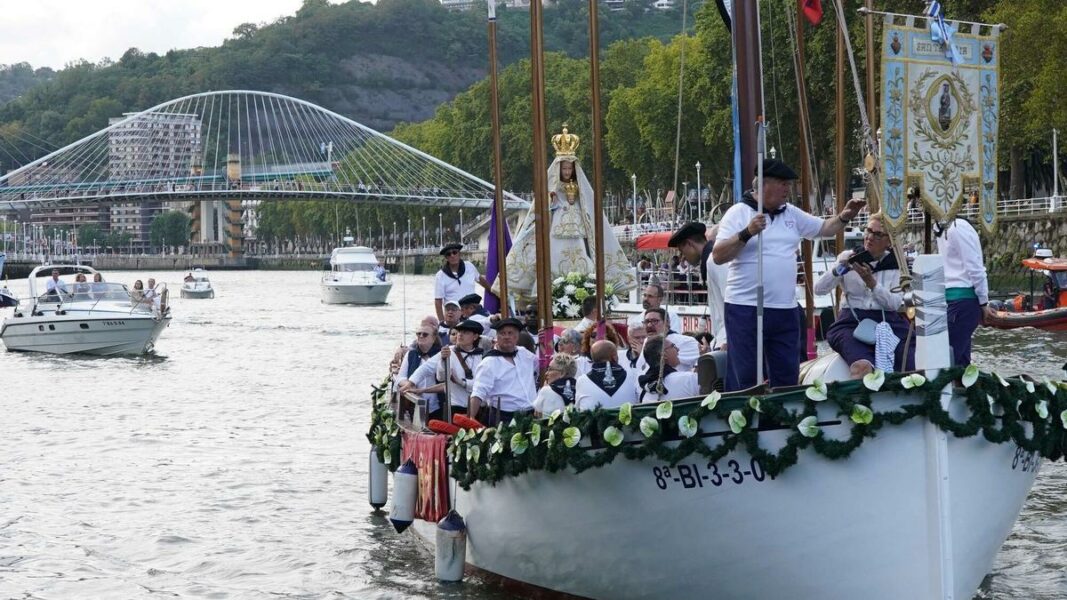
Today, 15 August, the Church celebrates the Assumption of the Blessed Virgin in body and soul into heaven. It is a holy day of obligation, a national holiday and, above all, the day when half of Spain takes to the streets behind its Virgin: the one of the Kings in Seville, the one of the Dove in Madrid, the one of Begoña in Bilbao, the Assumpta in so many parishes. Few feasts express so clearly that this country was built, stone by stone and vow by vow, on devotion to Mary.
A feast older than its dogmatic definition
It is worth recalling, because it is sometimes forgotten: when Pius XII defined the dogma of the Assumption on 1 November 1950 with the apostolic constitution Munificentissimus Deus —the only exercise of ex cathedra infallibility after the definition of Vatican I—, he invented nothing. He placed the seal of the extraordinary magisterium on a faith that the Church had professed since its earliest centuries.
In the East, the feast of the Koimesis or Dormition of the Mother of God was already celebrated in the fifth century in Jerusalem, and Emperor Maurice extended it throughout the Byzantine Empire at the end of the sixth century, fixing it precisely on 15 August. Rome adopted it in the seventh century, and Pope Sergius I included it among the four great Marian feasts with a stational procession. St John Damascene, St Germanus of Constantinople and so many other Fathers preached eloquently what the Christian people already knew: that it was not fitting for the body that had given flesh to the Word to know the corruption of the tomb. The total absence of bodily relics of the Virgin —something unheard of in a Church that from the beginning venerated the bodies of its saints— underpinned this conviction for centuries.
In the traditional calendar, the Assumption is a first-class feast with its own vigil on 14 August and, until the reform, it had a privileged octave. Those attending the traditional Mass today will hear the introit Signum magnum, introduced by Pius XII himself after the dogmatic definition: “A great sign appeared in heaven: a Woman clothed with the sun, with the moon under her feet”.
Spain, land of the Assumption
It is no coincidence that a large part of Spanish cathedrals —Toledo, Seville, Valencia, Jaén, Coria, El Burgo de Osma, among so many— are dedicated to St Mary in her Assumption. Reconquest Spain consecrated the purified mosques to the Assunta, and chapters, confraternities and universities swore to defend this mystery centuries before Rome defined it. The Assumption vow, like the Immaculist one, is part of the theological history of this nation. And this 15 August 2026 once again demonstrates it with a calendar of devotions that spans the entire geography.
Seville rises early: the Virgin of the Kings
The day begins before dawn in Seville. The Cathedral hosts the traditional pilgrim Masses from 5:30 a.m. (5:30, 6:00 and 6:30), with faithful arriving from throughout the archdiocese. At 8:00, to the sound of the Giralda bells, the Virgin of the Kings, patroness of Seville and its archdiocese, emerges through the Puerta de Palos to tour the surroundings of the metropolitan church —Plaza Virgen de los Reyes, Alemanes, Avenida de la Constitución, Plaza del Triunfo— with the Municipal Symphonic Band leading the procession and the Army Band following the float. On her return, around 9:30, the stational Mass is celebrated, one of the central liturgical acts of the Assumption in Andalusia.
A few kilometres away, Cantillana lives its great Assumption night. After the dawn Mass, the Principal Institute Function at 11:00 includes the renewal of the traditional vow and oath to defend the dogmas of the Divine Maternity, the Immaculate Conception and the Assumption —a jewel of continuity with the best Spanish votive tradition—, with a sermon by Don Salvador Aguilera López, official of the Holy See and chaplain to His Holiness. At 21:00 the procession begins, which will continue until dawn, in a year marked by the centenary of the march Plegaria a la Virgen de la Asunción, by Farfán. The novena will continue until the 23rd, with the closing function broadcast by Canal Sur.
Madrid: Cardinal Cobo’s Mass and the descent of the Paloma painting
In Madrid, the Assumption coincides with the most traditional feast of the calendar: the Virgin of the Paloma, that humble canvas rescued by a neighbour in 1787 and which the capital’s firefighters regard as their patroness. The great day begins, curiously, at Las Ventas: at 10:30 the painting of the Virgin that presides over the chapel of the bullring emerges into the arena for a Mass for the bullfighting world, a testimony to the old bond between bullfighters and the Paloma.
In the parish on Calle de la Paloma there will be Masses from 7:00 a.m., and at 13:00 the Solemn Mass presided over by the Cardinal Archbishop of Madrid, José Cobo. Afterwards, one of the most eagerly awaited moments of the Madrid summer: the descent of the Virgin’s painting by a detachment of the Fire Brigade, a tradition documented since 1923. The painting will remain exposed for the veneration of the faithful during the afternoon, and at 19:30 the procession will set out through La Latina —Gran Vía de San Francisco, Puerta de Toledo, Calle Toledo, Plaza de la Cebada, Carrera de San Francisco—, with a tribute from the firefighters at the Puerta de Toledo. At night, the sung Salve will bring the religious close to a day that the street parties will prolong until dawn.
From the Cantabrian Sea to the Levante
In Bilbao, the basilica of Begoña —the Amatxu of the Biscayans— celebrates Masses from four in the morning, with the 12:00 Eucharist presided over by the diocesan bishop and the final Salve at the last Mass of the afternoon, after the days of novena that gather faithful from the entire territory.
In Castro Urdiales (Cantabria), the eve left last night one of the most beautiful images of the north: the Procession of the Little Candles, with the image of the Assumption touring the old town amid a sea of candles until the popular Salve at the doors of Santa María. Today, at 12:00, Solemn Mass sung by the Coral Santa María with the attendance of the authorities.
In the Levante, Elche celebrates today at 18:00 the second day of the Misteri, the Assumption drama sung since the fifteenth century inside the basilica of Santa María thanks to a rescript of Urban VIII from 1632, and which this year commemorates the 25th anniversary of its declaration as World Heritage by UNESCO. The Festa this afternoon, with the Coronation of the Virgin and the rain of tinsel, is free until full capacity. And in towns like Sax (Alicante), the patroness will process solemnly at 19:30 after the midday High Mass, in a scheme —Mass, wine of honour, evening procession— that is repeated today in hundreds of villages in Aragon, the two Castiles and all inland Spain.
What we celebrate
Beyond the richness of the devotions, it is worth keeping in mind what the Church proclaims today: that Mary, having completed the course of her earthly life, was assumed body and soul into heavenly glory. That is to say, that Christ’s victory over death is not an abstract promise, but a reality already fulfilled in one creature. The Assumption is the anticipation of our own resurrection and the reminder, so necessary in this time, that the human body is called to glory, not to waste.
Pius XII wrote in 1950, with Europe still in ruins: the definition of the dogma would serve to make “more evident to all the exalted goal to which our bodies and our souls are destined”. Seventy-six years later, from the Seville dawn to the nocturnal Salve of Begoña, the lesson remains intact. Happy Feast of the Assumption.