


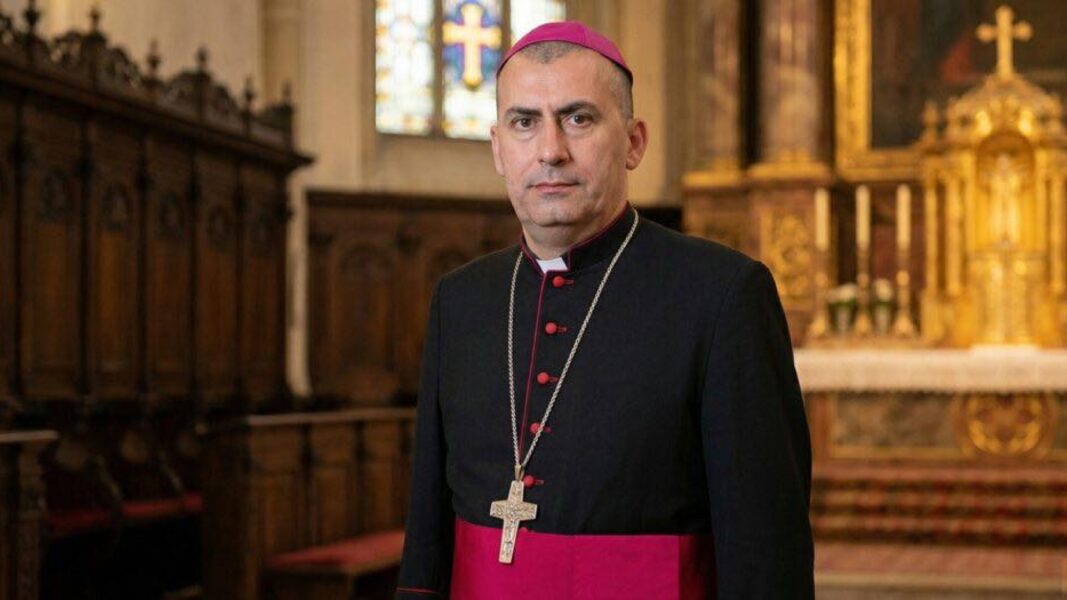
Twelve years after tens of thousands of Christians fled the advance of the Islamic State, the reconstruction of their towns has failed to restore the Christian presence that existed before 2014. The Chaldean Patriarch of Baghdad, Polis III Nona, warns that many families remain outside their places of origin and points to the lack of hope, especially among young people, as one of the main threats to the future of the Christian community in Iraq.
In an interview with Vatican News, the new patriarch, elected four months ago, acknowledges that the security situation has improved considerably, but maintains that the consequences of years of war, emigration and instability continue to shape the lives of Christians.
A Rebuilt Nineveh Plain, but Not All Its Christians
Last August 6 marked twelve years since the exodus from the Nineveh Plain. During the night of August 6–7, 2014, the advance of the jihadists forced tens of thousands of Christians to abandon their homes in haste.
Nona, who was then Chaldean archbishop of Mosul, still recalls families fleeing in vehicles or on foot and “the fear that filled their hearts.” One of his greatest concerns that night was ensuring that those still in the villages understood the danger and left before the terrorists arrived.
“The crying of the children was particularly painful,” the patriarch remembers. Faced with the paralysis of institutions, he explains, priests and church leaders had to organize themselves to try to get families to safe places.
The current situation is very different. The Islamic State no longer controls those territories, and Nona assures that in the historically Christian regions “the security problems of the past are no longer found.” Material reconstruction, however, has not solved the demographic problem.
“The greatest challenge we must face is that not all Christians have returned to this region,” he states. Many emigrated permanently from Iraq, and others preferred to settle in parts of the country they consider more stable.
The patriarch points out that a true return requires more than rebuilding homes. Families need political stability, employment, an absence of discrimination, and sufficient guarantees to trust that a tragedy like that of 2014 will not happen again.
Young People Without Hope and Families That Never Form
Emigration continues to affect the new generations in particular. For Nona, the most serious problem among Iraqi youth is precisely “the lack of hope.”
“Young people have lost hope in the future, in their own land, in the homeland, and in a certain sense almost in everything,” he laments.
Added to this uncertainty are the lack of job opportunities and the difficulties of finding a stable place in society. Among young Christians, the possibility of leaving the country also constantly arises.
The consequences even reach the formation of new families. According to the patriarch, the number of marriages has decreased significantly because many young people plan to emigrate or consider their future too uncertain to marry and settle in Iraq.
Nona warns that this situation also compromises the future of the country itself: “It is above all young people who build a nation; without their participation and commitment, the future risks becoming increasingly precarious.”
Catholic Bishops Will Meet Again After Five Years
Amid these difficulties, the patriarch wants to strengthen cooperation among the various Catholic Churches present in Iraq. On August 28, the Assembly of the country’s Catholic bishops will meet in Ankawa, near Erbil, something that has not happened since 2021.
The Christian presence and the protection of communities historically settled in Iraq will be among the central issues. Questions related to catechesis, ecclesiastical courts, and the work of Caritas will also be addressed.
For Nona, resuming this common work is especially important under current circumstances. “No one can do everything alone,” he states, convinced that greater collaboration will allow the Churches to respond better to the needs of their faithful.
The patriarch also observes with concern the repercussions that tensions between the United States and Iran are having on Iraq, especially in the economic sphere. Although he considers that internal security is currently “quite good,” he fears that the country will once again become a stage for external conflicts.
For Christians, the fundamental issue remains the ability to stay in the land where their communities have had roots since the first centuries of Christianity. After the losses caused by wars and the exodus, Nona sums up the desire of his faithful in simple terms: they are “tired of conflicts” and want to be able to live “in peace and tranquility.”