


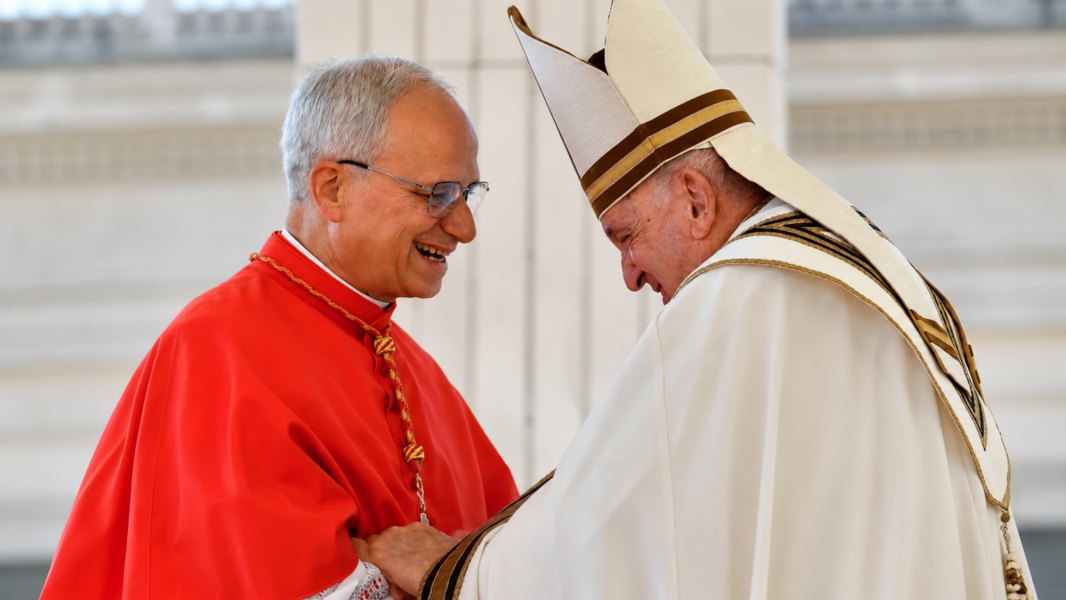
Argentina will once again receive a Pope after nearly four decades. The apostolic visit that Leo XIV will make from November 8 to 11 will carry a significance that goes far beyond the return of a Pontiff to the country. It will be the first time that the successor of Peter visits Argentina after the pontificate of Francis, the first Argentine Pope in history, who never returned to his homeland during his twelve years of Petrine ministry.
Precisely that circumstance seems to set the tone with which the Church in Argentina is preparing for the trip. The first statements from the bishops of the three dioceses that will receive the Pontiff—Buenos Aires, Córdoba, and Mercedes-Luján—reveal a striking common denominator: the insistence on presenting Leo XIV with his own identity and avoiding that his visit be reduced to a permanent comparison with Francis. All this is happening, moreover, amid a progressive decline in religious practice in a deeply polarized society.
Forty years later, a very different Church
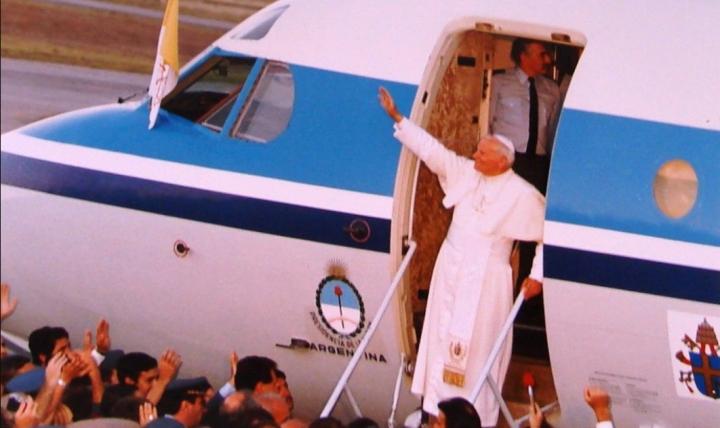
The last visit of a Pope to Argentina was that of Saint John Paul II in 1987. Since then, not only has Argentine society changed profoundly; the Church itself has as well.
During the years of Francis’s pontificate, the Argentine episcopate underwent a profound renewal through numerous episcopal appointments and a reorganization of the country’s pastoral structure. Leo XIV will therefore encounter a Church largely shaped during the pontificate of his predecessor.
However, that renewal of structures has coexisted with a very different evolution of the main indicators of ecclesial life. Religious practice continues to decline, sacramental baptisms and marriages maintain a downward trend, and the crisis of priestly and religious vocations remains one of the country’s major pastoral challenges.
Religious identification also reflects this change. According to a study by the Pew Research Center published this year, the percentage of Argentines who identify as Catholic dropped from 71% in 2014 to 58% in 2024, one of the sharpest declines recorded in Latin America over the past decade.
Aware of this context, the Argentine Episcopal Conference has sought to place the visit on an eminently spiritual plane. In the letter sent to the Pontiff after the official announcement of the trip, the bishops express their “deep joy and sincere gratitude” and describe his decision as “a true gift from God” and “an eloquent sign of his closeness as the Successor of Peter.”
They also express their hope that the Holy Father’s presence “will renew the communion of our Church, strengthen the faith of our communities,” and help continue building a society based “on the culture of encounter, dialogue, and service to the common good.”
A particularly complex political and social scenario
Leo XIV will also arrive in an Argentina marked by deep political polarization, an economy still facing significant social tensions, and a public debate where confrontation has often become the dominant tone. This context explains why the Church is paying special attention to the development of the apostolic journey and trying to preserve its strictly pastoral character.
The Archbishop of Mercedes-Luján, Jorge Eduardo Scheinig, acknowledged that many dioceses would have liked to receive the Pontiff, but he reminded that the trip must be understood as a visit to the entire nation, beyond the cities included in the itinerary.
“We would have liked the Pope to stay much longer and take him everywhere,” he said, while expressing the desire that “the entire people of God feel invited.”
Scheinig also highlighted that Leo XIV knows the Latin American reality in depth thanks to the years he lived in Peru and his leadership of the Order of Saint Augustine, an experience that, in his view, will facilitate especially close communication with Argentines.
The country Francis never visited now receives Leo XIV
Precisely in a scenario so conditioned by political polarization and by the weight that the figure of Francis continues to have in Argentine public life, the bishops of the dioceses that will receive Leo XIV seem to have assumed a common priority from the very announcement of the trip: to prevent the visit from being reduced to an exercise in comparison between the two pontificates or to a partisan reading. Their first public interventions point to presenting the new Pontiff from his own identity and ministry.
The first to mark that difference was the Archbishop of Buenos Aires, Jorge García Cuerva.
“The successor of Peter is coming, not the successor of Francis,” he stated in remarks to TN, inviting people to avoid letting the visit be conditioned by a permanent comparison between the two pontificates.
The archbishop added that Leo XIV “is foreign to Argentine domestic politics and partisanship” and expressed confidence that his message “will challenge us all,” precisely because it cannot be read through the categories of the so-called Argentine “divide.”
Likewise, Cardinal Ángel Rossi, Archbishop of Córdoba, insists on a very similar idea.
“He doesn’t have to be a clone of Francis,” he declared, emphasizing that the new Pontiff has his own personality, even while maintaining continuity in the Church’s mission.
Rossi described the confirmation of the visit as “an immense joy” for the faithful of Córdoba and recalled that the Holy See will still determine the specific events Leo XIV will preside over during his stay in the province.
Beyond the event
Leo XIV’s visit will concentrate the attention of all Argentina for a few days and will likely mobilize hundreds of thousands of faithful. However, experience advises distinguishing between the immediate impact of an apostolic journey and its real fruits. The Pontiff’s visit to Spain last June confirmed the extent to which an event of this nature can be surrounded by excessive expectations, interested narratives, and attempts at political appropriation that ultimately eclipse its authentic pastoral meaning.
The true dimension of this trip will not be measured by institutional photographs or attendance figures, but by its capacity to leave a lasting fruit in the life of the Church in Argentina, far from circumstantial narratives and the permanent comparison with the pontificate of Francis.