


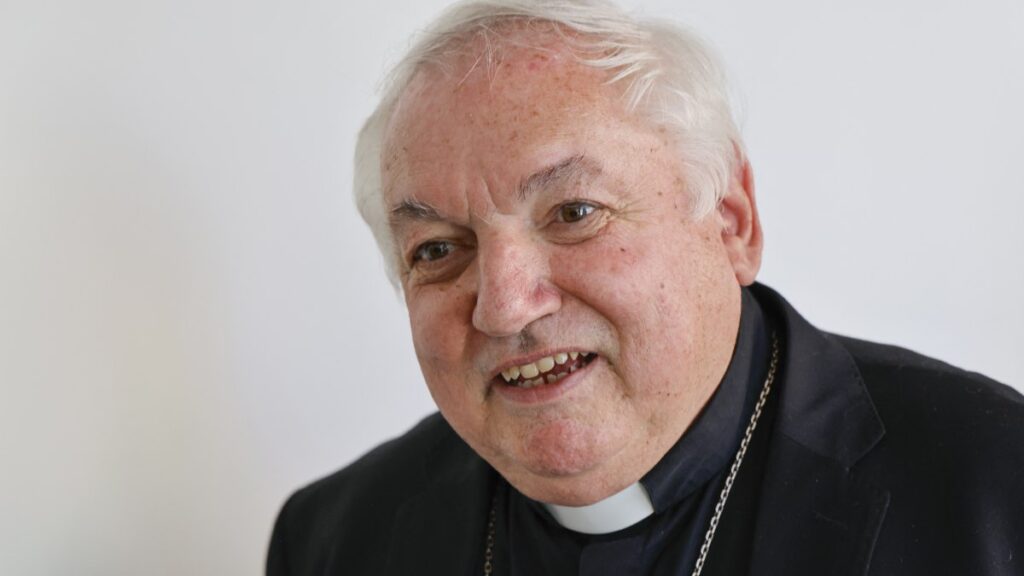
While France continues to be one of the most secularized countries in Europe, the Church has witnessed for several years a phenomenon that is as unexpected as it is hopeful: the steady growth of adults requesting Baptism. The president of the French Episcopal Conference, Cardinal Jean-Marc Aveline, has now offered some keys to understanding this awakening of faith in an interview granted to the Italian newspaper Avvenire, in which he invites the Church to look at this phenomenon with humility and without falling into self-complacency.
The figures show a sustained trend. If three years ago there were about 15,000 adults who began the catechumenate, the following year they rose to 17,000 and in 2025 they reached 21,000. Forecasts for 2026 point to further growth, which leads the Archbishop of Marseille to affirm that “this is not a flash in the pan.”
“We prepared the door; they came in through the window”
Far from presenting these data as the result of a particularly effective pastoral strategy, Aveline considers that they constitute a wake-up call for the Church itself.
“There is a temptation to feel proud of these figures, even comparing ourselves between dioceses to see who has more or fewer catechumens. It is something human,” he acknowledges. However, he adds that the best remedy against that temptation is to accept that “we have prepared the way to the door; they have come in through the window.”
With this image, the cardinal wants to express that many of the new catechumens have not followed the traditional paths of evangelization, but have come to the faith through unexpected routes that the Church must listen to and understand.
The wounds of life are often the beginning
According to Aveline, those who today knock on the Church’s doors share some common traits. The first is usually a painful experience that changes the course of their lives.
“A bereavement, an illness, a family drama or a personal disappointment” awaken questions that until then remained dormant and open the search for a deeper meaning of existence.
This is often accompanied by the encounter with young believers who live their faith naturally. “It is a very discreet presence,” explains the cardinal, but capable of sparking conversations and accompaniment that recall, in his words, “the Acts of the Apostles and the beginnings of the Church.”
The example of Muslims also challenges us
One of the most striking aspects of the interview is the reference to the role played by some Muslim friends in the journey of certain catechumens.
Aveline explains that many young people discover the seriousness with which their peers live prayer or Ramadan and then begin to wonder what it really means to be Christian.
“Not knowing how to respond, they search the Internet for the most basic questions,” he states. That search eventually leads some to a parish or a Christian community, where they begin their preparation to receive Baptism.
An open church and a silence that speaks
The president of the French episcopate also recounts the testimony of a person who, for years, passed by a church every day on the way to work. One day he decided to go in.
“In that silence he found the peace he was looking for,” recalls the cardinal. From then on, he began to stop every day, got to know the parish community and eventually began his journey toward the faith.
For Aveline, these testimonies show that evangelization often continues to take place through simple encounters and personal experiences that no pastoral plan can fully foresee.
“The mission of the Church is to cooperate with the Holy Spirit”
The cardinal concludes that this phenomenon constitutes a call to humility for the entire Church. “Let us never forget that the mission of the Church is to cooperate with the Holy Spirit, who always surprises us precisely when we make all our plans,” he affirms.
For the cardinal, this phenomenon is also a call to strengthen the life of Christian communities and formation in the faith, so that the initial enthusiasm of those who discover Christ can be translated into a lasting commitment. “Strong links must be created between faith and life,” he concludes, convinced that only in this way will it be possible to consolidate the numerous conversions that the French Church is witnessing today with hope.