


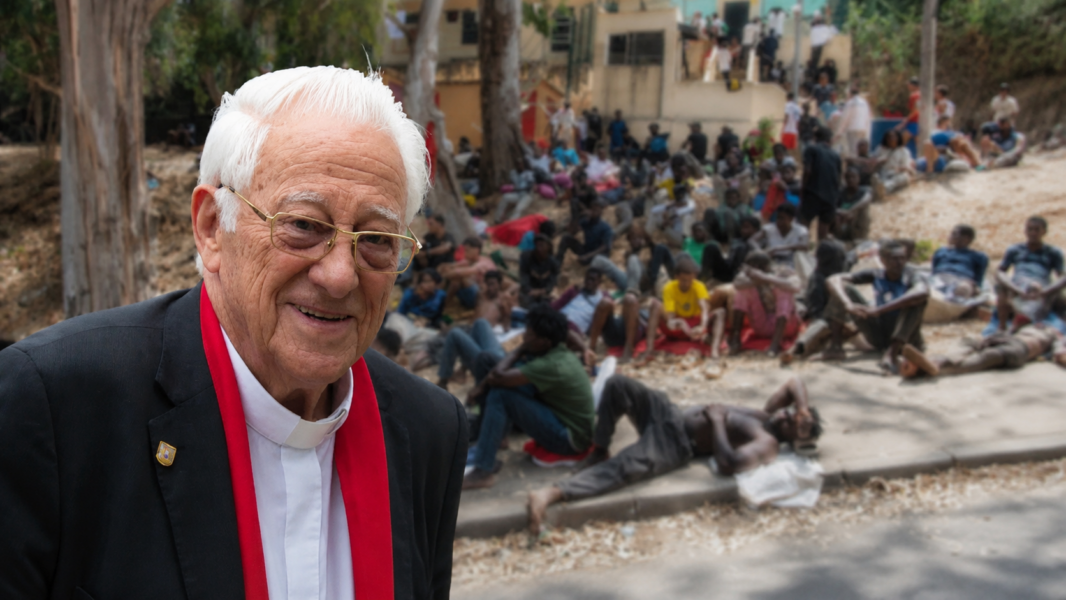
While Ceuta continues to face the consequences of the mass influx of migrants recorded last week from Morocco, the founder of Mensajeros de la Paz, Father Ángel García, visited the autonomous city this Monday to meet with local authorities and later travel to the Temporary Migrant Reception Center (CETI), where a large part of the reception facilities are concentrated. The visit took place one day after León XIV called during the Angelus for a solution to be found for the crisis the city is experiencing.
Meeting with Juan Vivas and visit to the CETI
According to the Autonomous City of Ceuta, President Juan Vivas conveyed to the priest “the serious situation” the city is going through and the saturation affecting both resources for adults and reception centers for minors following the mass arrival of migrants.
Father Ángel expressed his solidarity with the people of Ceuta and stated his wish that the city “regain normality as soon as possible.”
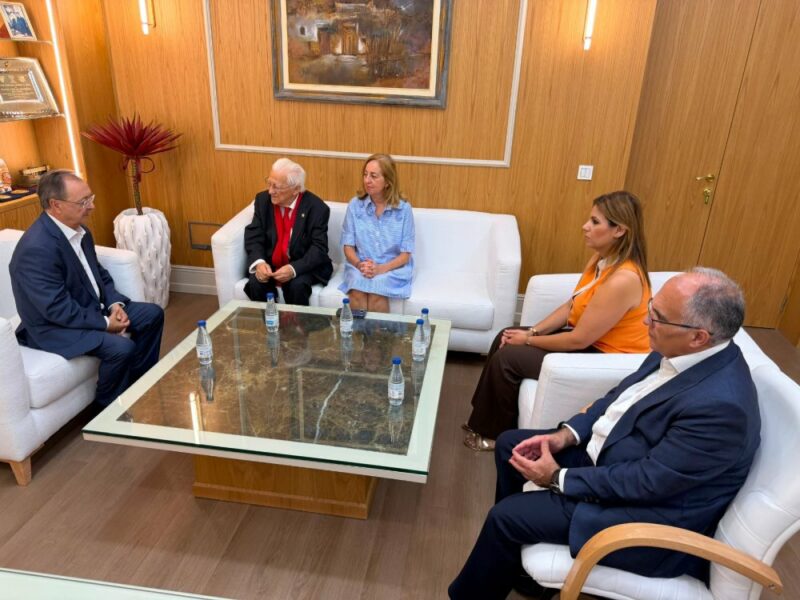
This is not the first time the founder of Mensajeros de la Paz has traveled to Ceuta during a migration crisis. He already visited the city in August 2024, following another episode of mass entries through the Tarajal area.
In addition to the institutional meeting, he visited the CETI and held a meeting with the Franciscans of the White Cross, a congregation that carries out assistance work in the city.
“They are saints”
During his appearance before the cameras of laSexta, Father Ángel described the situation as a human drama that “deeply hurts the heart” and praised those who care for the migrants gathered near the CETI. “I prefer to see that side,” he said, referring to those who provide them with water, clothing, and protection.
The priest also stated that the migrants “are saints,” because, he said, “if we were in their place, I think we would do any kind of barbarity. And you see them here, calm, not causing disturbances, just waiting to see if they can enter the CETI.”
He also appealed to “human dignity” and the “rights” of these people and called for “this never to happen again.”
Father Ángel appeals to mercy and omits the causes of the crisis
To reinforce his message, the founder of Mensajeros de la Paz invoked the words spoken by León XIV during the Angelus on Sunday, stating that the Pope had called for “mercy and justice” for the migrants.
However, he made no reference to another central axis of León XIV’s recent teaching on migration: the right of people “not to have to migrate” and the need to address the causes that force people to leave their own country.
During his intervention, he also did not address issues such as the actions of human trafficking mafias, the role played by Moroccan authorities in the mass entry of migrants, the responsibility of public authorities in protecting borders, or the consequences the crisis is having for the population of Ceuta.
His speech once again focused almost exclusively on managing the humanitarian emergency and strengthening reception, leaving the causes that have triggered the largest migration crisis Ceuta has experienced in recent decades in the background.
A saturated CETI and thousands of migrants still in Ceuta
Father Ángel’s visit took place amid strong pressure on the city’s assistance resources. According to data released by the Government of Ceuta and reported by COPE, between 3,000 and 5,000 migrants remain in the city after the mass entry recorded last week, although local authorities estimate that up to 80,000 people may have entered from Morocco during the crisis.
The Temporary Migrant Reception Center (CETI), with capacity for around 500 people, currently houses more than 700 residents, while around 1,000 migrants remain in its surroundings waiting to access its facilities.
The pressure also affects the child protection system. According to the Ceuta government, the city is currently caring for 862 foreign minors, a figure representing an over-occupancy of nearly 2,900% compared to the 29 places the local government attributes as the ordinary capacity recognized by the State.
The National Court has also requested a report from the National Police to determine whether the mass entry of migrants was the result of coordinated action by a criminal organization, while the political debate continues over the actions of Spanish and Moroccan authorities during the crisis.
A debate also present in the Church
In recent months, entities such as the Jesuit Migrant Service, Cáritas Española, CONFER, and Mensajeros de la Paz have publicly supported initiatives such as the extraordinary regularization of migrants in irregular situations or the strengthening of reception policies.
León XIV, however, has insisted that the response to migration cannot be limited to reception. In his message for the 2026 World Day of Migrants and Refugees, he recalled that, alongside the right to seek refuge when life is threatened, there also exists “the right not to have to migrate,” emphasizing the need to address the causes that force millions of people to leave their countries.
The Catechism of the Catholic Church also reflects this dual dimension. In paragraph 2241, it recalls the duty to welcome the foreigner “to the extent possible,” but also recognizes the right of civil authorities to regulate migratory flows in accordance with the common good and notes that those who migrate have the duty to respect the laws and heritage of the country that receives them.