


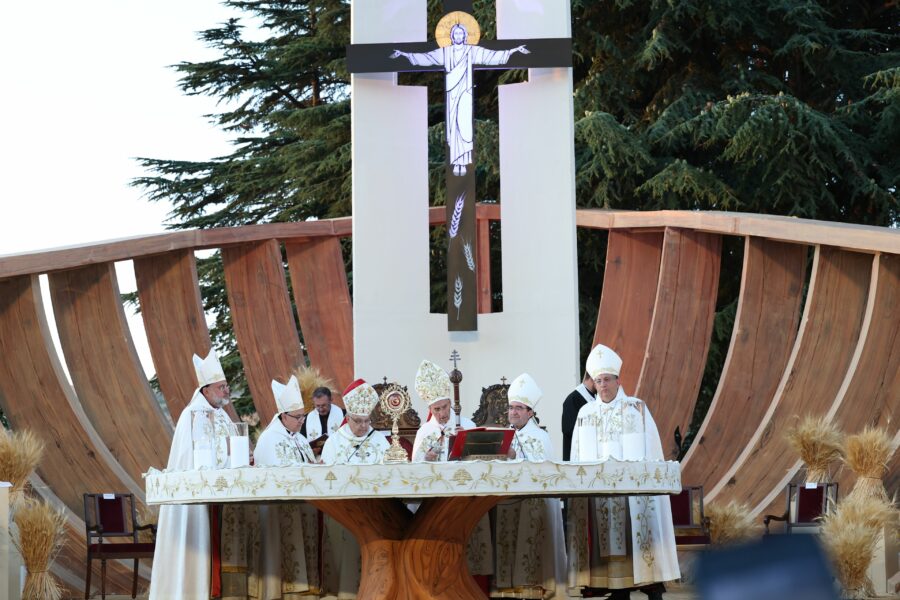
The Maronite Patriarch Elias Peter Hoyek (1843-1931), one of the most relevant figures in the contemporary history of Lebanon and the Maronite Church, was proclaimed blessed on July 25 during a celebration presided over by Cardinal Bechara Boutros Rai in Dimane, the summer residence of the Maronite Patriarchate, in the north of the country. Cardinal Marcello Semeraro, prefect of the Dicastery for the Causes of Saints, participated on behalf of Pope Leo XIV.
According to ACI MENA, the beatification was formalized with the reading of the apostolic letter of Leo XIV, through which the Pontiff officially inscribed Hoyek in the catalogue of the blessed and set June 5 as the date of his annual liturgical memorial. Numerous Eastern patriarchs and bishops also attended the celebration, as well as the main authorities of the country, including the President of Lebanon, Joseph Aoun, and the Prime Minister, Nawaf Salam.
Who was Blessed Elias Peter Hoyek?
Elias Peter Hoyek was born on December 4, 1843, in Helta, in the north of present-day Lebanon. Ordained a priest in 1870, he was consecrated bishop in 1889 and, ten years later, elected Patriarch of Antioch of the Maronites, a ministry he held until his death on December 24, 1931.
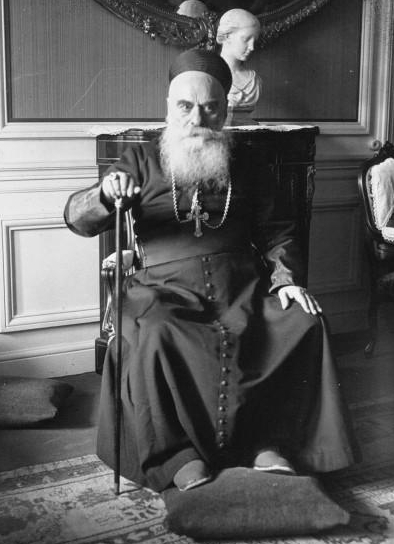
During his 32 years at the head of the Maronite Church, he promoted the creation of schools, supported numerous charitable works, and paid special attention to the formation of the clergy and the assistance of the most needy. His patriarchate coincided with some of the most difficult moments in the country’s history, especially during the First World War, when he organized initiatives to help the population affected by famine.
In addition to his pastoral work, he played a prominent role in the international recognition of Greater Lebanon after the fall of the Ottoman Empire. At the 1919 Paris Peace Conference, he defended the creation of a Lebanese state with its own borders, which is why he is considered one of the main architects of the birth of modern Lebanon.
The Church recognizes in him the testimony of a shepherd devoted to God and his people, whose life was marked by a deep trust in Providence, summarized in the motto that accompanied him throughout his life: «My God, thy will be done».
Leo XIV sets his liturgical memorial on June 5
The celebration began with the formal request for beatification presented by the Maronite Bishop of Batroun, Bishop Mounir Khairallah, in charge of promoting the cause. Next, the patriarchal vicar general and postulator before the Holy See, Bishop Hanna Alwan, presented a summary of the life of the new blessed.
After the reading of the pontifical decree, Cardinal Semeraro delivered five original copies of the beatification document to the Maronite Church. Subsequently, the official icon of the new blessed was presented and his relics were carried in procession among the faithful, accompanied by thirty-two lit candles in memory of the 32 years that Hoyek remained at the head of the Maronite Patriarchate.
«Holiness is not an honor granted by the earth»
In his homily, Cardinal Bechara Boutros Rai affirmed that the new blessed «entrusted himself completely to divine providence until he became a luminous sign in the history of the Church and of Lebanon».
The Maronite Patriarch added that «the Church does not today raise a man to earthly glory, but bears witness to the glory that God accomplished in him», and recalled that «holiness is not an honor granted by the earth, but a divine gift given to those who faithfully live the Gospel to the end».
Addressing Cardinal Semeraro, Rai emphasized that his presence expressed «the depth of communion between the Maronite Church and the Church of Rome» and conveyed the closeness of Pope Leo XIV to a Christian community that «has remained faithful to the faith and to its witness to Christ in the Middle East».
The Patriarch also recalled the motto of the new blessed, «My God, thy will be done», and assured that Hoyek «never sought personal glory, but the glory of God and the good of the human person», convinced that «Lebanon is a message and the human person is its greatest treasure».
At the end of the celebration, the Lebanese President received a sculpture of a cedar carved in stone from the country with the image of the new blessed and one of his relics. After the final blessing, the relics of Elias Peter Hoyek were carried in procession among the faithful.