


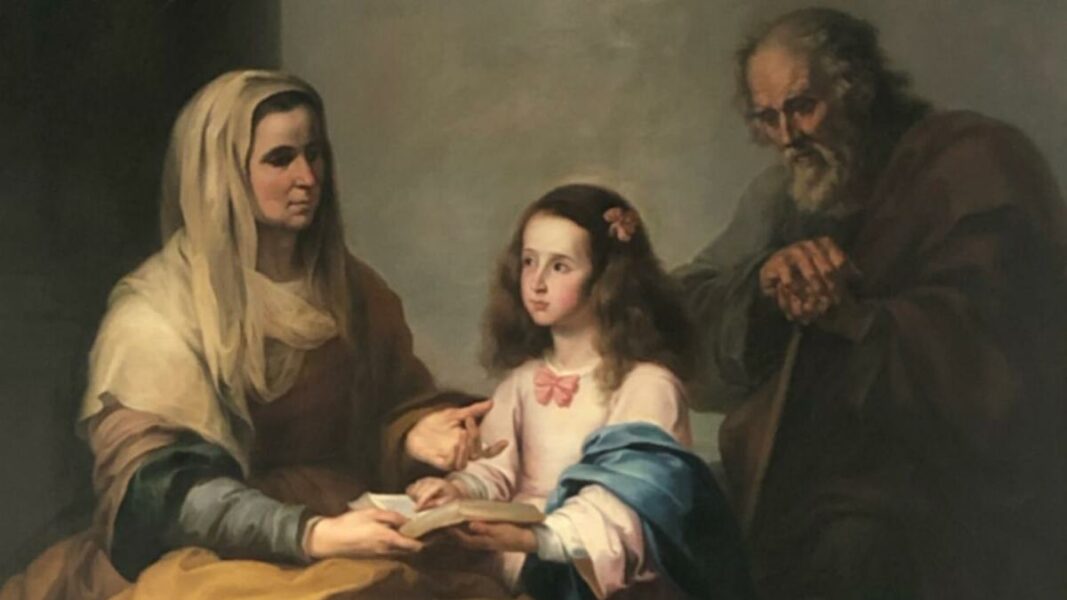
The Church celebrates this 26 July the liturgical memorial of Saints Joachim and Anne, parents of the Virgin Mary and grandparents of Jesus according to Christian tradition. The feast also coincides with the VI World Day for Grandparents and the Elderly, instituted by Pope Francis and celebrated this year under the pontificate of Leo XIV.
On the occasion of this day, the Pope issued a message last June centred on the theme «I will not forget you» (Is 49:15), in which he invites us to rediscover the place of the elderly in the life of the Church, encourages visits to grandparents and those living in solitude, and thanks the witness and prayer of so many older people who daily sustain the Christian community.
The parents of the Virgin Mary
The Gospels provide no information about Mary’s parents. The tradition that identifies them as Joachim and Anne comes mainly from ancient apocryphal writings, especially the Protoevangelium of James and the Gospel of Pseudo-Matthew, which later inspired popular devotion and Christian iconography.
According to that tradition, Joachim and Anne lived in Jerusalem and remained childless for many years. In the Jewish mentality of the time, sterility was seen as a sign of the absence of divine blessing, a circumstance that caused them suffering and humiliation.
After a period of intense prayer and penance, an angel announced separately to both that they would become parents. From that announcement Mary was born, and, according to tradition, she was presented in the Temple at the age of three to be consecrated to God.
A devotion with centuries of history
The cult of Saints Joachim and Anne first arose in the Eastern Churches and later spread to the West.
In 1481, Pope Sixtus IV incorporated the feast of Saint Anne into the Roman Breviary and fixed its celebration on 26 July. A little more than a century later, Gregory XIII extended her liturgical memorial to the entire Latin Church. The celebration of Saint Joachim was introduced later and underwent various date changes until, with the liturgical reform of 1969, both spouses were united in a single liturgical memorial on 26 July.
«I will not forget you»
In his message for the World Day for Grandparents and the Elderly, Leo XIV took as his guiding thread the words of the prophet Isaiah: «I will not forget you», recalling that God’s love reaches every person and constitutes a response to the loneliness and forgetfulness experienced by many older people.
The Pontiff warned that the elderly frequently run the risk of being relegated to anonymity, especially when they live alone or remain hospitalised, where their identity may be reduced «to the number of their bed or to their pathology».
For this reason, he stated that this day seeks to remind us that the Church is called to be «mother of all» and that at every stage of life each person continues to be a son or daughter of God.
An invitation to visit the elderly
Leo XIV made a special appeal to young people to revive the custom of visiting grandparents, the elderly of their own family, and also those who receive no visits.
The Pope asked them to bring «the closeness and affection» of the Church so that the day’s theme may be translated into concrete encounters. In this context he recalled a reflection from his encyclical Magnifica humanitas, where he notes that although technologies multiply connections, «the human heart retains an irreplaceable need for proximity».
Old age as a time of faith and hope
The message also presents old age as a privileged time to deepen one’s relationship with God. Leo XIV reminds us that it is never too late to begin or resume a spiritual life and encourages us to live our own fragility as an opportunity to open ourselves to others and to trust more fully in the Lord.
Finally, the Pope thanks the elderly for the constant support they offer the Church through their prayer, especially through the recitation of the Holy Rosary, and exhorts them to join his petition for peace in a world marked by war and social violence, trusting that God «never forgets us».