


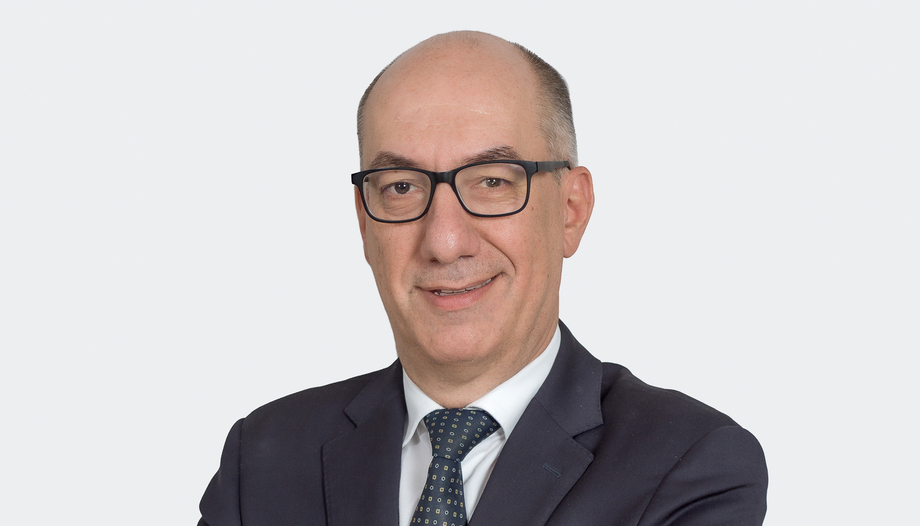
The Institute for the Works of Religion (IOR) has appointed Giovanni Boscia as the new director general of the institution. The Italian financier will assume the position on October 1, succeeding Gian Franco Mammì, who will step down after eleven years leading the institution upon reaching the age limit for the post.
The appointment, announced this Tuesday by the IOR, was agreed upon by the Council of Superintendence and approved by the Cardinal Commission for Oversight. With this transition, the Institute completes a profound renewal of its senior management that began this year, following the arrival of François Pauly as president of the Council of Superintendence and the incorporation of Marina Natale as a new member of that same governing body.
A succession prepared from within
The IOR has chosen to promote one of the executives who has participated in the transformation of the institution in recent years.
Boscia, 55, joined the Institute in 2019 as head of Finance and chief financial officer (CFO). In 2021, he also assumed the direction of Investments and Asset Management, and since 2023, he has served as deputy director general. His appointment therefore represents the culmination of an internal succession process that was carefully prepared.
In the statement released by the IOR, the president of the Council of Superintendence, François Pauly, stated that Boscia possesses “a deep knowledge of the Institute and solid experience in international financial markets,” and expressed his confidence that he will lead the institution “with rigor and a spirit of service” to the Holy Father, the Holy See, and the universal Church.
Three decades in international finance
Before joining the IOR, Boscia spent much of his career in London, where he worked for some of the leading international financial institutions, including Salomon Brothers, Citigroup, Royal Bank of Scotland, and Credit Suisse First Boston.
He later served as head of Fixed Income and Credit at Quaestio Capital SGR, an Italian asset manager specializing in institutional investments.
His profile is that of a specialist in financial markets, portfolio management, and risk administration. He graduated with honors from Bocconi University in Milan, completed a master’s degree in Finance and an Executive MBA at the London Business School, and obtained the international CFA, CAIA, and FRM certifications, considered among the most prestigious in the industry.
Since joining the IOR, he has been closely involved in the institution’s investment policy. Among the projects carried out under his responsibility is the launch, this year, of two stock indices developed in partnership with Morningstar in line with investment criteria compatible with the social doctrine of the Church.
The end of the Mammì era
Boscia will replace Gian Franco Mammì, director general since 2015 and one of the key figures in the IOR’s process of reform and professionalization.
In his farewell message, Mammì stated that he leaves his successor “a solid, transparent Institute fully recognized at the international level,” the result of more than a decade of work to strengthen governance, internal controls, and the Institute’s adaptation to international financial sector standards.
The Italian executive also expressed gratitude for the trust he received from Pope Francis at the beginning of his mandate and wished Boscia continued success on the path ahead “with unity, prudence, and vision.”
The new leadership of the “Vatican bank”
Boscia’s appointment marks the third major move in the renewal of the IOR’s leadership during 2026.
In March, the Vatican appointed Luxembourger François Pauly as president of the Council of Superintendence, former chief executive of Edmond de Rothschild Europe and one of the best-known executives in European private banking. Subsequently, on July 10, Marina Natale, former executive at UniCredit and former chief executive of the Italian public company AMCO, specializing in the management of distressed assets, was added to the same body.
With these appointments, the Institute combines profiles from international high finance with executives trained within the IOR itself, a formula aimed at strengthening both continuity in management and the professionalization of its structure.
An institution already very different from the IOR of the past
Boscia will take charge of an institution that, according to the latest reports, is experiencing one of the strongest periods in its recent history.
The IOR closed 2025 with a net profit of 51 million euros —the best result of the last decade— and nearly 5.9 billion euros in assets under management. The Institute has also consolidated its control, transparency, and regulatory compliance mechanisms, definitively moving away from the image associated for decades with the financial scandals that marked part of its history.
Although popularly known as the “Vatican bank,” the Institute for the Works of Religion does not operate as a bank open to the public. Its mission is to safeguard and manage the assets of dioceses, religious congregations, Holy See bodies, and other ecclesiastical institutions, placing those resources at the service of the Church’s mission.
The main challenge for the new director general will be to consolidate this financial stability and continue developing a management model that combines technical solvency, prudent investments, and fidelity to the religious purpose that distinguishes the Institute for the Works of Religion.