


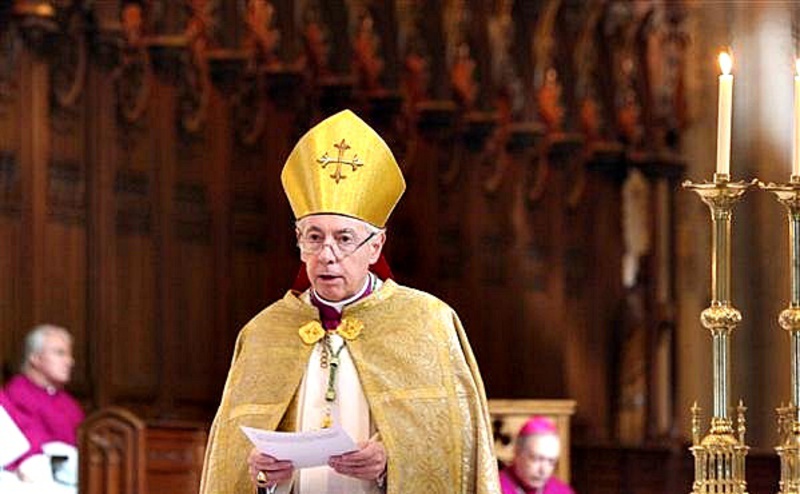
The emeritus archbishop of La Plata (Argentina), Monsignor Héctor Aguer, has stated that the restrictions imposed by Pope Francis on the celebration of the traditional liturgy have not succeeded in curbing the growth of interest in the Vetus Ordo, but rather have contributed to strengthening it, especially among young people. This is what he maintains in an article published this Monday, in which he reflects on the liturgical tradition, the situation of the Church, and the doctrinal challenges of recent decades.
The legacy of Summorum Pontificum
Aguer recalls that Benedict XVI promulgated the motu proprio Summorum Pontificum in 2007 with the aim of fostering liturgical peace and recognizing the value of a form of celebration which, as the German pontiff then wrote, “was sacred to previous generations” and could not be considered harmful or suddenly prohibited.
The Argentine prelate maintains that Benedict XVI allowed any priest to celebrate Mass according to the 1962 Missal without the need for special authorizations, and states that the Pope suffered deeply when, fourteen years later, Francis repealed that regulation through the motu proprio Traditionis custodes. At this point, he refers to the recent statements of Archbishop Georg Gänswein, former personal secretary of Benedict XVI.
“Far from closing wounds, it deepened them”
In his analysis, Aguer asserts that the restrictions introduced in 2021 did not produce the intended effect.
“Traditionis custodes, promulgated five years ago, far from closing wounds, only deepened them,” he writes. He adds that, “contrary to what its promoter sought, it contributed to a growing interest in Tradition and Orthodoxy, especially among young people.”
The emeritus archbishop states that a significant part of conversions to Catholicism today takes place in communities linked to the traditional liturgy and maintains that the transmission of the faith “no longer occurs, to a large extent, from parents to children, but from young people to young people.”
At the same time, he notes that he was ordained a priest in 1972 according to the Novus Ordo and that he has never celebrated the extraordinary form of the Roman rite.
A critique of liturgical and doctrinal developments
Aguer attributes much of the ecclesial crisis following the Second Vatican Council to liturgical abuses and certain theological currents.
He states that the reformed Missal ended up being used, “even against what was laid down by Sacrosanctum Concilium,” as an instrument for “liturgical devastation.” He also criticizes the proliferation of celebrations which, in his view, depart from established norms and maintains that this has contributed to the decline in priestly and religious vocations, as well as to the decrease in the number of Catholics in various countries.
As an example, he points to the case of Argentina, where he claims that the Catholic population has gone from representing around 90% to standing at 57% over the last six decades.
The archbishop also questions various theological currents developed after the Council, including Karl Rahner’s so-called “anthropological turn,” liberation theology, and the theology of the people.
A final reflection on the future of the Church
In the final part of his article, Aguer maintains that the Church needs to recover doctrinal solidity and ecclesiastical discipline in order to face current challenges.
At the age of 83, the emeritus archbishop explains that he lives in retirement in a priestly residence and dedicates much of his time to prayer while preparing for the end of his life.
He concludes by noting that one of his greatest consolations has been to have ordained forty-nine priests and three deacons during his episcopal ministry, several of whom—he states—today exercise their ministry in communities characterized by a carefully celebrated liturgy, doctrinal fidelity, and notable growth in vocations.