


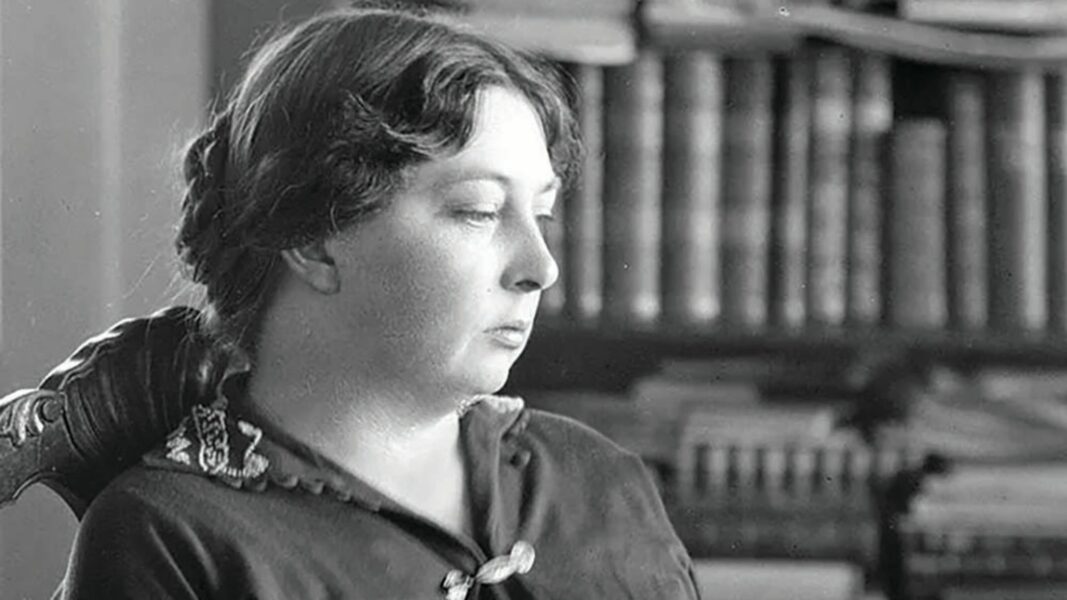
The Catholic Diocese of Oslo will begin this autumn the diocesan phase of the cause for the canonization of the writer Sigrid Undset (1882-1949), one of the most prominent figures in Norwegian literature and winner of the Nobel Prize in Literature in 1928. The announcement was made on July 8 by the Bishop of Oslo, Fredrik Hansen, during a Mass celebrated on the island of Selja on the occasion of the feast of Saint Sunniva.
With this decision, the Catholic Church in Norway is launching the first step of the canonical process that could lead, in the future, to the beatification and canonization of the writer, who converted to Catholicism in 1924.
During his homily, Hansen stated that Undset should be remembered not only for her literary output, but also for the witness of her Christian life. “She is much more than an author and Nobel laureate. For us, she is an example of Christian faith, of a life lived in virtue, and of the pursuit of holiness,” the prelate noted.
The bishop placed the opening of the cause in the context of the universal call to holiness and highlighted various aspects of the writer’s life, including her public defense of the Catholic faith, her opposition to Nazism, her work for Norway’s freedom during the Second World War, her attention to those most in need, and the care she devoted to one of her daughters, who had a disability.
A conversion that marked her trajectory
Sigrid Undset was born in Denmark in 1882 and grew up in Norway in a family whose convictions were largely distant from religion. After her father’s death, she began working as a teenager to help support her family economically, while also starting her literary career.
Her first novel, Fru Marta Oulie, published in 1907, sparked strong controversy for addressing adultery from the perspective of its protagonist. Years later, she began a relationship with the painter Anders Castus Svarstad, with whom she married and had three children. The couple eventually separated.
In 1924 she entered the Catholic Church, a decision that generated intense debate in the predominantly Lutheran Norway. She later joined the Secular Dominican Order and reflected in part of her work themes related to the Christian faith, grace, sin, penance, and redemption.
Nobel Prize and opponent of Nazism
In 1928 she received the Nobel Prize in Literature, especially for the trilogy Kristin Lavransdatter, set in medieval Norway and considered her best-known work.
In addition to her literary activity, Undset publicly expressed her opposition to National Socialism from the early years of Adolf Hitler’s rise to power. After the German occupation of Norway in 1940, she left the country and settled temporarily in the United States, where she participated in various initiatives supporting the Norwegian resistance and denounced Nazi totalitarianism.
She also maintained a close intellectual relationship with the British writer G. K. Chesterton, whose works she translated into Norwegian after her conversion to Catholicism.
Will begin this autumn
According to Bishop Hansen, the diocesan phase of the cause will formally begin this autumn. During this stage, documentation relating to the life, writings, and reputation for holiness of Sigrid Undset will be compiled before the dossier is sent to the Dicastery for the Causes of Saints, which will study the case in accordance with the Church’s regulations.
If the process succeeds, the Norwegian writer would become one of the few figures in world literature awarded the Nobel Prize whose path toward eventual canonization has been officially opened by the Catholic Church.