


There is a modern temptation to believe that the liturgy needs to say something more than what it already says. As if the Mass, by itself, were not enough. As if the sacrifice of Christ offered to the Father needed to be reinforced with an added message, with an impactful aesthetic, with a staging capable of translating the urgencies of the moment.
The Church, however, has always understood the liturgy in another way. The Mass is not a representation. It is not an act of institutional communication. It is not a spiritual performance at the service of a cause, however noble that cause may seem. The Mass is the Holy Sacrifice. And everything that enters into it—the church, the altar, the ambo, the sacred vessels, the vestments—remains subordinate to that end.
That is why a chasuble is not a canvas. The altar is not an artistic installation. The sanctuary is not a stage. And the priest does not vest to express a sensibility, but to disappear behind Christ.
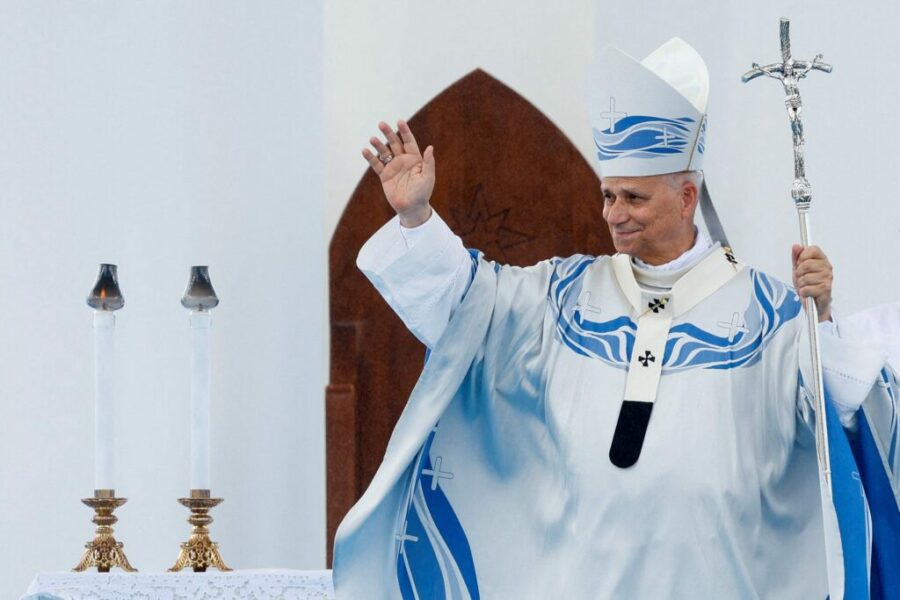
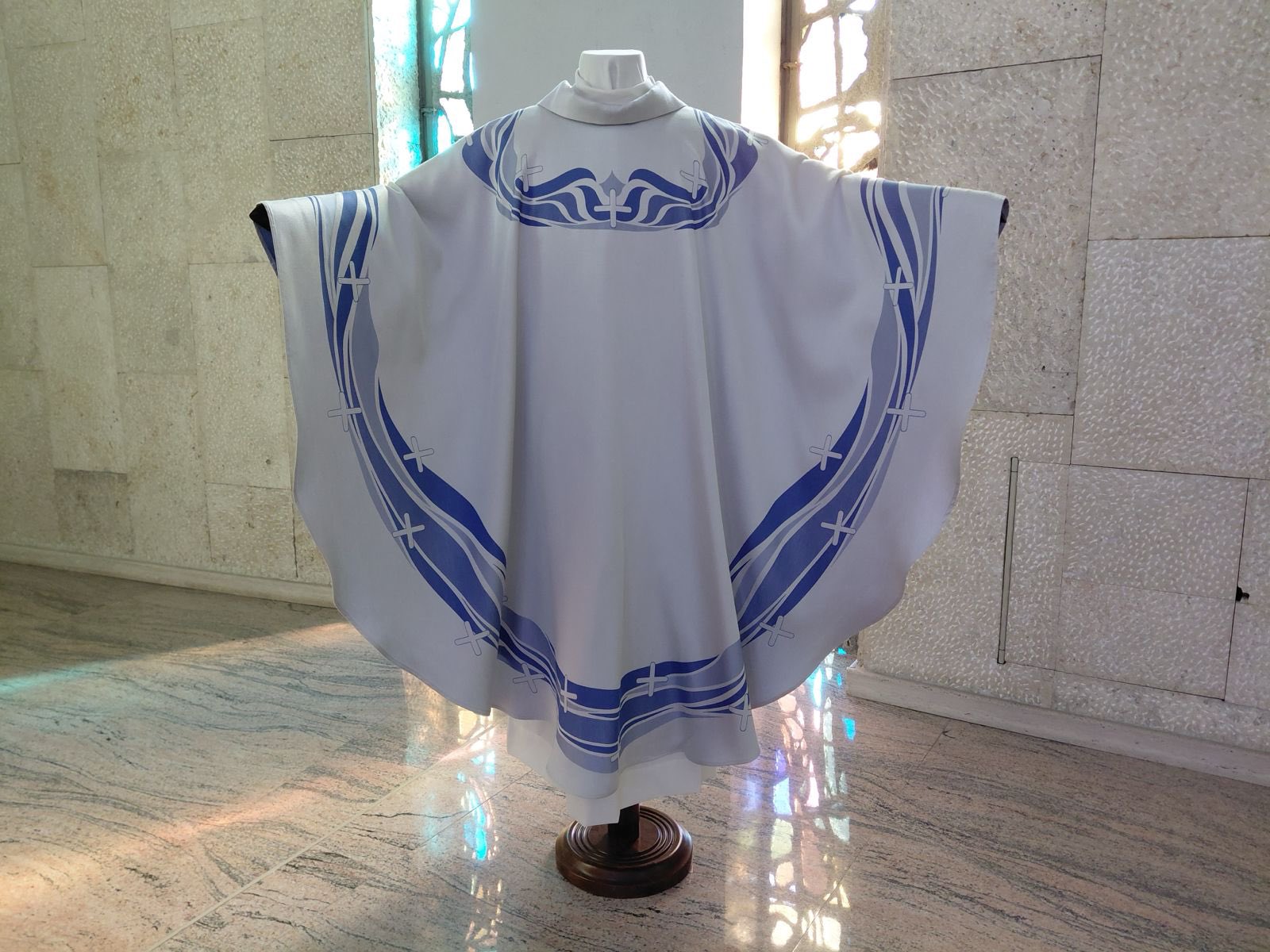
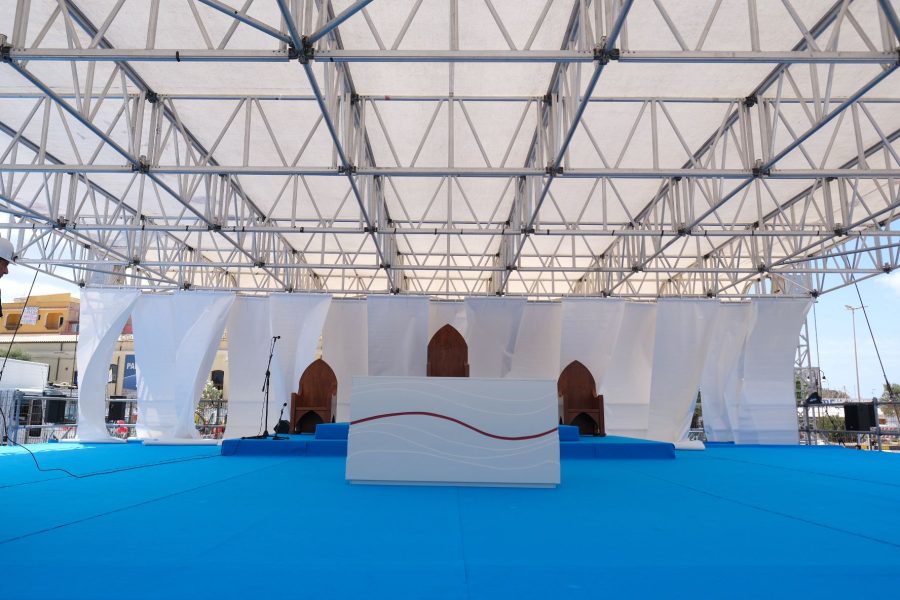
The recent papal celebration in Lampedusa once again raises a question that the Church should take seriously. The chasuble prepared for Leo XIV was explained as a piece loaded with references to the Mediterranean, to the migratory journey, to the blood shed at sea, to the memory of those who have died in those waters, and to hope. The altar and the ambo were also presented from similar keys: the sea, migration, pain, redemption.
 The intention can be understood. No one disputes that those who have died in the Mediterranean can and should be commended to God. The Church prays for the dead, accompanies those who suffer, and offers the sacrifice of Christ for the salvation of the world. It has always done so.
The problem arises when that intention ceases to be an intention of the Mass and begins to shape the visible form of the liturgy itself. One thing is to celebrate the Eucharist for those who have died at sea. Another is to turn the chasuble, the altar, and the liturgical space into a scenic language constructed to recall that tragedy.
The difference is not minor. It is theological.
The liturgy has its own end: the adoration of God and the sacramental actualization of the sacrifice of Christ. Everything in it must lead toward that center. When liturgical elements begin to function as supports for a human message, even if morally legitimate, the order is inverted. It is no longer the human drama that is lifted up to the altar to be redeemed by Christ; it is the altar that adapts to the human drama in order to represent it.
Therein lies the risk.
For centuries, the Church developed a stable, recognizable, and universal liturgical language. The cross, the Lamb, the Alpha and the Omega, the pelican, the vine, incense, the liturgical colors, the nobility of the fabrics, the orientation of the church, silence, and chant were not born to comment on current events. They were born to express the mystery.
That language did not need a press release to be understood. A chasuble with a cross speaks immediately of Christ. A consecrated altar speaks of sacrifice. A chalice speaks of the redemptive Blood. Not because they are poor symbols, but because they belong to a living tradition that does not depend on the artist’s subjective intention or on the event of the week.
Contemporary art functions differently. The work needs explanation. The artist proposes a narrative. The viewer must know the interpretive keys to access the meaning. That may make sense in a museum. But the liturgy is not a museum, nor is the Mass a conceptual installation.
When a chasuble requires several paragraphs to explain what it means to say, perhaps it is saying too much. And when it says too much, it prevents the one thing truly necessary from speaking: the mystery of Christ dead and risen.
The Church is not indifferent to the suffering of the world. Precisely because it is not, it brings that suffering to the altar. But it brings it to offer it to God, not to turn it into scenery. The liturgy does not need to imitate the language of theater or performance to be close. Its strength does not lie in representing our wounds, but in placing them before the Cross.
The priest vests because he no longer acts in his own name. The chasuble covers the man to manifest Christ. If the vestment draws attention to the designer’s message, to a specific social cause, or to an overly circumstantial symbolic reading, it ceases to fulfill its function fully. Liturgical beauty is not called to impose itself, but to serve. It must not distract, but lead. It must not explain the world, but open it to God.
The liturgical space also matters. A stadium may be used out of necessity for a large Mass. The Church has celebrated in squares, fields, open spaces, and airports. But even there it must strive to create a sacred environment, not an event platform. If the arrangement resembles a theatrical stage more than a space of adoration, the visual message dilutes the nature of the rite.
The underlying question is not aesthetic. It is spiritual.
The liturgy does not need to be updated by means of contemporary symbols. It is always current because it makes the eternal present. That is its greatness. That is also its demand.
The Church can and must pray for migrants, for those who have died at sea, for the poor, for the victims of war, and for all who suffer. But it must not forget that the first charity of the liturgy consists in being liturgy: divine worship, sacrifice, praise, adoration.