


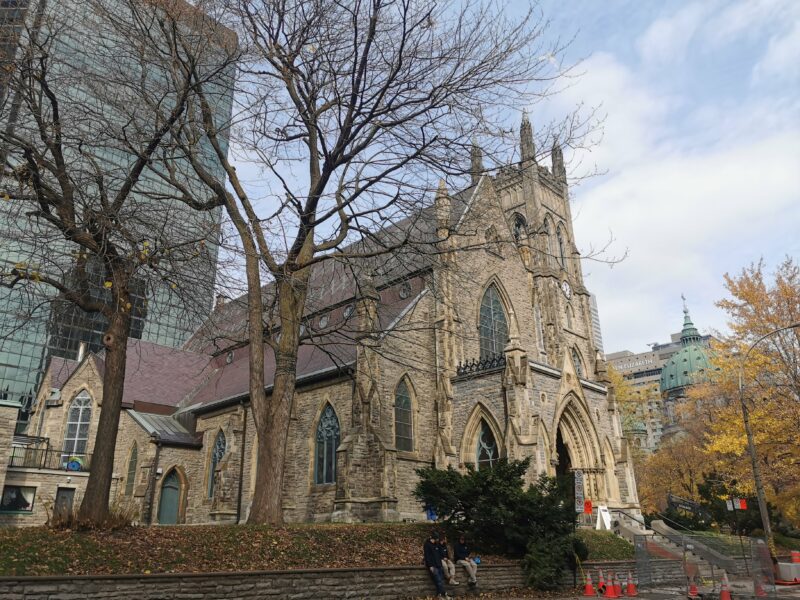
Anglicans in Canada have approved a document authorizing their ministers to offer pastoral accompaniment and, with the corresponding bishop’s authorization, to impart blessings to persons who have chosen to undergo medical assistance in dying (MAiD).
The text, titled Pastoral Liturgies at the Time of Death in Contexts of Medically Assisted Dying, not only contemplates the presence of Anglican ministers before the induced death but also develops a complete liturgical itinerary that may include confession, the laying on of hands, anointing, Holy Communion, blessings, prayers during the procedure, and intercessions after death. All of this remains subject to the corresponding bishop’s authorization and the pastoral discretion of each community.
Paradoxically, the document begins by stating that “it is not our intention to enter into the ethical arguments” about euthanasia or to offer “a moral argument for or against.” Instead of addressing the issue from a Christian moral standpoint, its authors maintain that the Church’s duty is to accompany pastorally those who request spiritual assistance at that moment.
A ritual specifically conceived for euthanasia
The document provides for different liturgical moments according to the circumstances. Before the procedure, a rite of preparation may be celebrated with biblical readings, psalms, an examination of conscience, individual confession, anointing, and the distribution of Communion. Specific forms of intercessions and blessings are also offered for those who are to receive medical assistance in dying.
Once the medical team’s intervention has begun, the ritual continues with new prayers while the procedure is administered. After death, prayers of farewell, blessings for the family, and forms for the subsequent accompaniment of loved ones are included.
The document avoids judging the moral licitness of euthanasia
The drafters maintain that the Church must respond pastorally “where people are” and accompany those who have freely chosen medical assistance in dying. The document states that many of these patients have lived for years with complex illnesses, wish to end their suffering, and want to face their death “with the grace and blessing of God” and with the presence of the ecclesial community.
At the same time, the text attempts to establish a distinction between blessing the person and blessing the decision to resort to euthanasia. However, it acknowledges that this difference may be difficult to perceive and recommends that ministers act prudently to avoid confusion among the faithful.
The expansion of medical assistance in dying in Canada
Canada has had a legal framework since 2016 that permits medical assistance in dying (Medical Assistance in Dying, MAiD), whose application has been progressively expanded in recent years. Currently, persons suffering from serious and irreversible illnesses and who meet the requirements established by federal legislation may avail themselves of this procedure.
Ten years after the legalization of the so-called Medical Assistance in Dying (MAiD), more than 100,000 people have died through this procedure, and the country currently records the highest number of deaths by euthanasia in the world.
In 2024 alone, official figures show 16,499 deaths by medical assistance in dying, the highest annual figure since the law came into force in 2016. Although the Canadian government maintains that the growth is beginning to stabilize, the number of cases continues to rise year after year.