


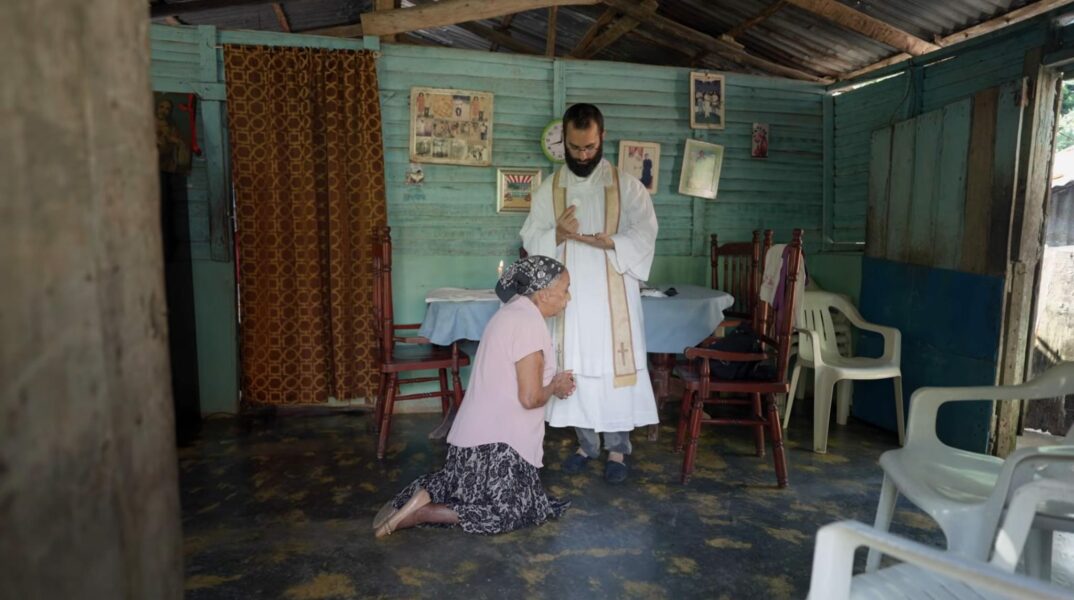
It is fitting to begin by saying who they are, because much is being said about them and at times they are being described maliciously. The faithful who attend a chapel of the Priestly Fraternity of Saint Pius X is not, in general, that arrogant character who, from an anonymous social-media account, lords it over the entire universe and spends his afternoons explaining to us the invalidity of the new Mass. That character exists, but it is a minority caricature. The faithful are thousands of ordinary people, many of them humble, families with children who squirm in the pew, elderly people who arrive with their worn-out missal, mothers who drive forty minutes every Sunday because in their city there is no parish where the sacraments are celebrated in the traditional rite, men who confess their sins on the first Fridays and who simply want to live in grace for as long as possible and to have the Eucharist—which is medicine, not a trophy—help them bear a daily life that already carries enough weight on its own.
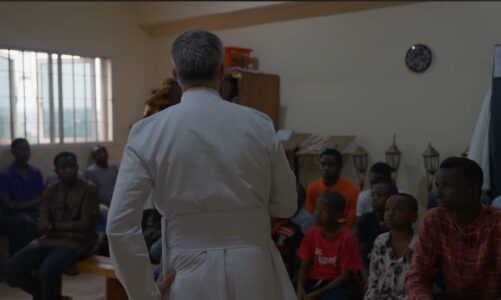
Consider the altar server in Nairobi who learned to serve Mass from the priests who arrived in his neighborhood, or the elderly woman in a village in the Dominican Republic to whom those same priests bring Communion and speak to her of Christ, or the family in a European capital that discovered the traditional liturgy almost by accident and felt moved, challenged, reached by a way of celebrating that flung wide open the mystery for them. Many of these people have come to know Christ through these priests. They did not choose a faction: they found a door, and they entered through it as one always enters the Church, seeking forgiveness and the Bread.
Now, this overwhelming majority of the faithful neither has the position, nor the information, nor are they directly involved in decisions about the operation or continuity of the five seminaries from which the priests who later serve them come. At most, they know that those seminaries need ordinations and that ordinations require bishops, but they do not take part in that process nor are they asked for their opinion on it. Exactly as I, a diocesan faithful, do not have a precise idea of how my diocese’s seminary functions, nor of what administrative decisions are being made in it, nor of who will ordain the priests who in a few years will hear my confession, nor of whether my bishop obeys or disobeys a Roman directive. Not only am I not aware: I have no duty to be, and above all it is not my responsibility. No one has ever maintained that the ecclesial communion of the ordinary faithful depends on their vigilance over episcopal governance.
On an entirely different level stands disobedience. The superiors of the Fraternity have decided to consecrate bishops because, they say, those who have been ordaining their seminarians are very elderly, because health does not wait, and because they have judged that the continuity of their work required it; and they have done so without a pontifical mandate, which is precisely what the law of the Church forbids under the severest penalties. One may discuss whether they should have negotiated longer, whether announcing in February what was carried out in July was precipitate, whether there was still room for a point of convergence with Rome. I myself wonder about it, and I suspect many of the faithful will also wonder with sorrow. But that decision, with all its disciplinary consequences, belongs to those who made it. It is a hierarchical, objective, sanctionable disobedience, upon which legitimate authority can and perhaps must act with juridical severity. What it is not, is the rupture of a dogma. No one has denied the primacy of Peter, no one has denied the Pope, no one has proclaimed any doctrine against the faith. Against which dogma are these faithful? Is there some new dogma of which we have not yet heard? To call schism what is disobedience (even if grave), and then to spread that schism like an oil stain over people who only want sacraments, borders on canonical abuse.
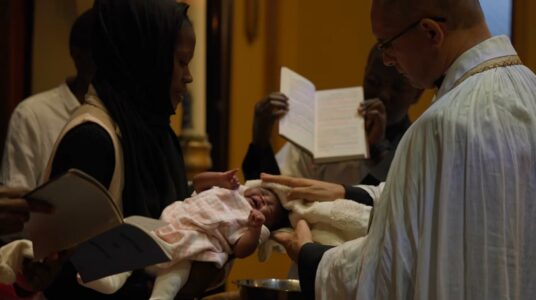
To involve ordinary people, to frighten families, to single out the elderly person who goes to Mass where and as he can, to assert that the father from Kansas, from Guadalajara or from the Philippines has become attached to a schism because of the disobedience of Pagliarani, Galarreta or Fellay is altogether excessive. These people—the rank-and-file faithful—have decided nothing, have been consulted about nothing, do not possess the information to judge in depth, and cannot be required to do what is not even within their reach to know. What they need are sacraments, and sacraments in accordance with the Catholic Church. And when it is suggested that they must present themselves individually before the bishop, sign a document of retraction and be readmitted one by one, as if returning from a sect, one cannot help thinking that the procedure has precisely that: a sectarian character, a flavor of administrative purge that is not Catholic, that it is not, sincerely, because the Church has never treated in this way those who seek grace, but rather those who fight against it.
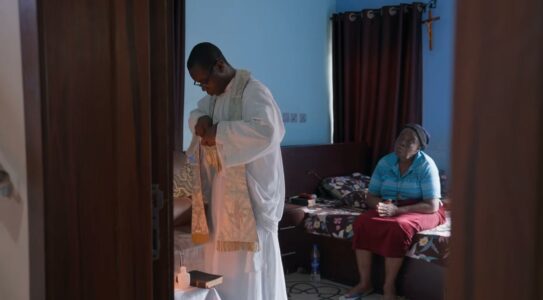
While agreeing that disobedience must have consequences, and that the law provides harsh mechanisms for those who commit it (who, by the way, also have the right of defense), I humbly ask that a distinction be made: to distinguish with mercy between the superior who decides and the faithful who prays, between the act that wounds communion and the multitude that does not sign it; between discipline, which is necessary, and indiscriminate punishment, which is scandal. Sanction those who must be sanctioned, with all the rigor of the law if necessary. But to the families, to the elderly, to the children, to the altar server in Nairobi and to the Dominican grandmother, have mercy and leave them aside. They are not the problem. They are, exactly, that for which the Church exists.