


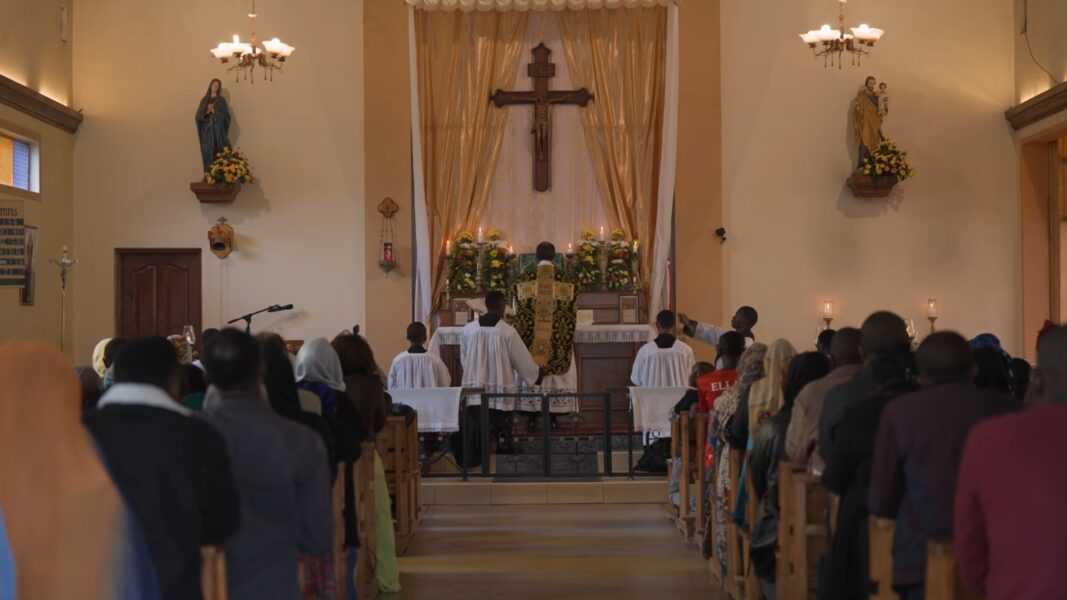
The Explanatory Note published this 2 July by the Dicastery for the Doctrine of the Faith (Prot. N. 99/2009), which declares the crime of schism consummated, considers the lay faithful who formally adhere to the Fraternity to be schismatic and excommunicated, declares invalid the sacraments of penance and marriage administered by its priests, and exhorts the whole people of God “to abstain from participating in the celebrations and activities promoted” by it, has a practical consequence that no one in Rome seems to have calculated: in fourteen nations of the world, the only traditional Mass that existed was that of the Fraternity. From today, in those countries, the faithful who wish to attend the rite that sanctified the West for fifteen centuries simply have no place to go.
Let us state it with canonical precision, because the document lacks it. The Note is legally weak: it is not a penal decree, it does not declare nominal excommunications of specific faithful, and it rests on the category of “formal adherence”—taken from the Note of the Pontifical Council for Legislative Texts of 1996—without ever defining what degree of connection constitutes it. Attending on a Sunday? Attending habitually when there is no other traditional Mass within a thousand kilometres? Baptising a child there? Financially supporting a chapel? The text does not say, and common doctrine had maintained for decades that mere attendance does not constitute adherence to schism. But that very ambiguity, far from reassuring, is what produces the effect of unease in the ordinary faithful, who are not canonists, cannot know whether crossing the threshold of the chapel makes them schismatic in the eyes of Rome, and that fear—calculated or not—is enough to do them tremendous harm. It is in the countries where the Fraternity was the only door that this mechanism unfolds all its cruelty.
The world map of desolation
The data is not an estimate: it comes from the Latin Mass Directory, the international census that records exclusively the Masses according to the 1962 Missal celebrated with the approval of the bishops—diocesan parishes, the Priestly Fraternity of Saint Peter, the Institute of Christ the King and other Ecclesia Dei communities—, cross-referenced with the official lists of chapels of the districts of the FSSPX in South America, Central America and the Caribbean, Africa and Asia. The result, continent by continent:
America: ten of the fourteen countries. It is, by far, the hardest-hit region:
- Peru. The three authorised centres that existed were cancelled in 2022 in application of Traditionis custodes: a 100% drop, zero centres. The Fraternity serves Lima and several cities in the interior. In the homeland of Leo XIV not a single authorised traditional Mass remains.
- Costa Rica. A unique case in the world: in July 2021 the Episcopal Conference formally prohibited the ancient rite throughout the national territory, decreeing that “no priest is authorised to continue celebrating according to the ancient liturgy.” Only the FSSPX mission in San José remained.
- Panama. The bishops have systematically refused even to negotiate. Traditional faithful, according to testimonies collected by Rorate Cæli in 2024, have come to attend Mass in apartments, rural estates and the loft of a shop, served by the Fraternity.
- Guatemala, Honduras, El Salvador and Nicaragua. None appears in the directory with a single approved centre. All four depend on the eight priests of the Autonomous House of Central America of the FSSPX.
- Bolivia, Paraguay and Uruguay. Without authorised centres. The Fraternity maintains a priory in Santa Cruz and chapels in La Paz and Cochabamba; a chapel in Asunción; and a priory in Montevideo.
Africa: two countries.
- Kenya. Not a single authorised centre in the directory. The FSSPX priory of the Holy Cross has been in Nairobi for twenty years, with a church and school between the Lavington neighbourhood and the Kawangware suburb.
- Zimbabwe. Without authorised centres. It is one of the historic missions of the District of Africa of the Fraternity.
Asia: two countries. The two most recent cases, and perhaps the most revealing of the direction of the tide:
- Malaysia. Lost its only authorised centre in 2024. The Fraternity maintains chapels in Kuala Lumpur and in Sabah.
- Sri Lanka. Lost its own in 2025. The FSSPX mission of Saint Francis Xavier in Negombo remains.
To the list could be added probable cases pending on-the-ground verification—Venezuela, absent from the directory, or Cuba—and the countries visited on an itinerant basis by the priests of the Asian district of the Fraternity (Vietnam, Thailand, Vanuatu), where no authorised centre exists either.
And there is a second category that the map reveals: the quasi-monopolies. In South Africa, seat of the District of Africa of the FSSPX, the directory records only one authorised centre for the entire country; in India, another. Wherever the Fraternity deploys priories, schools and missions, the authorised offering is, at best, token.
Entire nations, not dioceses
We are not speaking of dioceses, but of entire countries, on three continents, where the combined application of Traditionis custodes and yesterday’s Note produces a result that Paul VI never decreed: the total, legally sanctioned extinction of the Mass of all time in the territory of a nation. The Peruvian or Kenyan faithful who today wish to attend the traditional rite have three options: take a plane, frequent a celebration that Rome exhorts them to avoid without telling them at what point their attendance makes them schismatic, or stay at home.
The contrast with the wealthy world is eloquent. France retains 224 authorised centres and has grown 29% since 2021; the United States exceeds 450; Germany has gone from 36 to 85; Switzerland—the country of Écône—from 11 to 24. The purge has not fallen on Paris, Munich or Chicago: it has fallen on Lima, Tegucigalpa, Nairobi and Colombo. The fourteen countries on the list share one feature: they are poor or peripheral, precisely the “peripheries” that recent magisterium has invoked without cease. For the traditional Mass, the peripheries do not exist.