


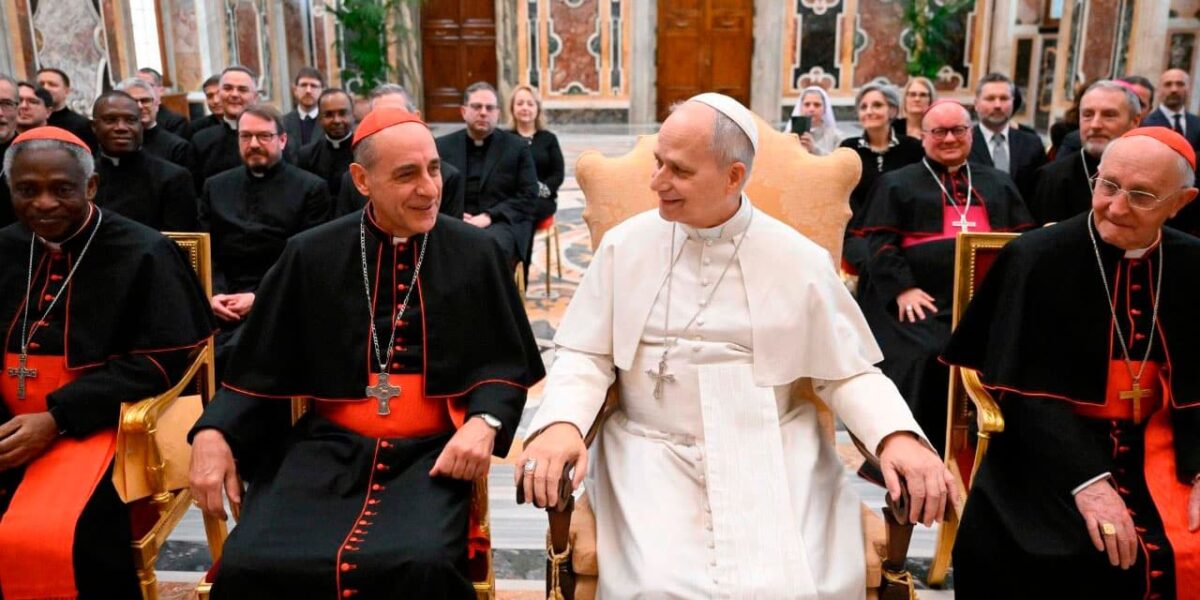
The response from Rome has not been long in coming, and it is the harshest in nearly forty years. Less than twenty-four hours after the episcopal consecrations celebrated yesterday in Écône by the Priestly Fraternity of Saint Pius X, the Dicastery for the Doctrine of the Faith has published on this 2nd of July an Explanatory Note signed by Cardinal Víctor Manuel Fernández declaring the crime of schism to be consummated and extending its canonical consequences not only to the bishops and priests of the Fraternity, but —and this is the gravest novelty— also to the lay faithful.
The document, dated at the Dicastery Palace and countersigned by the Prefect together with Mons. Armando Matteo (Secretary for the Doctrinal Section) and Archbishop John J. Kennedy (Secretary for the Disciplinary Section), states that “the multiple attempts to bring the adherents of the movement initiated by Mons. Marcel Lefebvre back into full communion with the Catholic Church have proved vain” and that the consecrations “without a pontifical mandate, against the will of the Holy Father” have “constituted the crime of schism”.
Three blows in a single document
The Note establishes three points of unprecedented forcefulness:
First: all sacred ministers of the FSSPX “are in schism and must therefore be considered schismatics”, remaining “subject to the excommunication provided for by law” (can. 1364 § 1). It is no longer a matter only of the four bishops consecrated yesterday and of the consecrator: the declaration reaches the more than seven hundred priests of the Fraternity throughout the world.
Second: the lay faithful “who formally adhere” to the Fraternity “are to be considered schismatics and excommunicated”, under the conditions established by the Explanatory Note of the Pontifical Council for Legislative Texts of 1996, which the Dicastery declares “still in force” and “makes its own”.
Third: the people of God are warned that the ministers of the Fraternity “administer the sacraments illicitly” and that “the sacrament of penance administered by them and the marriage assisted by them are invalid”.
Harsher than John Paul II in 1988
The comparison with the historical precedent is inevitable, and the result is devastating: this Note goes beyond what the motu proprio Ecclesia Dei of 1988 was. At that time, John Paul II declared the latae sententiae excommunication of Mons. Lefebvre, Mons. de Castro Mayer and the four consecrated bishops. Priests and faithful were warned of the risk, but the declared excommunication affected only six persons. Today, by contrast, the Dicastery declares the entire clergy of the Fraternity excommunicated and, for the first time expressly in a document of this authority, the laity who formally adhere to it.
A detail not insignificant for canonists: the document bears the protocol N. 99/2009. That is, it is filed in the dossier opened in the year when Benedict XVI, with the decree of 21 January 2009, remitted the excommunications of the four bishops as a gesture of mercy to foster unity. Seventeen years later, that same dossier serves for the exactly opposite movement.
Farewell to the concessions of Francis
The declaration of invalidity of confessions and marriages also implies the de facto revocation of the concessions of the previous pontificate. Francis granted in the Jubilee of Mercy of 2015 the faculty for the priests of the Fraternity to validly absolve, made it permanent in the apostolic letter Misericordia et misera (n. 12) and in 2017 established, through the then Commission Ecclesia Dei, a channel for the valid celebration of marriages assisted by its priests. All of this is today wiped out at a stroke, without any mention of those pontifical acts or of the hundreds of thousands of faithful who for a decade confessed and married under their protection.
A severity reserved for tradition
One may ask —and many faithful will ask themselves today— whether there is any other group within the Church to which Rome has ever applied such rigor. The so-called German Synodal Way has approved resolutions openly contrary to the magisterium without any bishop being declared schismatic. Theologians, congregations and entire communities publicly question defined doctrines without the Dicastery having declared their sacraments invalid or excommunicated their faithful. The express excommunication of laity for their mere adherence to an ecclesial reality has no parallel in the recent practice of the Holy See. The measuring rod, once again, only reaches its maximum length when it points toward tradition.
The document concludes with the customary maternal language —“the Church, as a solicitous mother, will welcome with sincere affection” those who wish to return— and with the exhortation to the faithful “to abstain from participating in the celebrations and activities promoted” by the Fraternity. The Apostolic Nuncios will provide procedures for the various cases of return.
Full text of the Explanatory Note (InfoVaticana translation)
Prot. N. 99/2009
EXPLANATORY NOTE
From the time of Saint Paul VI until the most recent talks, recently held in this Dicastery, the multiple attempts to bring the adherents of the movement initiated by Mons. Marcel Lefebvre back into full communion with the Catholic Church have proved vain. This situation has been further aggravated by the recent episcopal consecrations celebrated without a pontifical mandate, against the will of the Holy Father, in open violation of canon law. Therefore, this Dicastery, in the faithful exercise of the functions entrusted to it, considers it necessary to state that such an act has constituted the crime of schism, with the canonical consequences for the sacred ministers and for the lay faithful involved. Indeed, as already declared in 1988, “such disobedience —which entails a practical rejection of the Roman Primacy— constitutes a schismatic act” (cf. John Paul II, Ap. Letter Ecclesia Dei, 3).
In this regard, from now on:
1. The sacred ministers belonging to the Priestly Fraternity of Saint Pius X are in schism and must therefore be considered schismatics (cf. Ecclesia Dei, 5 c; Pontifical Council for Legislative Texts, Explanatory Note on the excommunication for schism incurred by adherents to the movement of Bishop Marcel Lefebvre, 24.08.1996, 5-6), remaining subject to the excommunication provided for by law (can. 1364 § 1 CIC).
2. As regards the lay faithful, those who formally adhere to the Priestly Fraternity of Saint Pius X are to be considered schismatics and excommunicated under the conditions established in the Explanatory Note of the Pontifical Council for Legislative Texts of 1996 (cf. ibid., 7), still in force, which this Dicastery makes its own.
3. Finally, the holy People of God are warned that the sacred ministers of the Priestly Fraternity of Saint Pius X administer the sacraments illicitly and that the sacrament of penance administered by them and the marriage assisted by them are invalid.
The Church, as a solicitous mother, will welcome with sincere affection and lively solicitude all those who wish to return to full communion. The Apostolic Nuncios will provide the procedures that the Ordinaries may use in the various cases.
Finally, all the faithful are exhorted to remain steadfast in communion with the Roman Pontiff, with the Bishops in communion with him and with the whole Church (cf. Lumen Gentium, 22; can. 751 CIC), and to abstain from participating in the celebrations and activities promoted by the aforementioned Priestly Fraternity of Saint Pius X.
From the Palace of the Dicastery, 2 July 2026
Víctor M. Card. Fernández
PrefectMons. Armando Matteo
Secretary for the Doctrinal SectionJohn J. Kennedy
Titular Archbishop of Ossero
Secretary for the Disciplinary Section