


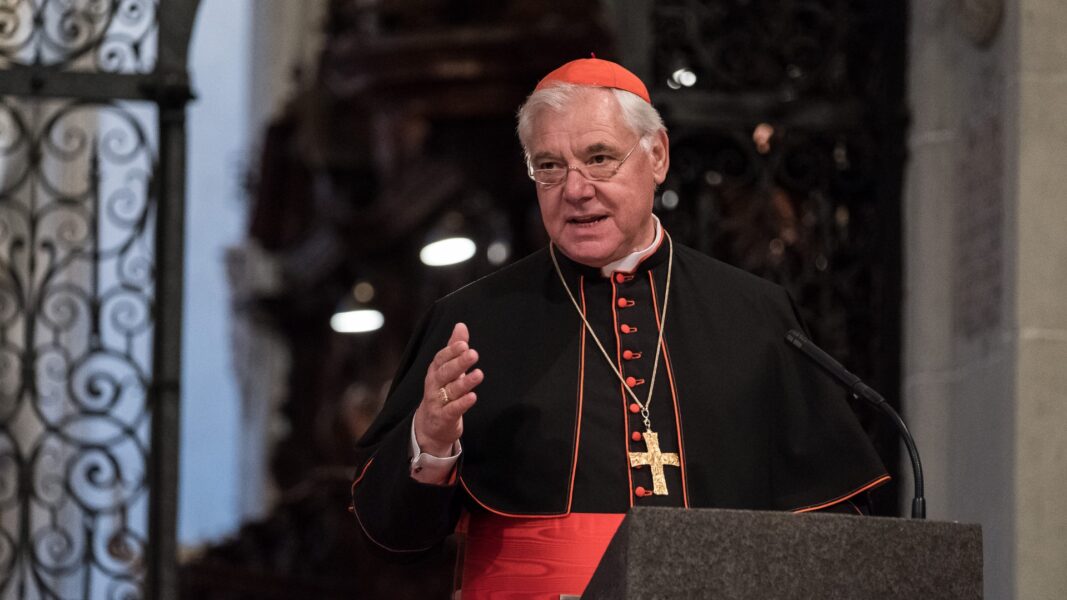
Cardinal Gerhard Ludwig Müller, prefect emeritus of the Dicastery for the Doctrine of the Faith, believes the time has come to review the restrictions imposed on the celebration of the traditional Mass and to recover the path opened by Benedict XVI with the motu proprio Summorum Pontificum. In an interview granted to the Italian daily Il Giornale, the German prelate maintains that the limitations introduced by Traditionis Custodes have not produced the expected effects and, on the contrary, have strengthened the positions of the Priestly Fraternity of Saint Pius X (FSSPX).
Müller states that the recent episcopal consecrations carried out by the Fraternity should prompt the Church to reflect on the liturgical policy followed since 2021. In his view, the restrictions on the traditional liturgy “have almost served as propaganda for the Lefebvrians,” who have been able to turn them “into a symbol of dissent toward Rome” and use them to spread their positions.
The cardinal maintains that Traditionis Custodes “did not have a positive effect” and criticizes the use of measures that, in his opinion, demand “blind obedience” through an excessively authoritarian approach.
“Only in dogmatic matters can there be no compromises; in concrete pastoral practice a certain tolerance may exist,” he affirms.
“Benedict XVI had found a good solution”
For Müller, the most appropriate path remains the one marked out by Benedict XVI with Summorum Pontificum, the document that allowed broad freedom for the celebration of the liturgy according to the 1962 Missal.
“Benedict XVI had found a good solution by fully accepting the ancient rite. That motu proprio brought much peace to the Church,” he assures.
The prelate insists that the Church has coexisted for centuries with different liturgical rites and considers that “the rite in its ancient form cannot be prohibited.”
He also rejects the idea that those who prefer the traditional liturgy necessarily reject the Second Vatican Council.
“To claim that all who prefer the ancient rite do not accept the Second Vatican Council is false,” he states, adding that the same reasoning could also be applied to those who habitually celebrate according to the reformed Missal.
The traditional liturgy and the unity of the Church
Asked about those who consider that the so-called Latin Mass constitutes an obstacle to ecclesial unity, Müller responds that it is difficult to sustain that thesis when for centuries it was the liturgical form celebrated by countless saints and fathers of the Church.
“The Second Vatican Council never said that the form celebrated until then was false,” he recalls.
The cardinal further explains that, although he usually celebrates according to the reformed Missal, he has also presided over celebrations in the traditional rite when invited by communities fully united to the Church. As an example, he cites the closing Mass of the traditional pilgrimage of Chartres, celebrated some years ago before about 22,000 young people.
A path to foster unity
Müller believes that a full rehabilitation of the traditional liturgy could also help facilitate the return to full communion of those who, after the recent episcopal consecrations carried out by the Priestly Fraternity of Saint Pius X, wish to reconcile with Rome.
“Fully allowing this liturgical form and making the Council accepted is also a solution for those who, after the disobedience of the consecrations of the Priestly Fraternity of Saint Pius X, wish to return fully to unity with the Pope, the permanent principle of unity and foundation of the Church,” he concludes.