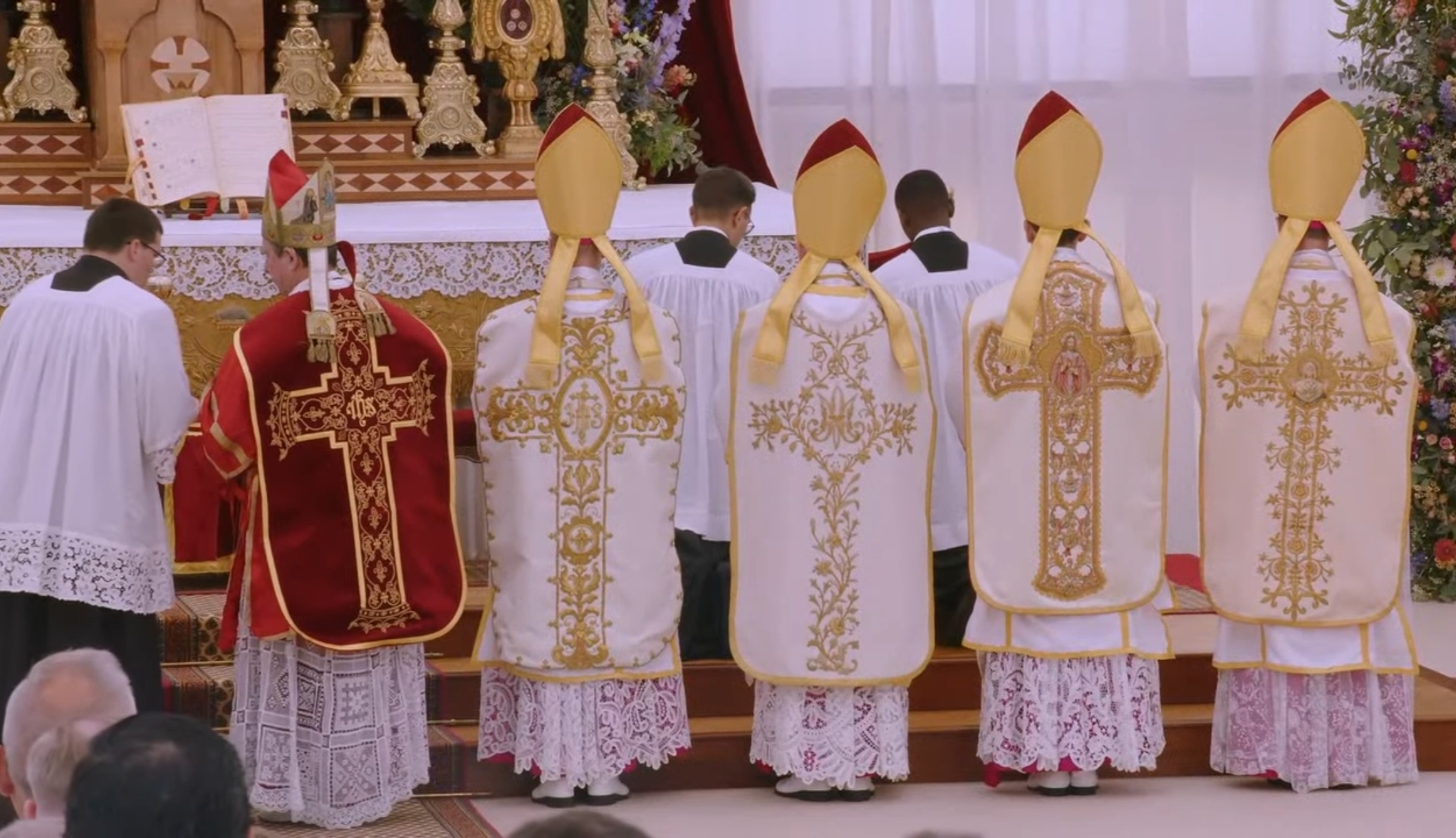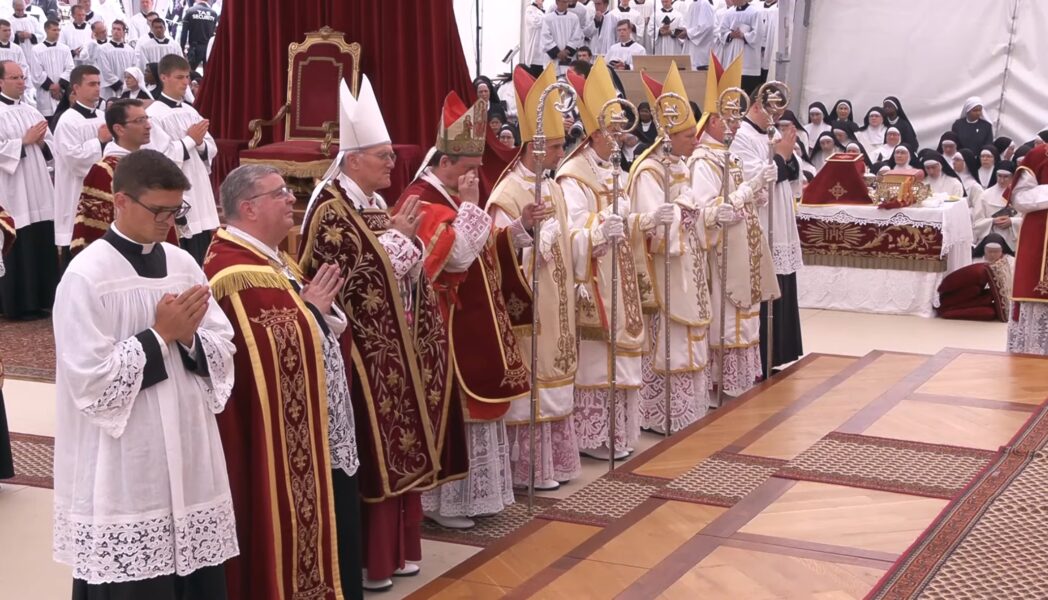
Écône, July 1, 2026. A clear dawn breaks over the Rhône Valley on the feast of the Most Precious Blood of Our Lord Jesus Christ. From early morning, buses keep arriving at the International Seminary of St. Pius X, and a large tent—very similar to the one the whole world saw in 1988—fills once again with faithful from all over Europe. The sky, clear for now, threatens rain toward the end of the morning; yet nothing seems to dampen the atmosphere of expectation that can be felt in Écône.
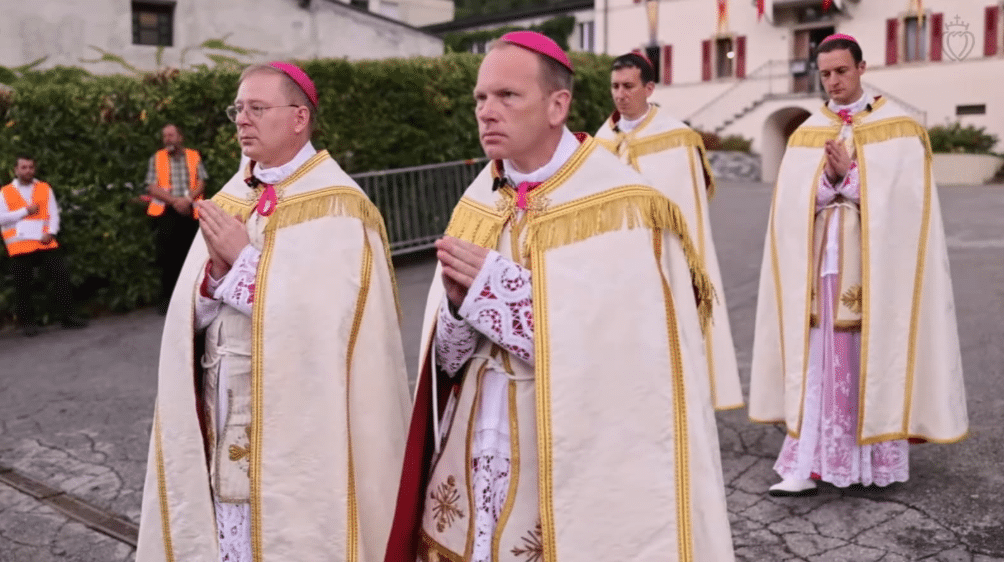
- The entrance procession begins with seminarians, deacons and priests, followed by the four bishop-elects: Pascal Schreiber, Michael Goldade, Michel Poinsinet de Sivry and Marc Hanappier. The procession concludes with Bishops Bernard Fellay, Alfonso de Galarreta and the Superior General of the SSPX, Fr. Davide Pagliarani.
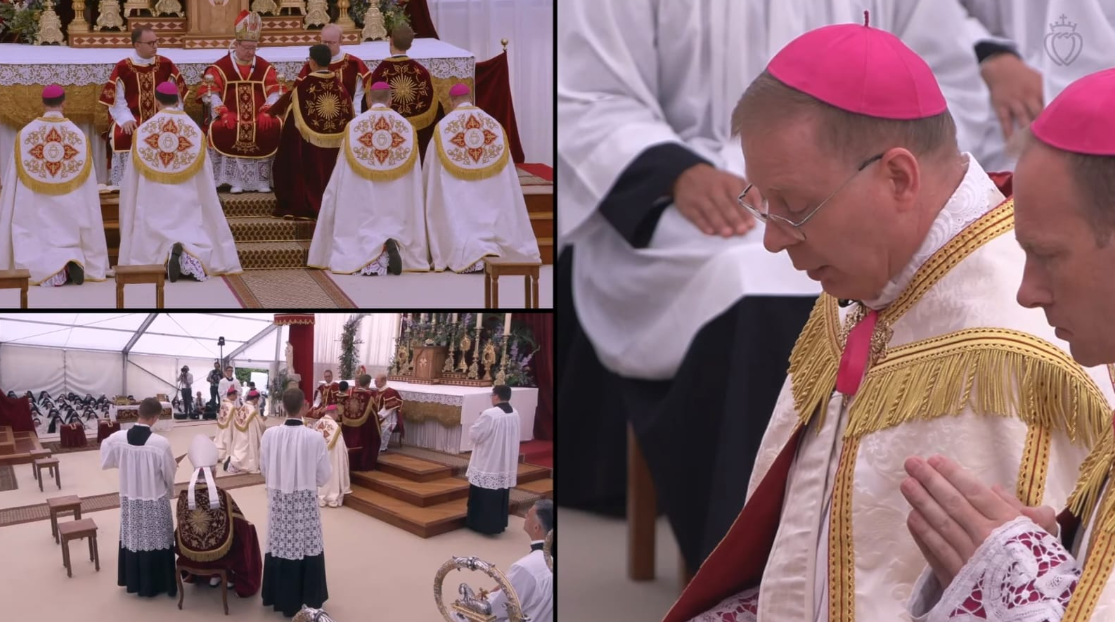
- The reading of the mandate foreseen for the ceremony takes place. The ritual itself explains that, given the particular circumstances of these consecrations, this point had to be adapted from ordinary practice. The Secretary General proceeds to read a clarifying note: «It is the Roman Catholic Church, ever faithful to the traditions received from the apostles, which in completely exceptional circumstances requires us to return to the preservation of those same traditions, that is: the deposit of faith and to take the necessary measures to continue transmitting it to all men for the salvation of their souls. Considering that since Vatican II until our day, the authorities of the Church are imbued with a spirit contrary to that of the faith and act against holy tradition, (…) before God we consider it a sacred duty toward the Holy Church and souls to proceed to the consecration of bishops fully faithful to holy tradition and to the constant magisterium of the Church (…) «, after which he presents the priests who have been elected as the new bishops.
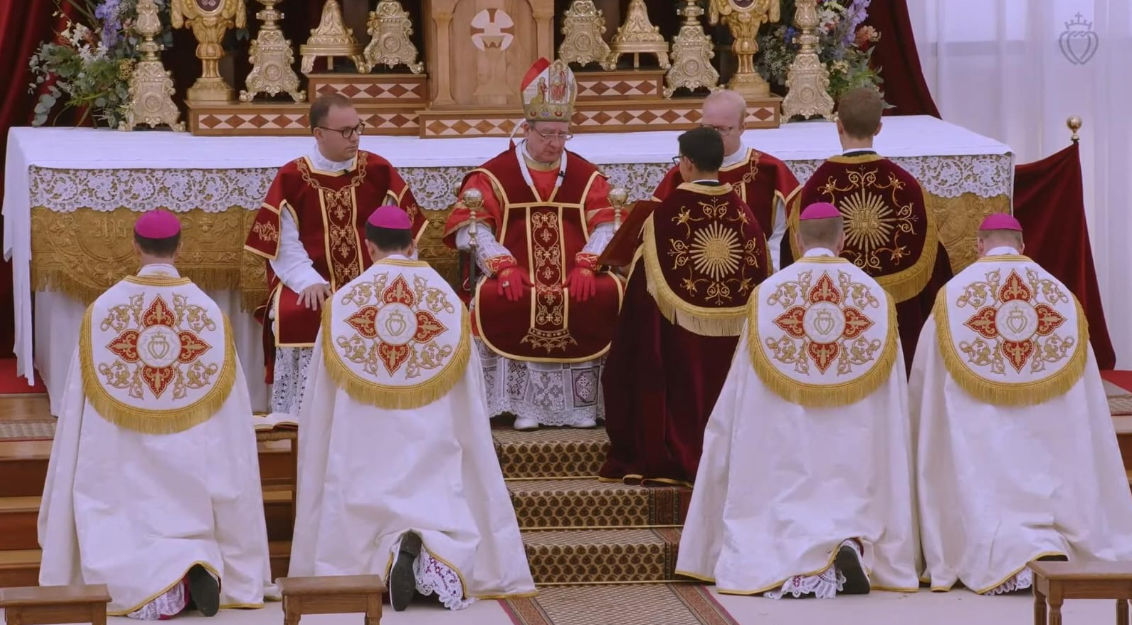
- Fr. Pascal Schreiber makes the medieval oath of fidelity and obedience to the Apostle St. Peter, to the Pope and to his successors, followed by the other three priests. He concludes by placing his hands on the Gospel to confirm his promise.
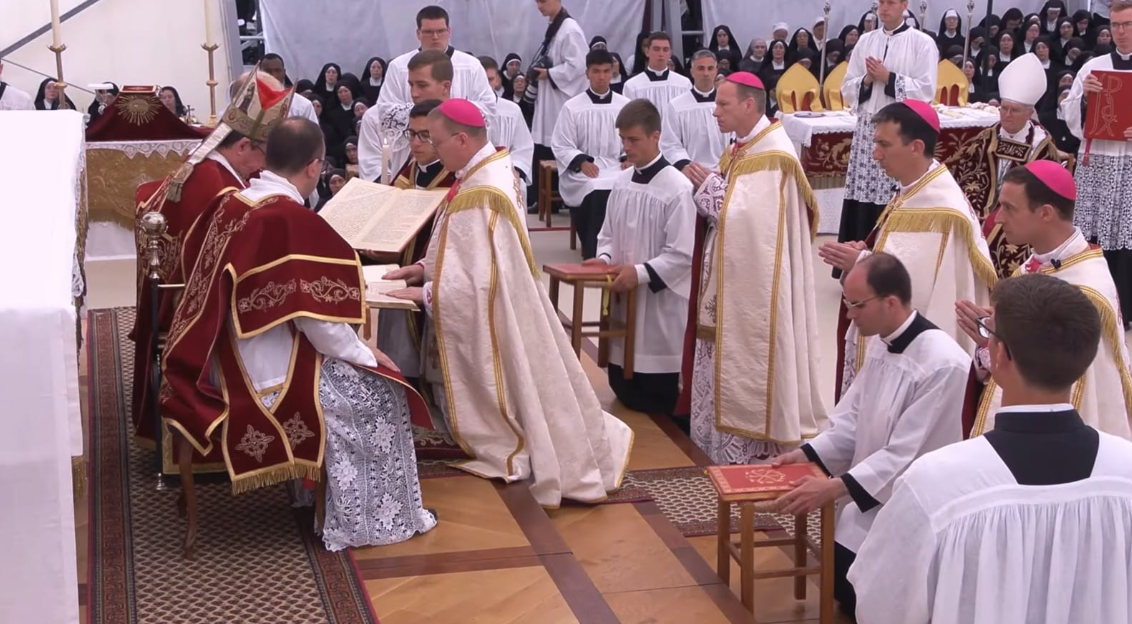
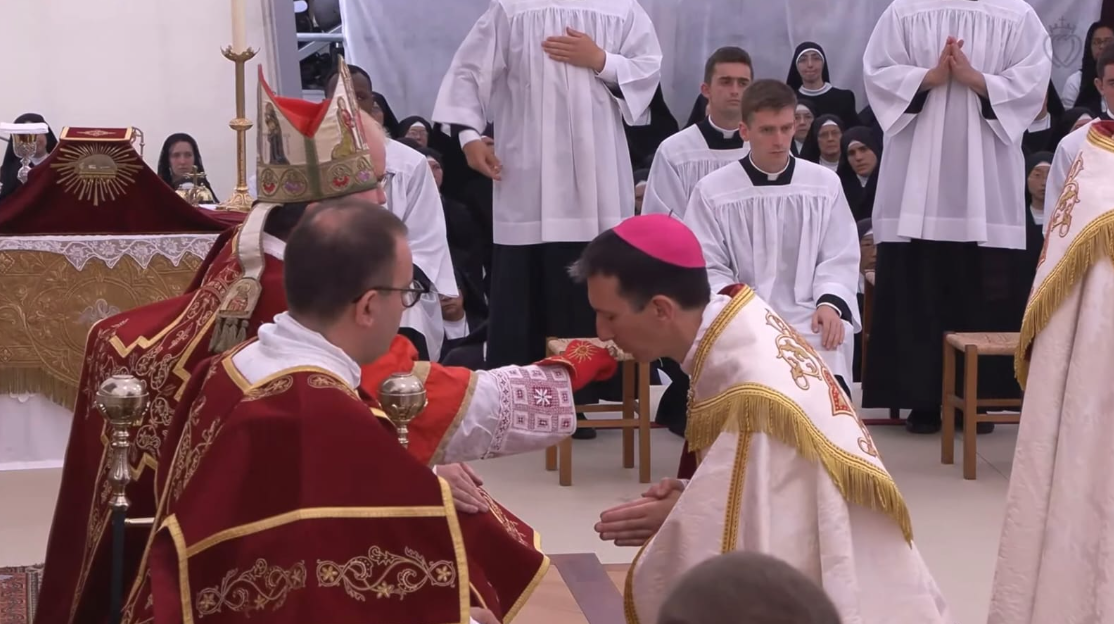
- Bishop Alfonso de Galarreta proceeds to the examination; the candidates answer «Volo» to the questions concerning the Catholic faith, doctrine, moral life and the proper obligations of the episcopate. They then kiss the ring of the consecrating bishop. Once the preliminary rites are completed, the votive Mass of the Most Precious Blood according to the 1962 Roman Missal begins.
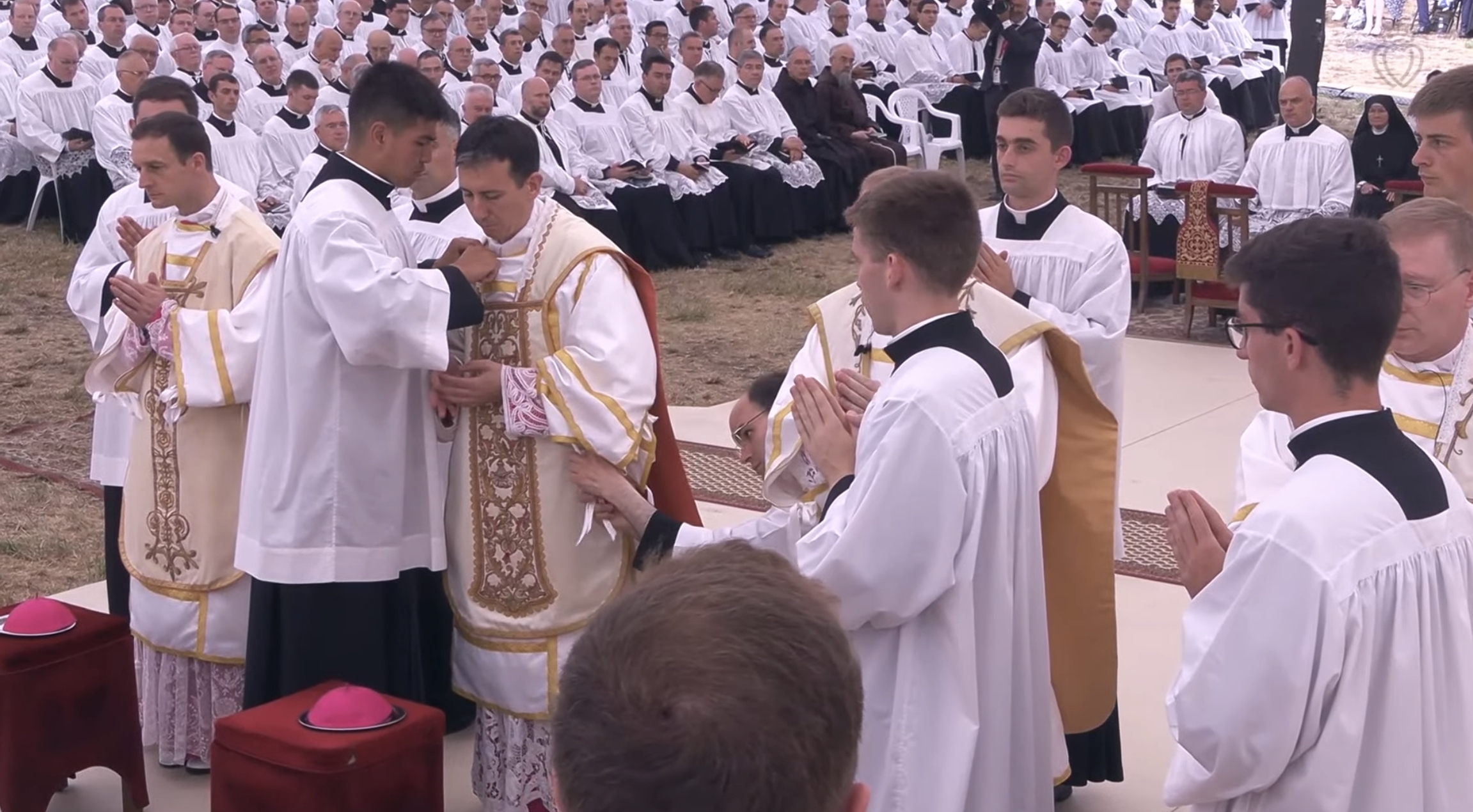
- During the initial prayers of the Mass, the elect are vested with the insignia proper to the episcopate: pectoral cross, tunic, dalmatic and pontifical chasuble. The celebration continues with the Gloria, the proper prayers of the day and the proclamation of the Epistle.
-
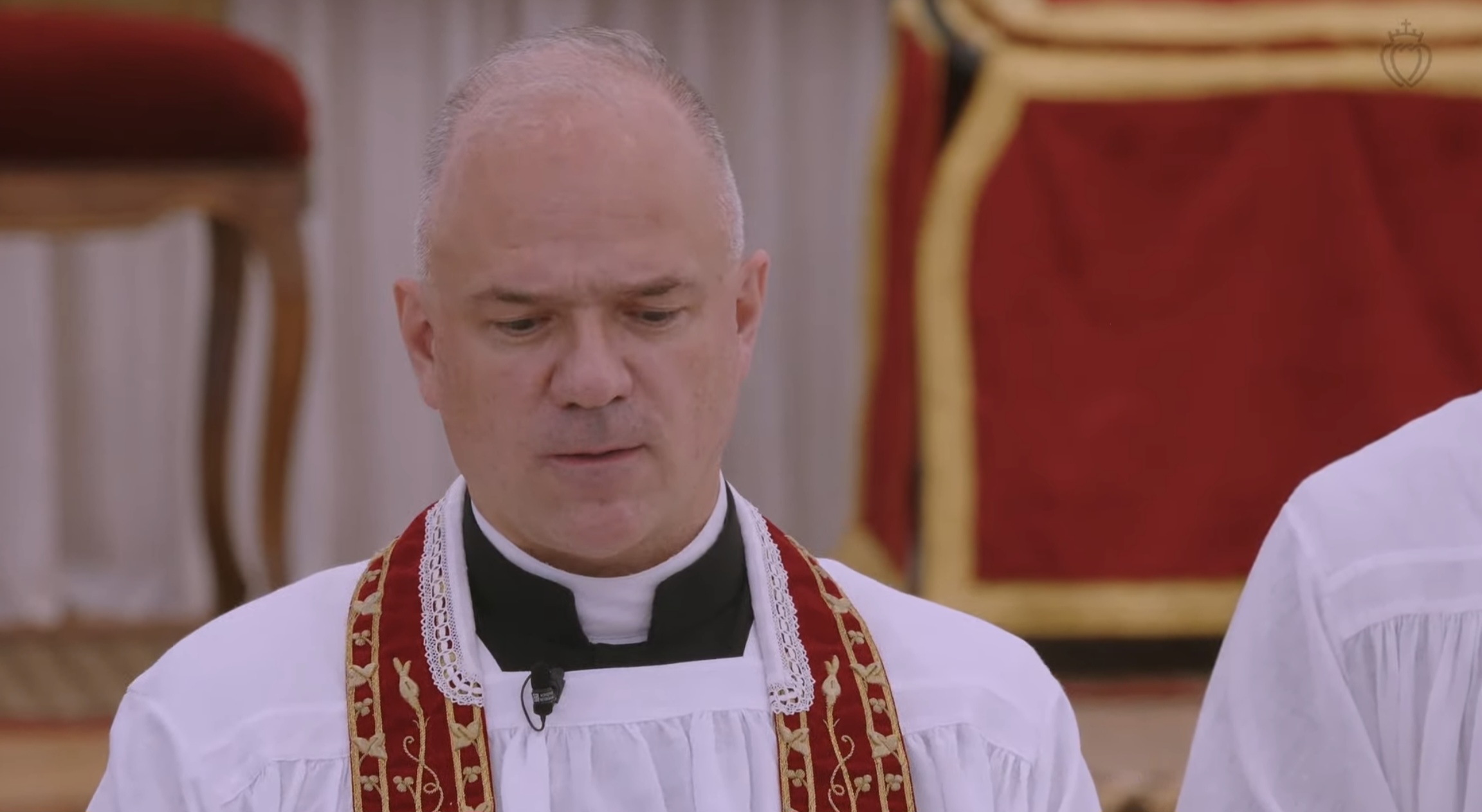
After the Gradual, the homily delivered by the Superior General of the Priestly Fraternity of St. Pius X, Fr. Davide Pagliarani, begins. In his address he justifies the episcopal consecrations as a response to the present situation of the Church: “Today we take exceptional means that are proportionate to the needs of the Church today.”
Pagliarani also rejects the idea that these consecrations imply a rupture with the Church: “Are we in the process of choosing between faith and the Church— to keep the faith, are we separating ourselves from the Church? It is a false dilemma.” He adds: “We belong to the Church by the integral profession of the faith. We cannot choose between faith and belonging to the Church; no one can make that choice. We want the faith of the Church in order to remain within the Church, and we want the Church for the sake of the faith, in the faith.”
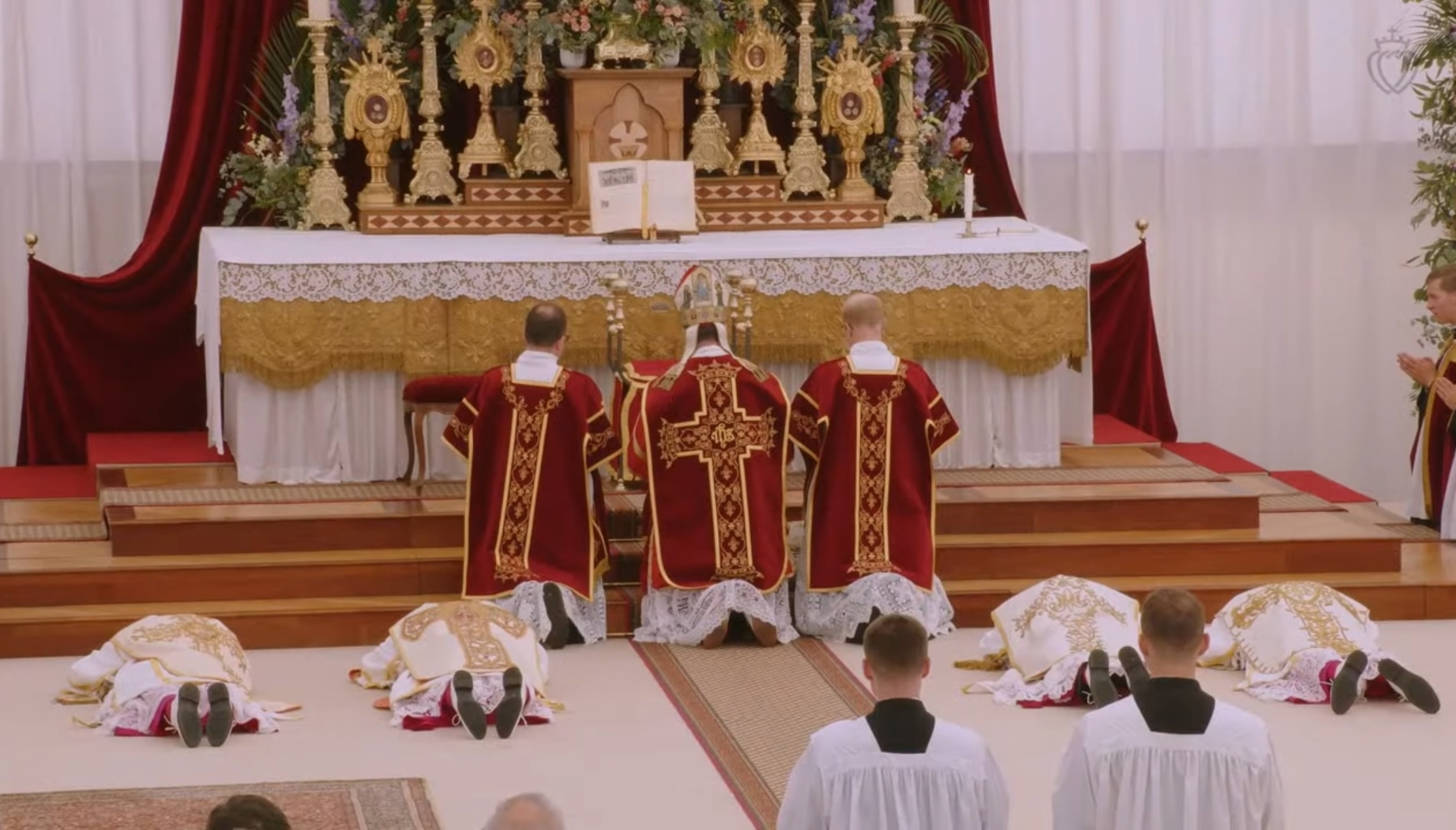
- The episcopal consecration begins. The elect prostrate themselves face down while the entire assembly invokes the intercession of the saints by singing the Litany of the Saints.
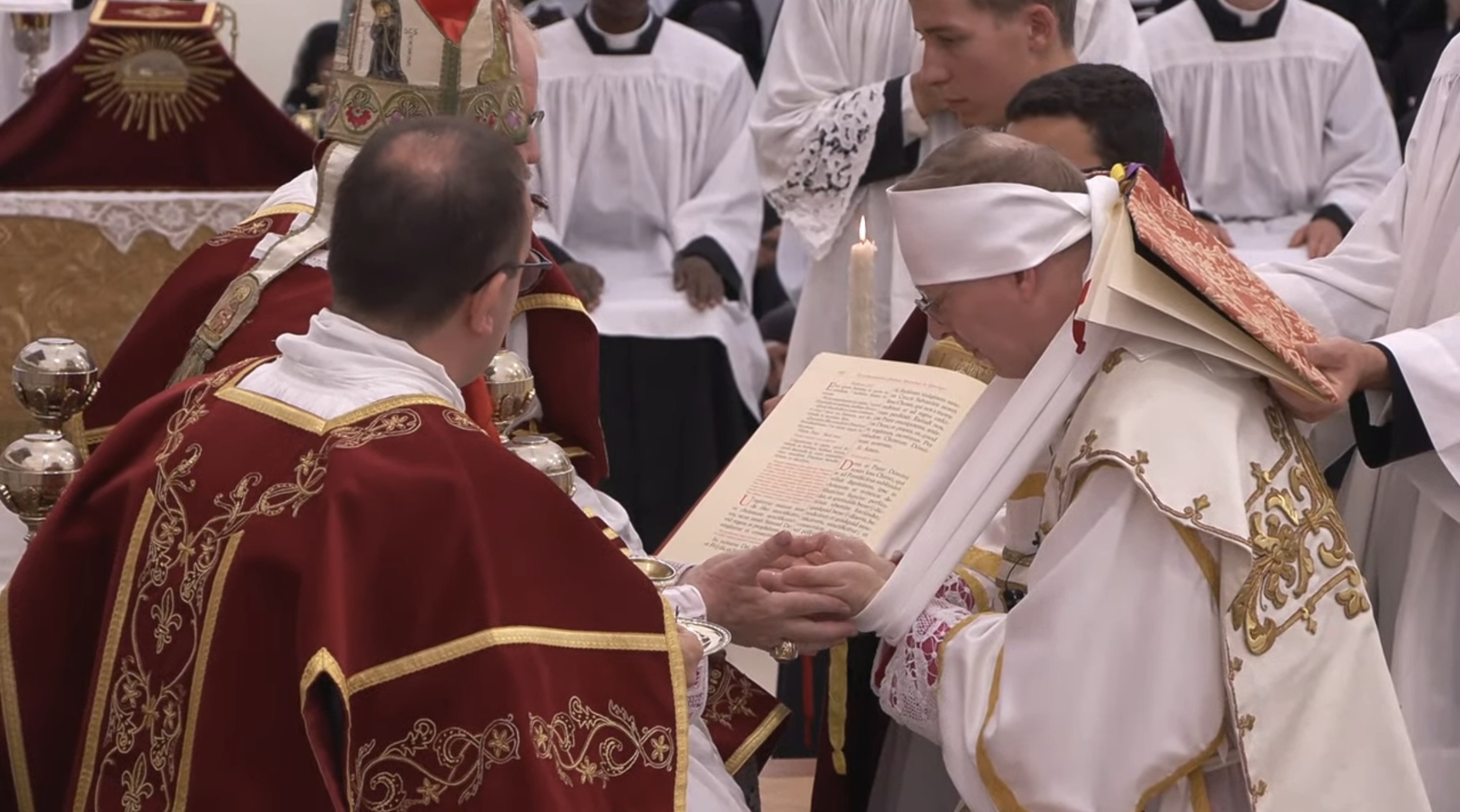
- Imposition of hands. The consecrating bishop and the assisting bishops lay their hands on each of the elect, pronouncing the words: “Receive the Holy Spirit.” The consecrator recites the great preface of episcopal ordination, imploring the descent of the Holy Spirit upon the new bishops.
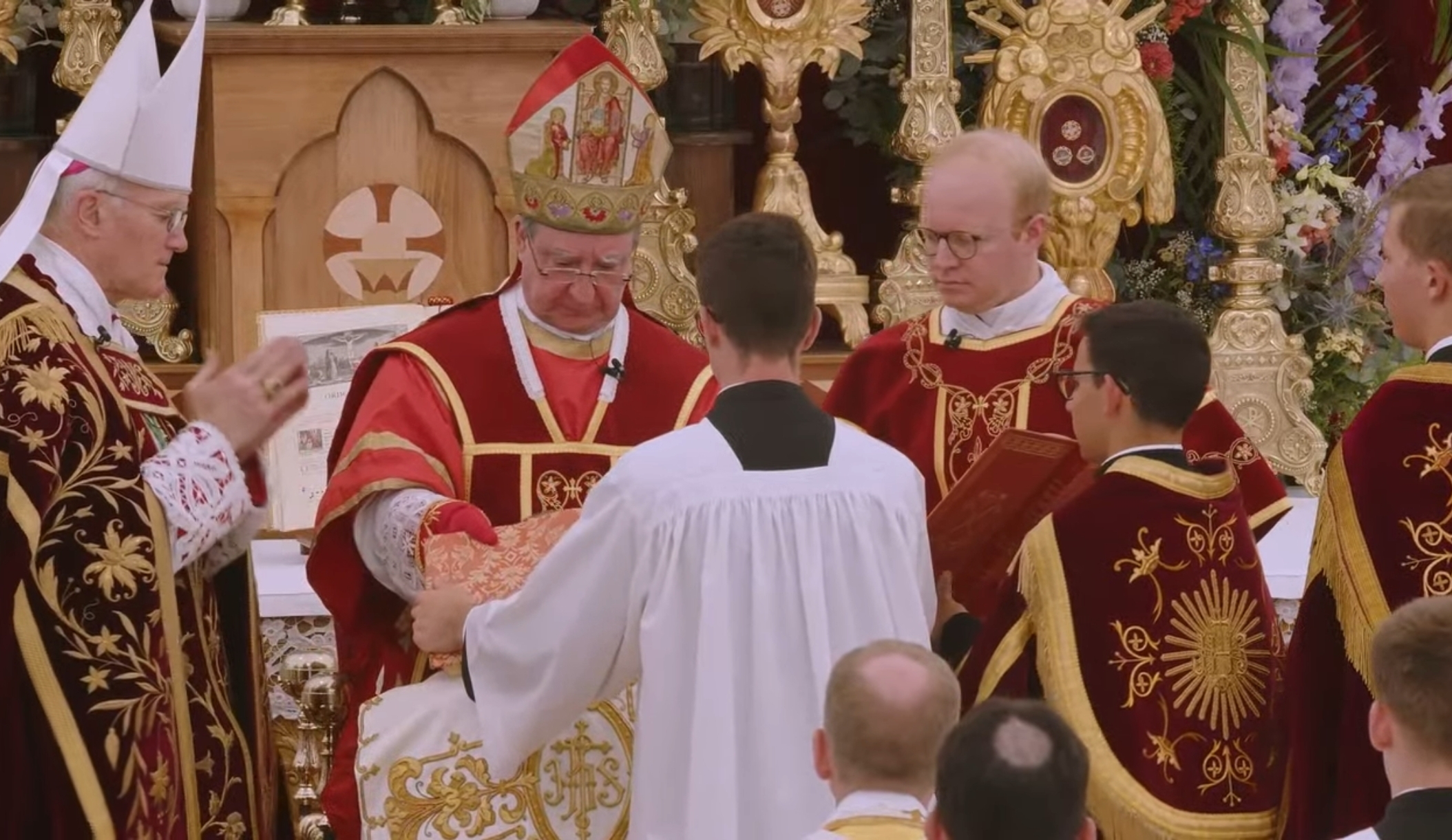
- During the singing of the Veni Creator Spiritus the essential rites of episcopal consecration are performed: the consecrating bishop anoints with holy chrism the head and hands of the new bishops, who subsequently receive the crozier, the episcopal ring and the Book of the Gospels as signs of their new ministry. After the kiss of peace, the celebration continues with the Holy Mass, the proclamation of the Gospel and the recitation of the Creed.
- The eucharistic liturgy begins with the offertory. The newly consecrated bishops concelebrate with the consecrating bishop the pontifical High Mass according to the traditional rite, participating for the first time in the eucharistic sacrifice with the fullness of the priesthood received during the ceremony.
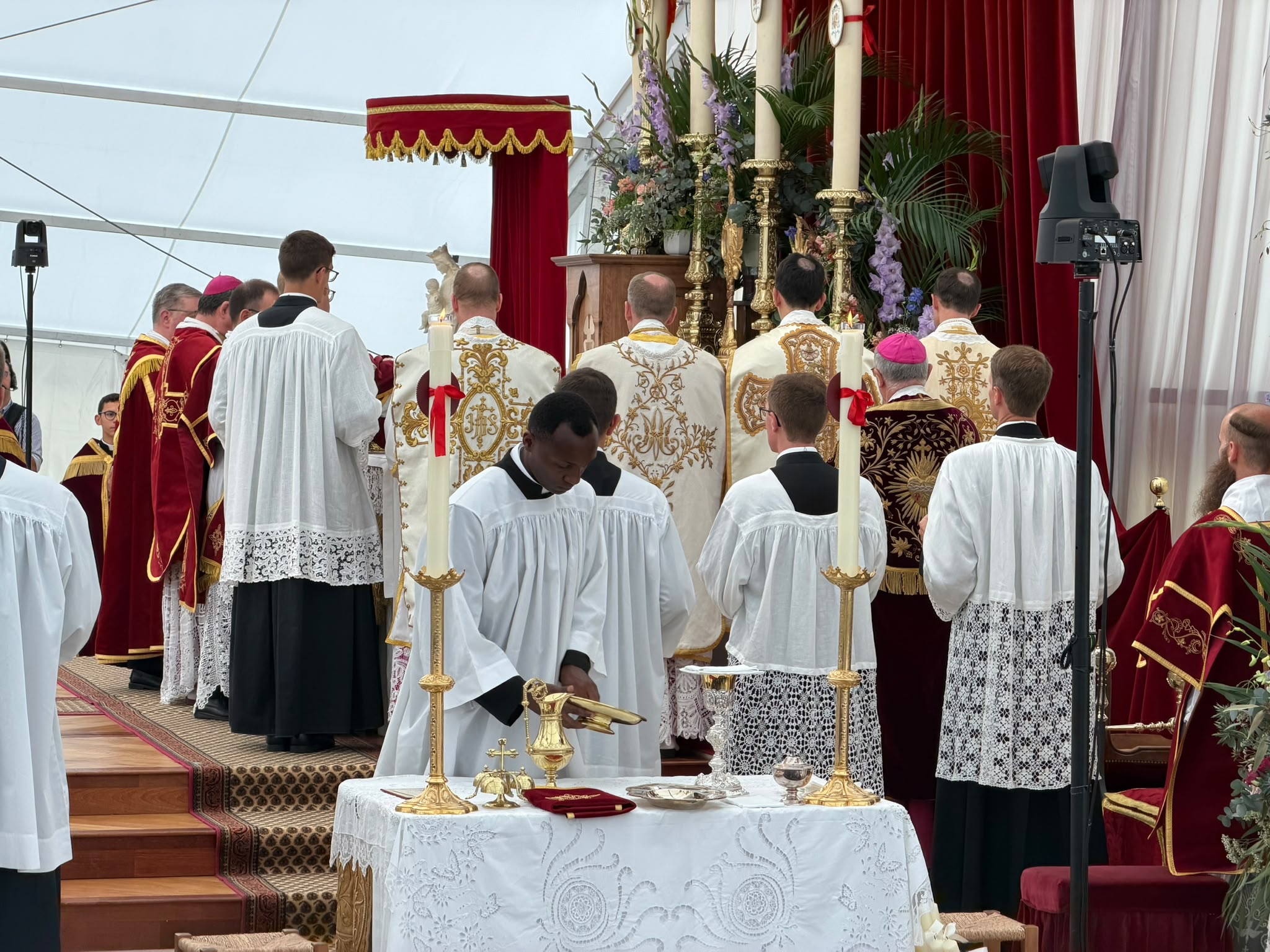
- The new bishops concelebrate with the consecrating bishop one and the same Mass, receiving a portion of the same Host and drinking from the same Chalice, a rite which the Roman Pontifical itself presents as a practice that “goes back to the most remote antiquity” and which expresses the intimate union between episcopal consecration and the eucharistic Sacrifice.
The rite preserves an exceptional form of concelebration proper to ancient usage: it is not an ordinary or large-scale concelebration, but a practice traditionally linked to particularly solemn moments, such as episcopal consecrations and priestly ordinations. In this form, the consecrating bishop retains the principal place and the newly consecrated participate by receiving from him a portion of the same Host and drinking from the same Chalice, underscoring the hierarchical character of the rite and the unity of the priesthood around a single eucharistic sacrifice.
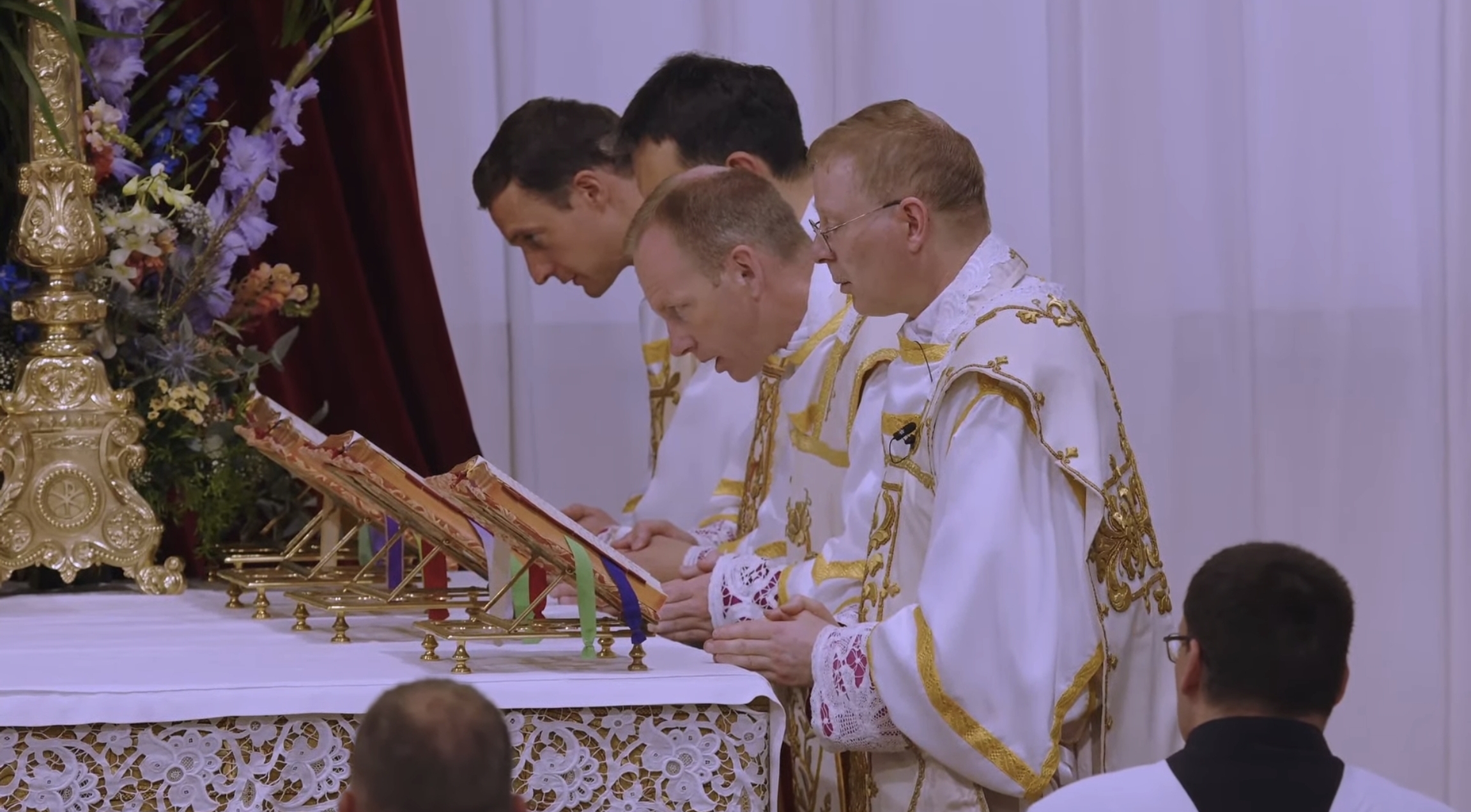
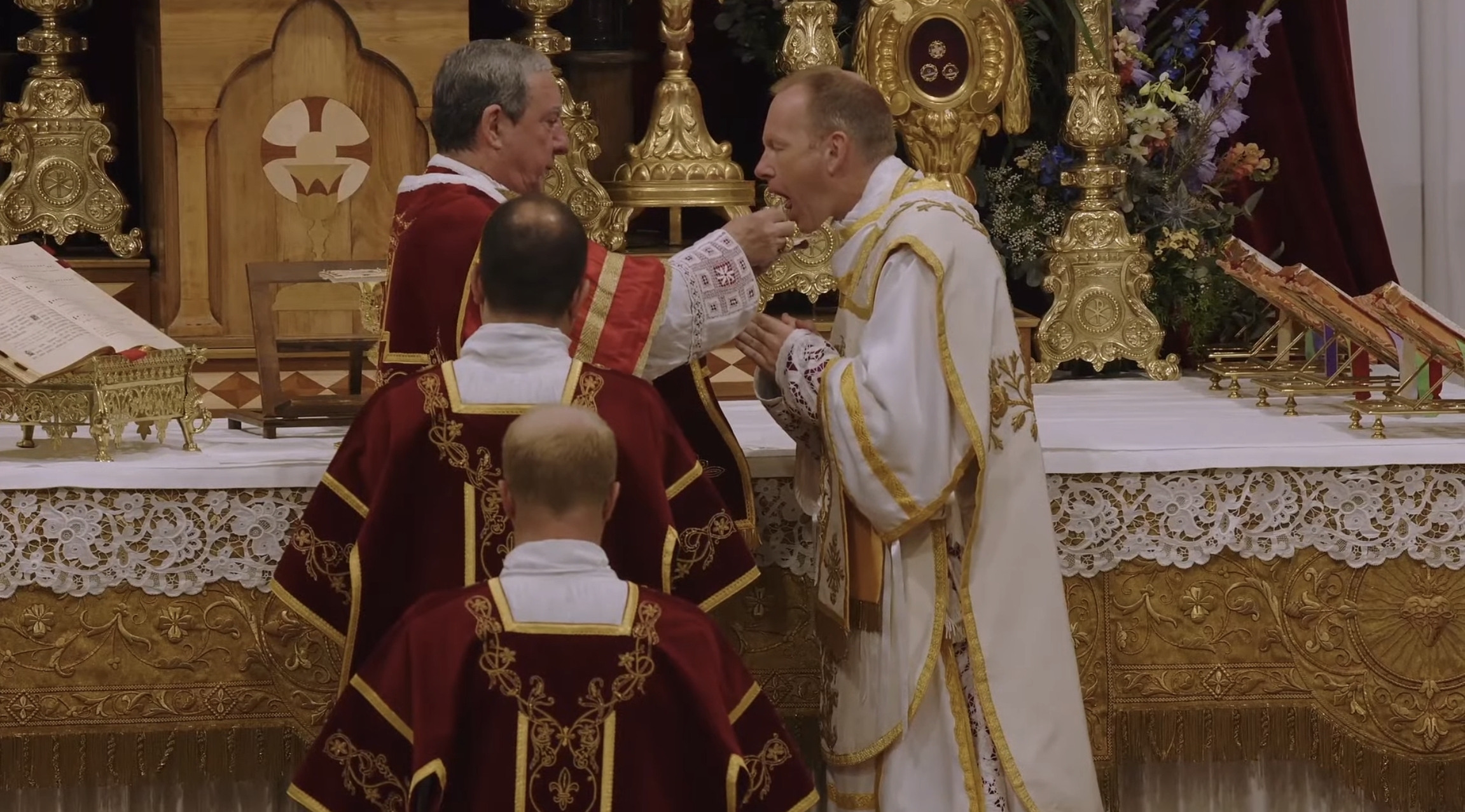
- After the recitation of the Our Father, the fraction of the Bread and the Agnus Dei, the consecrating bishop communicates first under both species and then administers Holy Communion to the newly consecrated bishops.
- Once the Mass is concluded, the third and final part of the ceremony begins. The new bishops receive the insignia that remained to be conferred, among them the mitre and the pontifical gloves. They are then solemnly enthroned: the consecrating bishop leads them one by one to their cathedra and hands them the pastoral staff. While the Te Deum is intoned in thanksgiving, the newly consecrated bishops walk through the church imparting for the first time the episcopal blessing to the faithful. Once the hymn is finished, they return to the sanctuary for the act of homage, before concluding the celebration with the solemn recessional.