


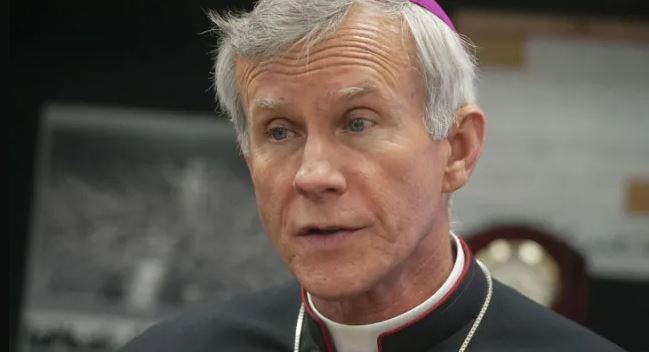
Bishop Emeritus of Tyler (Texas), Joseph E. Strickland, has published an extensive reflection on the Priestly Fraternity of Saint Pius X (FSSPX) in which he invites readers to contemplate its history from a spiritual rather than an exclusively juridical perspective. With the countdown nearly at its limit regarding the announced episcopal consecrations in Écône, the prelate maintains that it is “difficult to deny the love” that has driven, for more than half a century, the priests, religious, and families connected to the work founded by Archbishop Marcel Lefebvre.
Drawing on Saint Paul’s teaching about the primacy of charity, Strickland affirms that any judgment on the situation of the FSSPX must always be oriented toward the salvation of souls and recalls that “truth can never be separated from charity, nor charity from truth.”
The heritage Lefebvre wished to preserve
The bishop invites us to remember the origins of the Priestly Fraternity of Saint Pius X and the motivations that led Archbishop Marcel Lefebvre to embark on a path that brought him misunderstandings and personal sufferings.
“He did not undertake this path because it was easy, nor because it brought him honor or tranquility,” Strickland writes. Although he acknowledges that the decisions made by the French archbishop may be open to debate, he considers it indisputable that Lefebvre acted convinced that “the Holy Sacrifice of the Mass, the reverent celebration of the sacred mysteries, the formation of holy priests, and the perennial teachings of the Catholic faith” were at risk of being weakened.
That same love for the spiritual heritage of the Church has continued to inspire, for decades, numerous priests, religious, and families who have accepted misunderstandings and sacrifices in order to hand on that legacy intact to future generations.
“It is difficult to deny the love”
Strickland maintains that an honest examination of the Fraternity’s history reveals the high personal cost borne by many of its members.
“It is difficult to deny the love that has inspired countless sacrifices, vocations, families, and faithful souls who only wished to remain close to Our Lord and be faithful to the deposit of faith,” he states.
At the same time, he recognizes that Catholics may legitimately debate the prudence of certain decisions made over these fifty years, yet he believes that such analysis should not obscure the sincerity of the motivations that have guided so many of the faithful.
A call to reconciliation
Strickland recalls that ecclesiastical discipline exists to foster reconciliation and the good of souls, and he warns that it should never be applied in a way that obscures the sincere love many Catholics profess for Christ and His Church.
In this context, he raises a question that, he notes, many of the faithful are asking today: why some Catholics who publicly question established doctrines or moral principles seem to receive little correction, while those who seek to preserve the liturgical and doctrinal heritage of the Church face the severest sanctions.
In his view, these questions should not be dismissed but answered “with justice, wisdom, and charity.”
Praying for the unity of the Church
Far from fueling divisions, Strickland insists that no Catholic should rejoice over fractures within the Church and calls for prayer for full visible unity.
That unity, he affirms, cannot be built on suspicion or fear, but on mutual trust, humility, and the recognition of sincere love wherever it is manifested.
The bishop concludes by entrusting the situation to the Sacred Heart of Jesus and asking for prayers both for the faithful of the Priestly Fraternity of Saint Pius X and for the Pope, the bishops, and all those who bear responsibility for governing the Church.
“May those who have worked to preserve the sacred traditions of the Church continue to act with humility, fidelity, and love; and may those who must make decisions for the universal Church look deeply into the hearts of those before them, recognizing not only their actions but also the love that has inspired so many sacrifices,” Strickland concludes.