


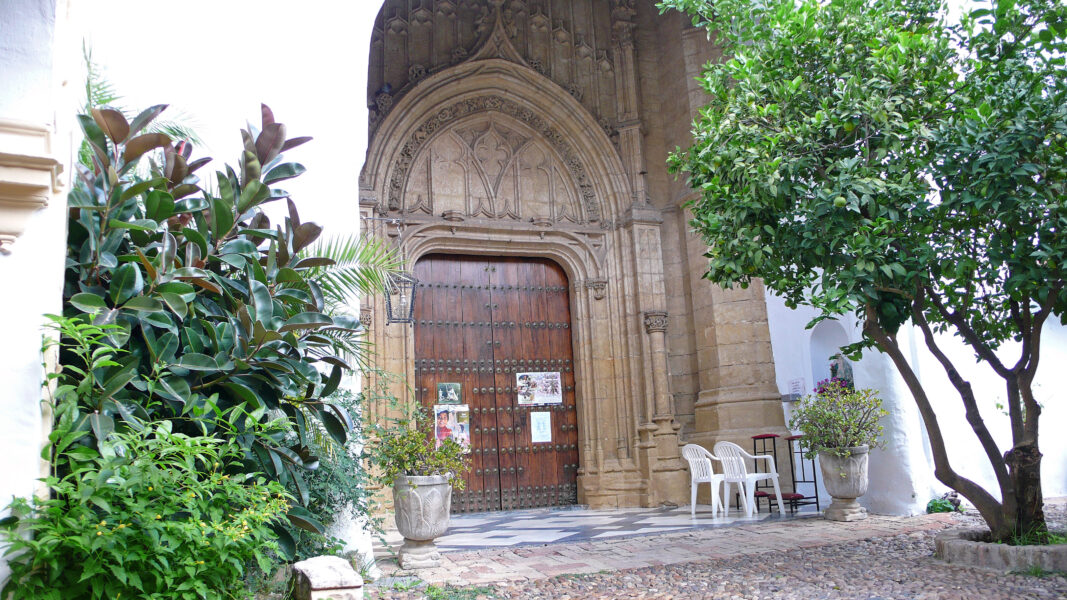
The death of Sister Fátima, the last nun of the Hieronymite monastery of Santa Marta, has left the oldest convent in Córdoba without a community, founded in 1464. The Hieronymite Order has not yet decided whether it will attempt to maintain monastic presence in the historic monastery or whether the closure will ultimately become definitive, as reported by ABC Córdoba.
With this case, the diocese of Córdoba has lost four enclosed female monasteries in barely a decade, a reality that reflects the difficulties facing contemplative life in much of Spain.
The last nun of Santa Marta
Sister Fátima passed away on June 15 at the age of 99. She had entered the monastery in 1943 and, for more than eight decades, lived according to the Hieronymite charism of prayer, silence, and community life. Over the years, she witnessed the disappearance of the other nuns in the community until she became the only nun belonging to the monastery and also served as prioress.
In recent years she was accompanied by Sister María de Gracia, a nun from the Hieronymite monastery of Nuestra Señora de los Ángeles in Constantina, temporarily assigned to care for her due to her advanced age. Following Sister Fátima’s death, the nun has returned to her original community, leaving the monastery empty.
Four communities disappeared since 2016
The case of Santa Marta is not an isolated event. In the last ten years, Córdoba has seen the disappearance of four female contemplative communities.
In 2016 the convent of the Poor Clares of Santa Isabel de los Ángeles closed; a year later the monastery of the Immaculate Conception, known as the Cistercian, did the same. Last autumn the closure of the monastery of the Visitation, of the Salesian nuns, was also announced. Now, the disappearance of the Santa Marta community worsens a trend marked by the scarcity of vocations and the progressive aging of the nuns.
In all these cases, the respective orders attempted to keep the communities open, but the reduction in the number of nuns ultimately made their continuity unfeasible.
The future of the monastery remains open
For the time being, the Hieronymite Order has not announced whether it will attempt to restore monastic life at Santa Marta by bringing nuns from other communities or whether the closure will ultimately become definitive.
This would not be the first time such a solution has been sought. In previous years the monastery welcomed nuns from India, as other religious orders have also done to sustain communities affected by the lack of vocations in Spain. However, those incorporations did not succeed in consolidating the continuity of the convent.
Until a definitive decision is made, the intention is to keep the monastery church open for worship, where Sunday Mass is regularly celebrated and the traditional devotion to Saint Martha continues.
A long-standing concern
The difficulties of continuity at Santa Marta had been known for years. Already during his episcopate in Córdoba, Monsignor Juan José Asenjo warned of the importance of preserving this monastery and even stated that “Córdoba needs Santa Marta,” referring to the spiritual value the contemplative community represented for the diocese.
In addition to the uncertainty about the future of the community, the question of the conservation of the convent complex, one of the oldest and most significant in the historic center of Córdoba, remains open.
Contemplative life seeks new paths
Despite the closures recorded in recent years, the diocese of Córdoba currently maintains seventeen enclosed female monasteries and three male contemplative communities.
While some female communities continue to face pronounced aging and a scarcity of new vocations, in recent years new male foundations have also emerged. This is the case of the Congregation of Camaldolese Hermits, established in the Los Pedroches region, or the consolidation of the Cistercian monks of Santa María de la Escalonias in Hornachuelos.
Alongside the closure of historic monasteries due to lack of generational replacement, new monastic initiatives continue to appear, showing that the contemplative vocation remains alive, albeit with a different implantation from the one that for centuries characterized numerous enclosed female communities.