


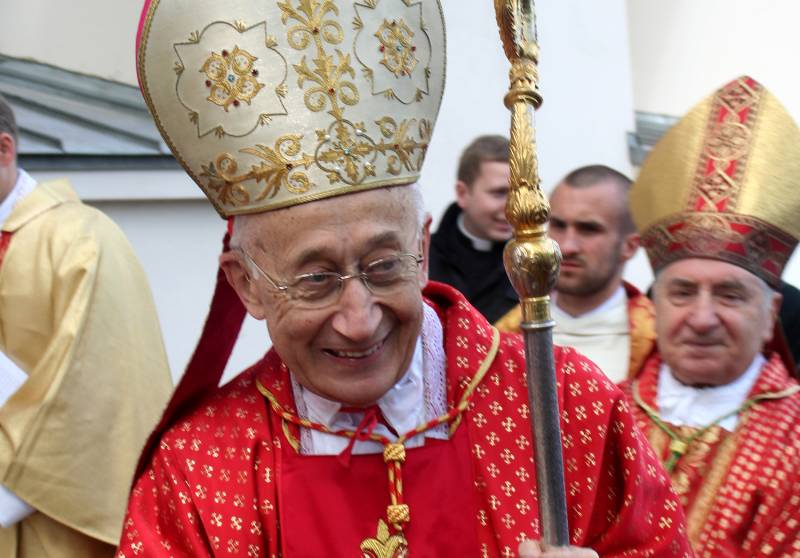
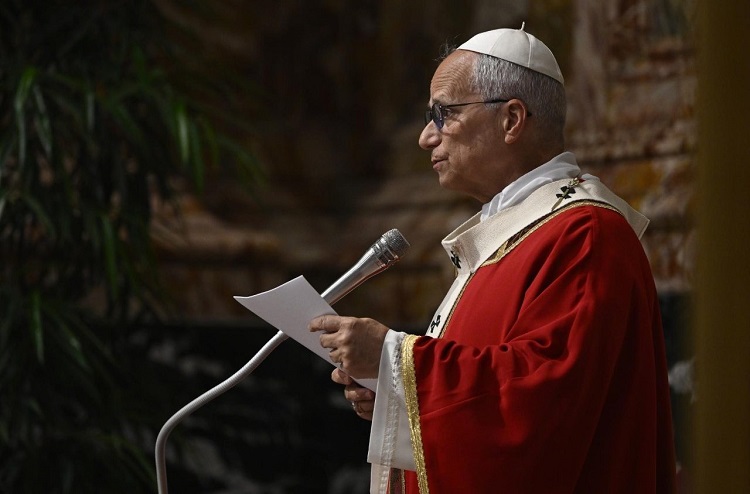
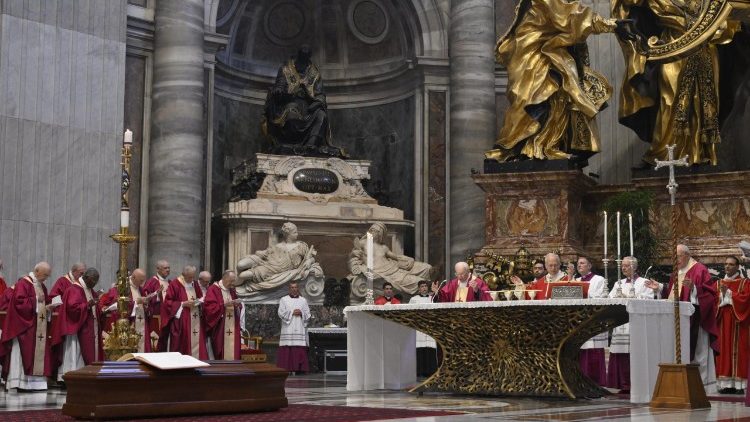
Pope Leo XIV presided this Thursday at St. Peter’s Basilica over the funeral of Cardinal Camillo Ruini, who passed away on June 16 at the age of 95. During the homily, the Pontiff recalled the long ecclesial career of the former president of the Italian Episcopal Conference and vicar general for the Diocese of Rome, highlighting his service to the Church, his profound spiritual life, and the enduring relevance of one of the principles that defined his entire ministry: “The truth will set us free.”
The celebration took place at the Altar of the Chair in St. Peter’s Basilica at 4:30 p.m. and was attended by cardinals, archbishops, and bishops. In a homily later released by the Holy See, Leo XIV described Ruini as a “wise and attentive shepherd” who served the Church with the same dedication both in discreet responsibilities and in the highest offices entrusted to him.
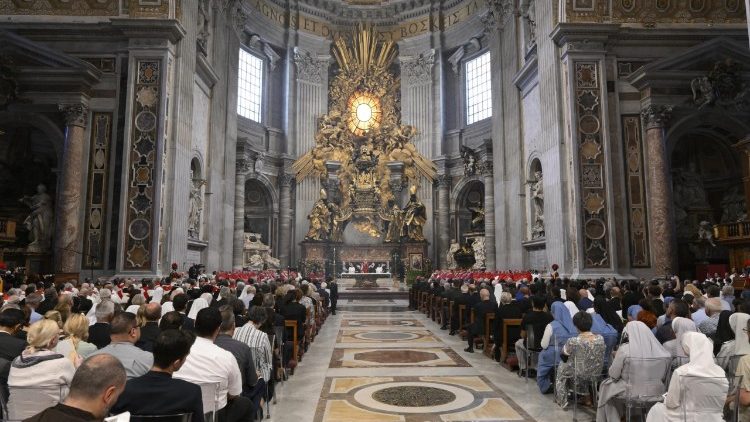
A shepherd at the service of the Church in Italy and in Rome
The Pope especially recalled the nearly seventeen years during which Ruini presided over the Italian Episcopal Conference, as well as the long period in which he served as the Pope’s vicar general for the Diocese of Rome.
“He knew how to guide the People of God and his brothers in the Episcopate through important and delicate moments, facing multiple challenges with enthusiasm, discernment, and courage,” Leo XIV affirmed.
During his homily, the Pontiff also evoked some of the initiatives that marked his ministry, including the so-called Cultural Project of the Italian Church, the work carried out in the Diocesan Synod of Rome, and his active presence in ecclesial, cultural, and social spheres.
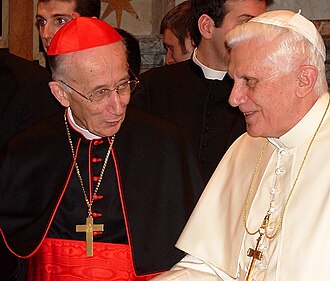
Ruini was one of the most influential figures in the Italian Church during the pontificates of Saint John Paul II and Benedict XVI. He presided over the Italian Episcopal Conference from 1991 to 2007 and served as the Pope’s vicar for Rome until 2008, becoming one of the main references of Italian Catholicism for more than two decades.
His name remained closely linked to the impetus given by Saint John Paul II to the public presence of Catholics in cultural and social life, especially in the years following the fall of communism and the profound political transformation Italy experienced in the 1990s.
Prayer as the foundation of a life
Leo XIV also wished to highlight the spiritual dimension that sustained the extensive ministry of the Italian cardinal.
He recalled that Ruini himself acknowledged on several occasions that prayer had been one of the constant pillars of his existence, from childhood to his final years marked by illness and physical frailty.
“One of the realities that accompanied him most from childhood was prayer,” the Pontiff noted.
The Pope also cited several passages from his spiritual testament, including a reflection in which the cardinal expressed gratitude toward the many people who accompanied him throughout his life and affirmed that he had received from them as much as he had tried to give.
The legacy of Saint John Paul II and Benedict XVI
During the homily, Leo XIV recalled the close collaboration Ruini maintained with some of the great protagonists of the contemporary Church.
The cardinal worked directly with Saint Paul VI, Saint John Paul II, and Benedict XVI. In particular, the Pope highlighted the relationship he maintained with John Paul II, of whom he was a close collaborator for many years.
In his spiritual testament, Ruini wrote that in the Polish pontiff he had been able to experience the union of prayer, life, and apostolate, as well as the courage of faith and the capacity to love and forgive.
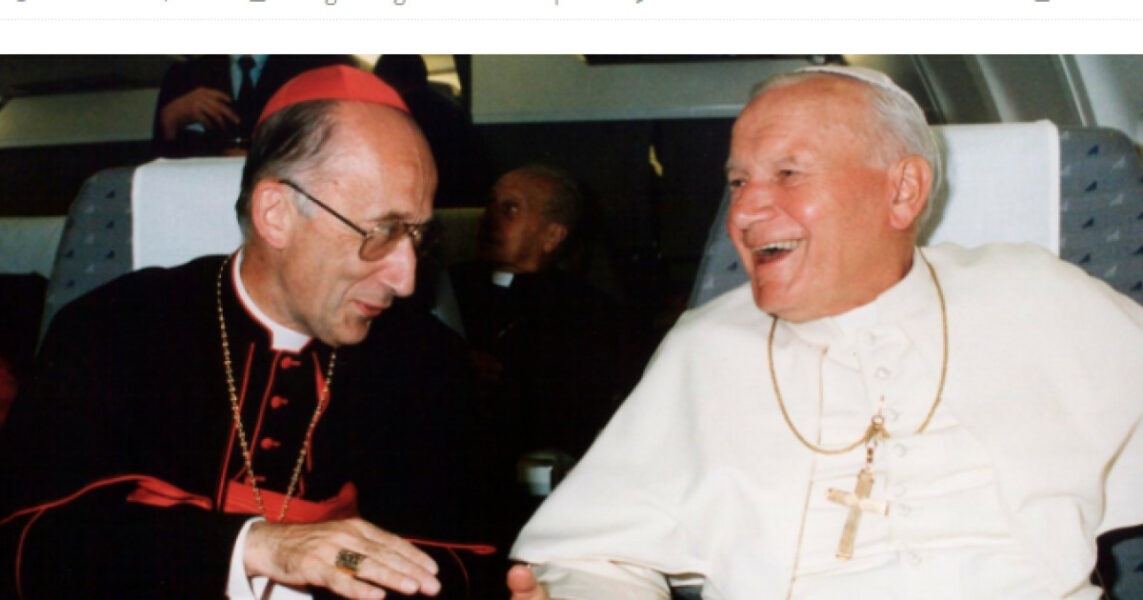
Leo XIV noted that many of those characteristics could also be recognized in the life of the cardinal himself.
After the election of Benedict XVI, Ruini continued to collaborate closely with the new Pope and took part in various cultural initiatives promoted during that pontificate. Even after stepping down from his main ecclesial governance positions, he continued to engage in the Italian ecclesial and cultural debate.
“The truth will set us free”
One of the central moments of the homily came when Leo XIV recalled the episcopal motto chosen by Ruini: Veritas liberabit nos (“The truth will set us free”), taken from the Gospel of Saint John.
According to the Pontiff, these words summarize a Christian conception of the human person and of freedom that runs through the entire life and ministry of the Italian cardinal.
“We are made for truth and for goodness, and only in them do we find unity, peace, and full fulfillment, both in earthly life and in eternity,” he affirmed.
Leo XIV added that this message retains special relevance in the contemporary cultural context.
“These words clearly remind us of a message that is particularly significant for our time, in which one can be disoriented by relativistic drifts and by entirely fluid visions of reality and of man,” he noted.
For the Pope, Ruini’s personal and ecclesial journey constitutes a testimony to the solidity a person acquires when placing the truth of God at the center of their existence.
A reference until the end of his life
Even after withdrawing from public life, Ruini continued to be a voice heard within the Italian Church.
In the spring of 2025, following the death of Pope Francis, he publicly stated that the future Pontiff should be characterized by solid doctrine, governing ability, a spirit of communion, and a commitment to strengthening the faith.
At the conclusion of the funeral rites, Leo XIV thanked those who accompanied the cardinal during his final years and asked for him “the reward of peace that has no end,” entrusting him to the mercy of God after a life dedicated to the service of the Church.