


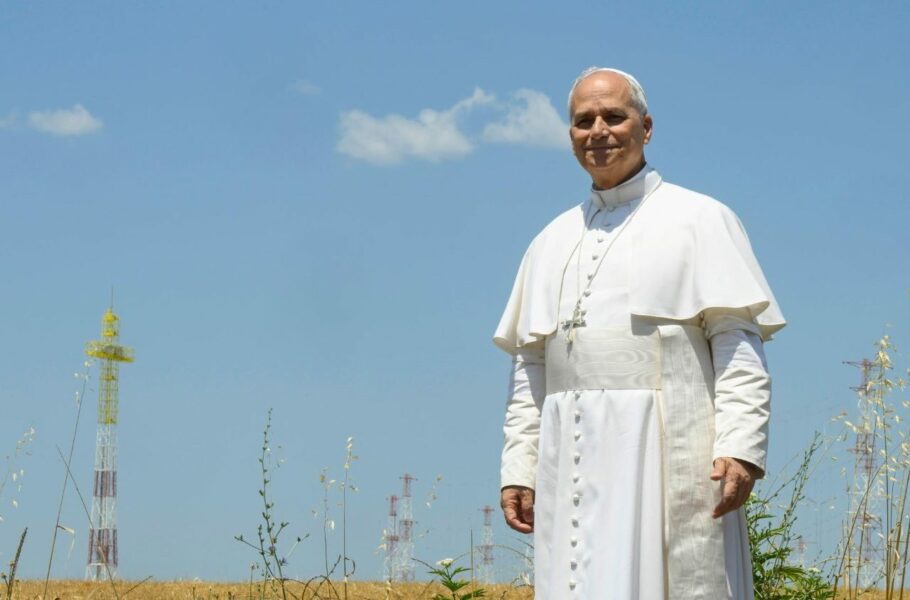
Pope Leo XIV participated this Tuesday via video message in the tenth edition of the Austrian World Summit, the international summit on sustainability and climate change held in Vienna. In his address, the Pontiff defended the need to promote a “just transition” toward economic models oriented to the common good, called for greater financial support for the poorest countries, and urged stronger international cooperation to address environmental challenges.
The message was addressed to participants gathered at the Hofburg Palace in the Austrian capital, where the Pope linked the climate crisis to broader economic and social problems, an idea he had already developed in his encyclical Magnifica Humanitas.
One of the most notable aspects of his intervention was his call for the most developed countries to increase financial support for the poorest and most vulnerable nations.
Leo XIV also called for a “just transition” toward economic models oriented to the common good and proposed moving toward an international financial framework that would enable less developed countries to address both economic challenges and the consequences of natural disasters.
The Pope also highlighted the contribution that religions can offer in caring for creation and recalled that for believers the world is a gift from God that must be protected.
He likewise insisted that responses to the ecological crisis must always place human dignity and the needs of the most vulnerable people at the center.
Full Message from Leo XIV:
I am pleased to greet all of you participating in the Tenth Austrian World Summit (Austrian World Summit). Sustainability, integral ecology, and care for creation have been matters of concern for many decades. The Church has always been aware that the ecological question has a moral dimension. Indeed, the environmental crisis “is not an isolated issue, but rather the ecological aspect of the contemporary socio-economic crisis” (Magnifica Humanitas, 43).
In your efforts to respond to the current crisis, I would like to encourage you to keep this broader context in mind and to propose three themes, based on the Christian virtues of faith, hope, and charity, which I trust may assist the work of this summit.
Allow me to begin with faith. Although for some, faith may seem to have little to contribute to issues of climate change and environmental protection, the religious dimension is, in fact, essential for adequately addressing these problems. Those who believe that our world was created by God and is intrinsically good are called to assume even greater responsibility in caring for creation, as their faith requires. “Living our vocation to be protectors of God’s handiwork is essential to a life of virtue; it is not an optional or a secondary aspect of our Christian experience” (Pope Francis, Laudato si’, 217).
Moreover, believers of many traditions understand “creation” as a divine gift. Likewise, various religions hold that life is sacred and therefore must be respected. We can say, then, that religious faith strengthens the common desire to protect life and care for nature.
This perspective underscores the deep ethical foundations to which I drew attention in my recent encyclical letter Magnifica Humanitas: the equal dignity of all human beings and the value of fundamental human rights, both properly safeguarded through the correct application of the principles of the common good, the universal destination of goods, subsidiarity, solidarity, and social justice (cf. Magnifica Humanitas, 51-81). These principles must “be considered together, so that it becomes clear how they relate to and complement one another” (ibid., 46).
These fundamental personal and social questions are intimately connected to the climate crisis, which, as I have noted, constitutes a manifestation—and a critical one—of the broader socio-economic crisis. Indeed, unless these issues are addressed, no technical solution aimed at protecting the environment will have any real chance of achieving the desired outcome.
From this perspective, we must pay particular attention to the poorest and those most vulnerable to environmental degradation. I would like to encourage you to keep them always at the forefront when evaluating, planning, and implementing possible projects.
This leads me to the second theme: hope. Due to the global nature of the challenges we face, it is evident that many people live with concern. There is, indeed, a growing awareness that peace is threatened by a lack of respect for creation, the plundering of natural resources, and the progressive deterioration in quality of life caused by climate change. These challenges require international cooperation, together with cohesive and forward-looking multilateralism, to find effective solutions.
However, in deliberations and negotiations on these issues, various fears often arise: fear of changing course, fear of losing power, and fear of uncertain outcomes. Only by overcoming these fears can we work together to find the right solutions.
I believe that it is precisely here that religious leaders and communities can offer a special contribution to supporting ambitious social and environmental initiatives, because the Bible is full of examples of how human fears can be overcome by hope, which ultimately is a gift from God.
From this perspective, despite skeptics or cynics, hope can be a powerful driving force. In this sense, it is not only desirable but also truly possible that the progress achieved at COP30 will give way to a just transition toward societies in which the common good prevails over economic profit and where economic models are rooted in solidarity and human dignity.
However, this requires that the wealthiest countries fulfill their obligations to provide financial support to the poorest countries. We also need the development of a new international financial framework centered on the person, ensuring that all countries—especially the poorest and those most vulnerable to climate disasters—can fully realize their potential, always respecting the dignity of their citizens (cf. Message to the United Nations Framework Convention on Climate Change, COP30, November 7, 2025).
Finally, I come to the theme of charity. I would like to emphasize the importance of cultivating an authentic culture of care for our environment, which includes what Pope Francis called “civic and political love” (cf. Laudato si’, 228-232).
This love is the key to authentic development, because “to make society more human, more worthy of the person, it is necessary to revalue love in social life—in the political, economic, and cultural spheres—making it the constant and supreme norm of all activity. (…) In this framework, together with the importance of small everyday gestures, social love urges us to devise broader strategies to halt environmental degradation and promote a ‘culture of care’ that permeates the whole of society” (Laudato si’, 231).
I hope that your deliberations will promote this culture of care and thus contribute to the civilization of love.
Dear friends, with these reflections centered on faith, hope, and charity, I pray that this summit may be fruitful in promoting the much-needed dialogue to find effective solutions that protect the wonderful gift of creation. And I gladly invoke upon all of you the gifts of wisdom and peace that come from God.