


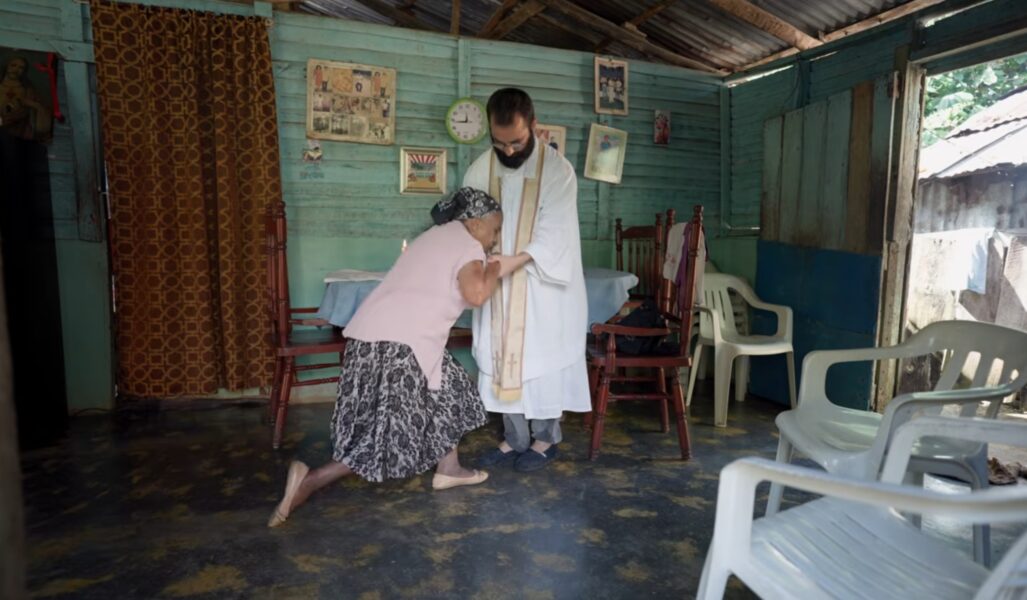
The second part of the documentary on the Priestly Fraternity of Saint Pius X leaves the seminaries behind and ventures into the field where vocation is truly put to the test: the missions. It does so with a narrative force and cinematic quality that once again surprise from the very first minutes.
The work begins in Meylan, France, with a shot of a fountain from which water flows, crowned by an image of the Sacred Heart of Jesus. There is much theology in many of the documentary’s shots. A priest appears there who tells us how he spent two decades as a missionary in the Philippines and who today, back in his homeland, leads a contemplative life. His experienced testimony, his nostalgia, and his deep faith serve as both an entry and an exit point into a reality unknown to many Catholics: that of the Fraternity’s priests working in some of the most difficult places in the world.
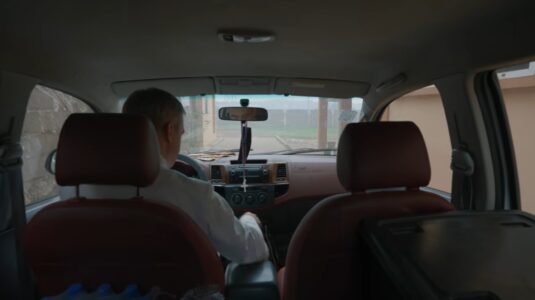
The camera accompanies the viewer to the very heart of the missions. It travels in precarious vehicles alongside portable altars in suitcases, crosses impassable roads, ventures into regions affected by malaria and dengue, shows makeshift chapels, hotels converted into places of worship, and communities living far from any stable ecclesial structure. The Philippines, Kenya, Nigeria, the Dominican Republic, and Japan are the settings where the cameras follow an apostolic work that impresses both by its reach and by its simplicity.
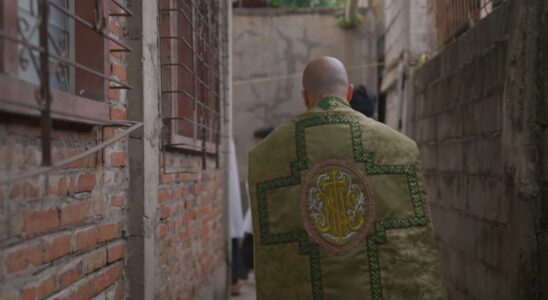
The visual beauty of the documentary is extraordinary. It is not merely about impeccable photography or carefully constructed framing. What is truly remarkable is the work’s ability to draw the viewer into the spiritual intimacy of missionary life. There are no artifices or triumphalism. The priests appear tired, worried, sweating under extreme climates, facing constant difficulties, and enduring conditions that few would accept without supernatural Grace.
Precisely for this reason the documentary is so convincing. Because it conveys authenticity. The broken roads, the deteriorated cities, the deficient infrastructure, and the countless material difficulties are not a backdrop. They are the everyday setting in which these priests carry out their apostolate.
One of the most striking aspects is realizing that the methodology of these missions is nothing new. There are no sophisticated pastoral strategies or complex programs. What appears again and again is the age-old Catholic method: preaching, catechism, the sacraments, and the Mass. The documentary clearly shows that the Fraternity remains convinced that evangelization is born precisely from this. And it is difficult not to feel challenged when witnessing the effectiveness with which this simplicity transforms entire communities.
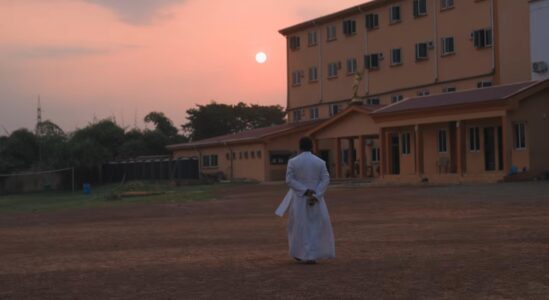
The mission in Japan helps connect the documentary’s narrative with the evangelizing archetype. There, the reference to Saint Francis Xavier appears naturally and helps link the present work with the Church’s great missionary tradition. The priest in charge of that mission also offers a particularly lucid reflection on the spiritual situation of his country and on the profound meaning of evangelizing in contexts where the secularization of recent decades has wreaked havoc.
Throughout Traditio, another inevitable question arises. The Fraternity appears as an institution that continues to carry out intense evangelizing activity in numerous countries while remaining subject to restrictions, misunderstandings, and conflicts with part of the ecclesiastical hierarchy. The film does not make this its central theme, but neither does it hide it. The priests and faithful themselves recount expulsions from chapels, difficulties imposed by bishops, and obstacles they encounter in the exercise of their ministry.
It is precisely here that “Traditio” raises an uncomfortable question. It is difficult to understand why those who dedicate their lives to bringing the sacraments, caring for the sick, celebrating funerals, catechizing children, and evangelizing remote regions continue to be treated as a marginal reality within the Church. The issue becomes even more striking when one observes the concrete scope of their work and the number of faithful who depend spiritually on these priests.
The documentary allows us to grasp something that often goes unnoticed. A fraternity deeply centered on the sacraments needs priests and needs bishops. Behind every Mass celebrated in a remote village, behind every baptism, every confession, and every sick person attended to, there exists a human structure that sustains an immense task. And that reality appears constantly on screen.
The conclusion imposes itself on its own. Beyond any canonical debate or the various interpretations of certain texts of the Second Vatican Council, what the viewer contemplates is a profoundly Catholic work centered on the salvation of souls. A work carried out with sacrifice, perseverance, and a faith that could hardly be sustained without a deep supernatural conviction.
More than a million people have watched the first part of this production. However, this second installment possesses a special force. It leaves the classrooms and seminaries to show the spiritual battlefield where the destiny of countless souls is at stake. And in doing so, it reminds us of something that many Catholics seem to have forgotten: that the essence of the mission remains the same as it was centuries ago. To bring Christ, to preach the Gospel, and to administer the sacraments.
The documentary expresses this without grandiloquent speeches. It simply shows men who have given their lives to that task. And in the end it leaves a feeling that is hard to ignore: perhaps the Church needs to look back precisely in that direction to remember who she is and what her mission is.
We would like to send a special message to all the bishops who read us and to all those who honor us every day with their visits from Rome and the Vatican. Please watch this documentary. Take your time and watch it, please.