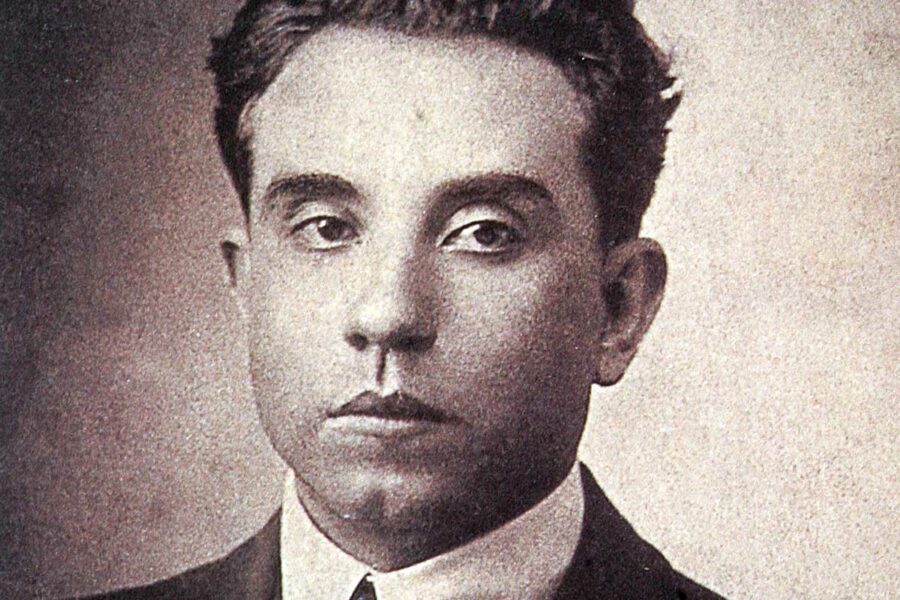
On April 1, 1927, at the Cuartel Colorado barracks in Guadalajara, a thirty-eight-year-old lawyer was hanged by his thumbs, whipped, stabbed in the soles of his feet, and finished off with gunshots. They demanded a name: the place where his archbishop was hiding. He did not give it. Anacleto González Flores died without betraying anyone, leaving behind his wife, two young children, and a phrase that spread across Mexico like a trail of gunpowder: “For the second time we have the joy of being able to shed our blood for the same ideal. I die, but God does not die.”
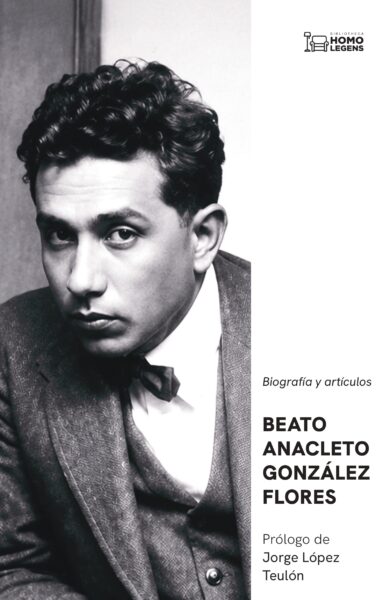
Almost a century later, that death returns to Spanish bookstores. Homo Legens has just published Beato Anacleto González Flores, a volume that brings together two voices separated by generations yet united by the same conviction. The first belongs to Father Alfredo Sáenz, S. J., the Argentine theologian whose series of biographies of figures of Christendom has become a reference work in Catholic thought in the Spanish language. The second is Anacleto’s own: a selection of the journalistic articles he wrote and circulated under persecution—combat texts that in their day reached clandestine print runs of one hundred thousand copies and that today are read with a disquiet hard to explain to anyone who has not opened them.
A layman, not a cleric
It is worth pausing to consider what Anacleto was not. He was not a priest or a bishop. He was not a Cristero guerrilla wielding a rifle in the mountains of Jalisco. He was a lawyer trained at the Escuela Libre de Derecho, a born orator, a pedagogue, a journalist. A layman.
That lay condition is what makes his figure both unsettling and, at the same time, most necessary. Anacleto understood before many others that the battle for the faith in public life could not be delegated to the clergy or resolved from the sacristy. He founded the Unión Popular of Jalisco, a civil resistance organization that mobilized tens of thousands of people, and directed the weekly Gladium, his platform and his weapon. His method was not violence: it was the organized word, economic boycott, mass conscientious objection, and the intellectual formation of the believing people. They called him “El Maistro” from his seminary years, when a priest recognized his talent and opened the doors of study to him.
The persecution that closed in on him had a name and a signature. The so-called Calles Laws—named after President Plutarco Elías Calles—pushed the anticlericalism of the 1917 Mexican Constitution to its extreme: expulsion of foreign priests, closure of churches, prohibition of public worship, and criminalization of religious education. The Mexican State did not merely separate itself from the Church; it decided to combat it, treating those who sustained it as criminals. In that context, Anacleto’s question ceased to be theoretical. What does a Catholic do when the law turns his faith into a crime? He answered with his life.
The “plebiscite of the martyrs”
The intellectual heart of the book—and what justifies recovering his articles rather than merely recounting his death—is a concept Anacleto coined with the lucidity of one who writes knowing he is condemned: the plebiscite of the martyrs.
The idea is devastating in its simplicity. A regime can falsify elections, buy votes, rig counts, and silence the press. There is, however, a suffrage that no power has ever managed to adulterate: that of the man who accepts death rather than renounce what he believes. The blood of the martyr is a vote that admits no fraud. When thousands of believers prefer prison, exile, or the firing squad to apostasy, they have issued a verdict that no state machinery can revoke.
Anacleto did not write this as a consoling metaphor. He wrote it as political diagnosis and as a program. Against a State that sought to decide from above what could be believed and what could not, he opposed the resistance of individual conscience multiplied by thousands. And he did so, moreover, without hatred toward persons: his struggle was always directed at apostasy as a cultural phenomenon, not at the specific men who carried it out. It is a distinction difficult to maintain under torture, and one he upheld to the end.
Why now, and why in Spain
This is where the book ceases to be an exercise in historical memory and becomes, uncomfortably, current.
Spain does not shoot Catholics. It does not close its churches or imprison its bishops. It would be a crude falsification—and an insult to real martyrs—to suggest otherwise. But the fundamental question Anacleto posed does not require bloody persecution to become relevant. It is enough that public debate shifts toward the conviction that faith is a strictly private matter, tolerable as long as it does not appear in the public square, suspect the moment it claims a place in the common conversation. It is enough that a believer senses that his faith is beginning to be treated as an oddity best kept hidden.
There, on that ground, Anacleto’s articles strike home. Because he did not write about how to die with dignity—though he did so—but about how to live the faith in public when the cultural climate pushes it to the margins. About the layperson’s responsibility not to wait for others to stand up. About intellectual formation as a condition of courage: one does not defend well what one does not know thoroughly. About the difference between pusillanimity disguised as prudence and true prudence, which knows when to remain silent and when to speak.
Reading Anacleto today is to realize that he did not need to know our era to describe it. He diagnosed the apostasy of the West—its lukewarmness, its comfort, its capacity to adapt to any pressure as long as it avoids discomfort—with a precision that, a century later, feels almost insolent. Not because he prophesied the future, but because he understood that the underlying temptations do not change: only their instruments do.
Sáenz’s signature
That it is Alfredo Sáenz who signs the biography is no minor detail. The Argentine Jesuit, doctor in Theology from San Anselmo in Rome and author of more than thirty books, devoted a good part of his work to recovering figures of Christendom that dominant culture had pushed aside. His gaze is neither that of the naïve hagiographer nor that of the cold historian: it combines documentary rigor with the passion of one who believes these lives have something to teach the present. In Sáenz’s hands, Anacleto is not a devotional image, but a thinker who deserves to be discussed.
The volume now arriving in Spain—378 pages in the Bibliotheca Homo Legens—thus offers two readings in one. Those seeking the story of a martyr will find a solid and moving biography. Those seeking intellectual ammunition for the present will find, in Anacleto’s own articles, a voice that writes with combative prose and the conviction of one who has already decided what he is willing to lose.
Beatified by Benedict XVI in 2005 and proclaimed patron of Mexican laity, Anacleto González Flores still cries out, from the final page, the watchword that led him to the Cuartel Colorado: Long live Christ the King! It is not a cry of nostalgia. It is, if read honestly, a question addressed to every reader. The same one he answered without hesitation.