


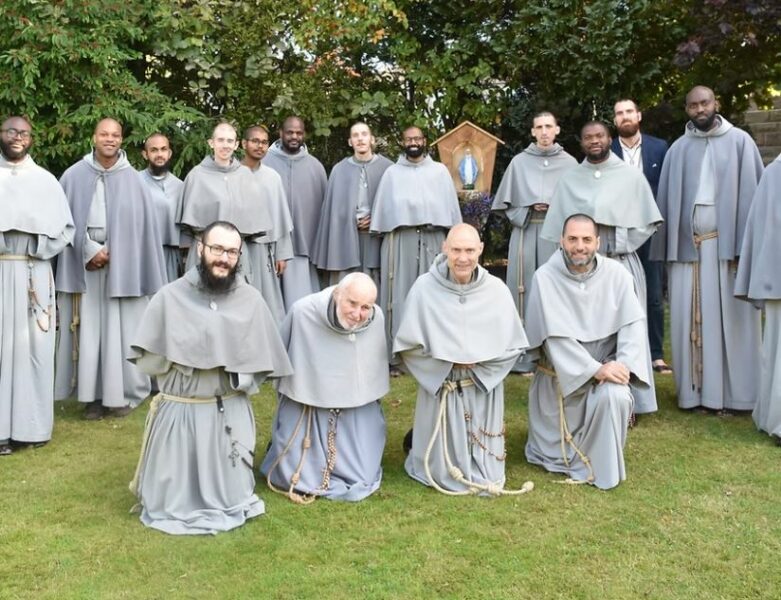
Just days after the dissolution of the Marian Franciscans in the United Kingdom, new information has come to light regarding the circumstances surrounding the closure of this traditional-spirituality community. While several accusations spread by anonymous sources point to possible internal problems, the friars themselves have publicly rejected those claims and maintain that the decision to request suppression was due to difficulties related to the community’s future viability.
The Family of the Immaculate Mary and St. Francis—the official name of the Marian Franciscans—ceased to exist as a public association of the faithful on 31 May, after its members formally requested dissolution.
The accusations that emerged after the dissolution
The debate over the reasons for the closure intensified after The Pillar published a report based on anonymous sources familiar with the community’s internal life.
According to those sources, concerns had arisen regarding safeguarding issues, alleged shortcomings in the admission process for candidates, ascetic practices considered excessive, and a presentation of the community that may have caused confusion about its canonical status.
The same sources also referred to the case of a former member who died after suffering mental-health problems.
To date, no diocese has published official findings confirming canonical or disciplinary irregularities on the part of the community.
The friars’ response
The Marian Franciscans responded directly to the accusations in a statement sent to The Pillar.
Regarding matters related to the protection of minors and vulnerable persons, the religious stated that they did not wish to respond to vague accusations lacking specific details. They also recalled that Bishop Philip Egan continues to allow priests incardinated in the Diocese of Portsmouth to exercise certain ministries and apostolates—an arrangement they consider incompatible with the existence of serious, proven concerns about the community.
Concerning the recruitment of candidates, the friars affirmed that applicants were required to undergo prior personal interviews, submit specific documentation, and provide medical reports before being admitted.
They also rejected allegations of supposedly harmful ascetic practices. According to their explanation, there is no evidence of physical harm caused by the community’s discipline, and they expressly denied that members were forced to consume spoiled food.
The question of canonical status
Another point raised by the anonymous sources was the way the community presented itself publicly.
The Marian Franciscans responded by recalling that they had always been a public association of the faithful composed of Franciscan friars and noted that it is common for new communities to follow this path before eventually becoming religious institutes of diocesan right.
They stated that any possible confusion on the part of third parties cannot be attributed to an incorrect presentation made by the community itself.
The official reasons for the closure
In response to the speculation that arose after the dissolution, those responsible for the support association of the Marian Franciscans maintain that the decision had a different origin.
In a question-and-answer document published alongside the announcement of the closure, they explained that the community had undergone a lengthy process of discernment about its future and concluded that it could not guarantee the practical and canonical support necessary for the formation of new members, the maintenance of its works, and future priestly ordinations.
For this reason, the friars considered that requesting the suppression of the association was the most responsible option for addressing the situation.
A future still open
Despite the community’s legal disappearance, some of its priests will continue to carry out certain apostolates while exploring the possibility of joining other associations with a similar charism.
The women’s community linked to the Marian Franciscans remains active for the time being in Dundee, Scotland.
Meanwhile, the discussion about the true causes of this community’s disappearance remains open. What does seem clear is that, beyond the accusations that emerged after the closure, the friars insist that the suppression was the result of structural and canonical difficulties related to their future—an explanation that, so far, has not been contradicted by any official Church investigation.