


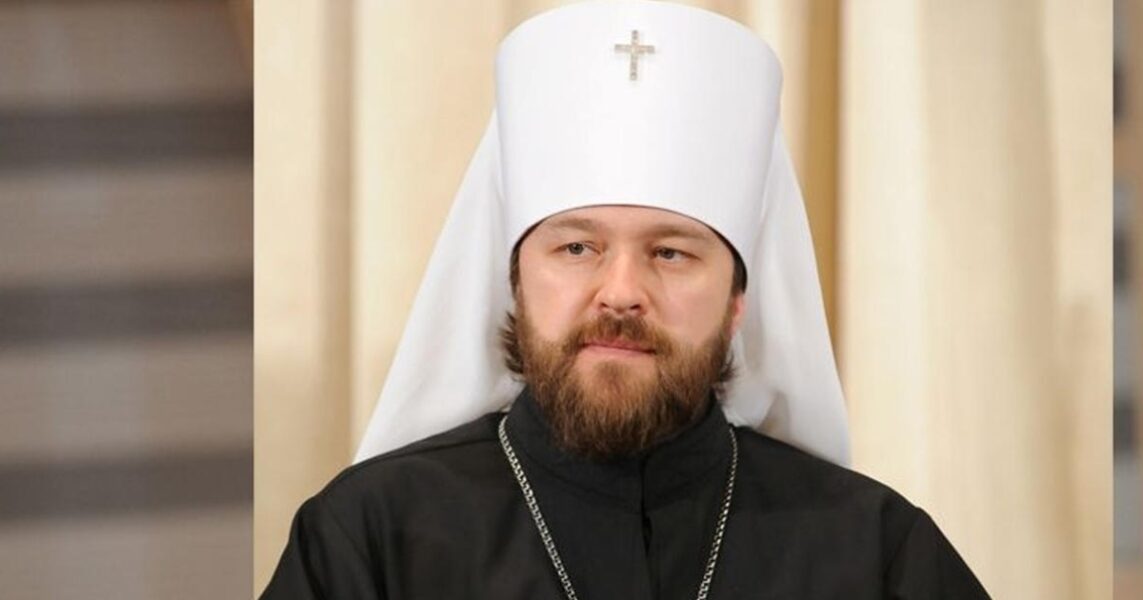
Metropolitan Hilarion (Alfeyev), for years the main official responsible for relations between the Russian Orthodox Church and the Vatican and considered one of the possible successors to Patriarch Kirill, has been assigned to Brazil after becoming involved in a police investigation in the Czech Republic following the discovery of cocaine in the vehicle in which he was traveling. The case marks the latest chapter in a downfall that began after the war in Ukraine and accelerated with various controversies that ultimately removed him from the main centers of power in the Patriarchate of Moscow.
On June 5, the Moscow Patriarchate announced that Hilarion would leave his post in Karlovy Vary (Karlsbad), in the Czech Republic, to take on pastoral responsibilities in two Orthodox communities in southern Brazil. The decision came just days after Czech authorities confirmed that the substance found in the metropolitan’s car was cocaine, although the investigation remains open and no formal charges have been filed.
An investigation that remains open
The events date back to May 25, when Czech police stopped the vehicle in which Hilarion was traveling with another person on a highway west of Prague. The stop followed an anonymous tip received by the national anti-drug unit.
During the search, officers found several bags containing a white substance. Days later, laboratory tests confirmed it was an illegal drug. However, neither Hilarion nor the other detained individual has been formally charged.
After spending two days in police custody, the metropolitan was released without restrictions and immediately returned to Russia.
Through his official Telegram channel, Hilarion has denied any involvement in the possession or transport of narcotic substances. His lawyer maintains that questions remain about how the drugs ended up in the vehicle and has requested an independent investigation into all the circumstances of the case. The Russian Ministry of Foreign Affairs has also intervened publicly, describing the episode as a provocation aimed at discrediting the prelate and the Russian Orthodox Church.
The Orthodox leader who prepared the historic meeting between Francis and Kirill
Born in Moscow in 1966, Hilarion pursued a distinguished academic and ecclesiastical career. He studied at the University of Oxford, became one of the most recognized theologians of the Russian Orthodox Church, and for years was regarded as one of the most influential figures in Eastern Christianity.
His rise culminated in 2009, when he was appointed chairman of the Department of External Relations of the Moscow Patriarchate, the body responsible for relations with other Churches and the international community.
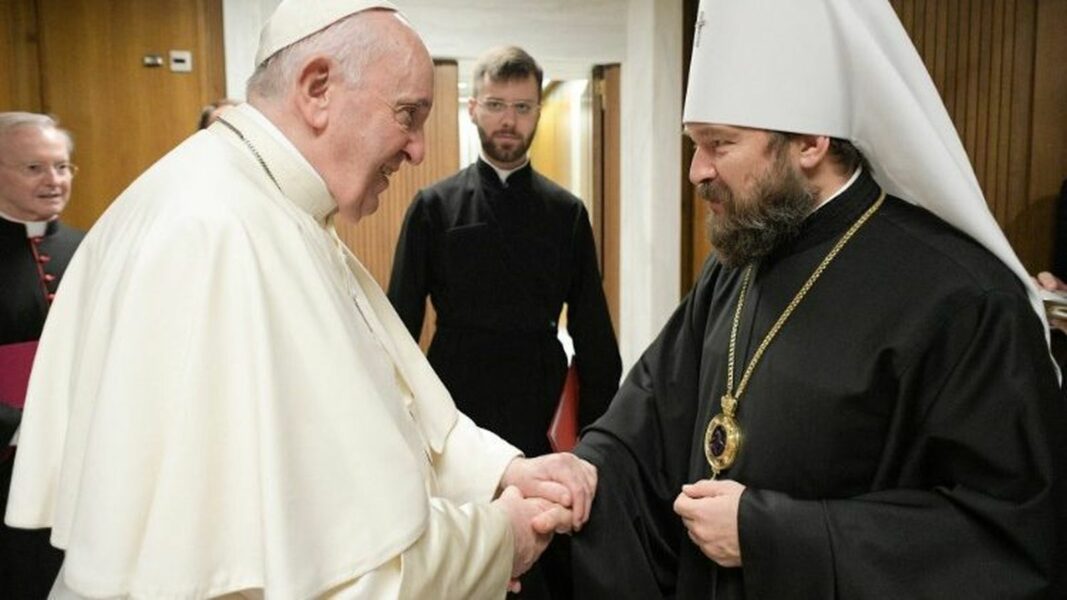
From that position, he maintained frequent contacts with the Holy See and played a decisive role in preparing the historic meeting held in Havana in February 2016 between Pope Francis and Patriarch Kirill. That encounter was the first between a Roman Pontiff and a Patriarch of Moscow since the separation between East and West, becoming one of the most significant ecumenical events of recent decades.
For years, Hilarion was considered the principal interlocutor of Russian Orthodoxy with Rome and one of the figures with the greatest international projection within the Moscow Patriarchate.
The turning point after the war in Ukraine
The metropolitan’s situation changed radically in 2022, coinciding with the start of the Russian invasion of Ukraine.
That year he was unexpectedly relieved of his leadership of External Relations and sent to the diocese of Budapest and Hungary. Although he never publicly criticized the war, various observers interpreted his dismissal as a sign of internal tensions within the Patriarchate regarding the course adopted by the Russian Church during the conflict.
The decision drew particular attention because the official communiqué even omitted the customary expressions of gratitude used when bidding farewell to senior ecclesiastical officials.
Accusations and loss of influence
His situation became even more complicated in 2024, when a former assistant accused him of sexual abuse in statements published by Russian media in exile.
The accuser also claimed that the metropolitan led a life of luxury incompatible with the image of austerity he publicly projected and asserted that he possessed private recordings in which Hilarion harshly criticized Patriarch Kirill.
Hilarion rejected all the accusations and denounced a campaign of defamation and extortion. Nevertheless, the Moscow Patriarchate opened an investigation and ultimately decided to remove him from his responsibilities in Hungary, later sending him to a Russian parish in Karlovy Vary.
A new assignment in Brazil
The transfer now announced to Brazil comes while the police investigation in the Czech Republic remains open and questions persist about the metropolitan’s future within the Russian Orthodox hierarchy.
Just a few years ago, Hilarion was considered one of the strongest candidates to succeed Patriarch Kirill and one of the most respected figures in Catholic-Orthodox dialogue. Today, his name is linked to investigations, accusations, and controversies that have profoundly altered his standing within the Moscow Patriarchate.
Pending clarification by Czech justice of the facts surrounding the discovery of cocaine, the case of Hilarion has also become a reflection of the tensions and fractures that have shaken the Russian Orthodox Church since the beginning of the war in Ukraine.