


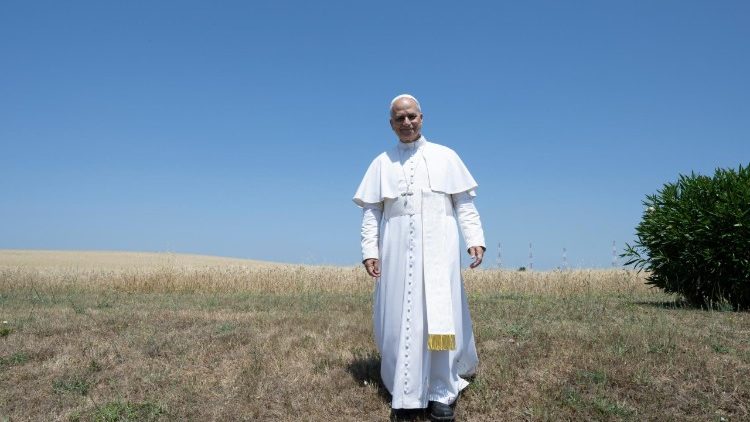
Pope Leo XIV has taken a new step in the Holy See’s energy self-sufficiency strategy with the creation of the foundation “Fratello Sole,” an organization intended to develop and manage the large agrivoltaic project of Santa Maria di Galeria, the extraterritorial Vatican area located north of Rome where the Vatican Radio transmission center is situated.
The decision was formalized through a pontifical chirograph signed on June 1 and published on June 2. In the document, the Pope presents the new foundation as a tool to make the Vatican’s commitment to environmental sustainability and care for creation “visible and concrete.”
Continuity of the project promoted by Francis
The initiative follows the line set by Pope Francis, who in June 2024 promulgated the motu proprio Fratello Sole with the aim of advancing toward energy autonomy for the Vatican City State.
The document entrusted the Governorate and the Administration of the Patrimony of the Apostolic See (APSA) with the development of an agrivoltaic installation capable of supplying not only the Vatican Radio facilities in Santa Maria di Galeria, but also a large part of the Holy See’s energy needs.
The creation of the foundation also comes just days after the entry into force of the agreement signed between the Holy See and the Italian Republic to regulate the development of this energy project.
A model combining agriculture and solar energy
The agrivoltaic project seeks to make renewable energy production compatible with agricultural activity, preventing the land from being used exclusively for the installation of solar panels.
As Leo XIV explains, this experience aims to become an example of how it is possible to harmonize technological development, energy production, and environmental protection.
In his chirograph, the Pontiff defines the foundation as “a sign of hope for the future” and as a concrete demonstration that energy production and respect for nature do not have to be incompatible objectives.
A foundation with broad competencies
The new entity will have Vatican public juridical personality and administrative, financial, and patrimonial autonomy.
Its functions include the construction, financing, and management of the agrivoltaic installation, as well as the production, distribution, and supervision of energy destined for the Vatican, various extraterritorial properties, and other institutions linked to the Holy See.
In addition, the statutes approved by Leo XIV contemplate the possibility of promoting new projects based on renewable energies if future energy needs so require.
The foundation will also be able to collaborate with universities, research centers, public and private organizations, as well as with Catholic institutions interested in the development of sustainable technologies.
Inspiration from Laudato Si’
Leo XIV explicitly links this initiative to the Church’s recent magisterium on care for creation. With Laudato Si’ as a guide, the apostolic exhortation Laudate Deum, and the motu proprio Fratello Sole, he emphasizes that the responsible management of natural resources is part of the principles of the Church’s social doctrine.
For the first three years of operation, the Pope has appointed as president of the foundation the president of the Governorate of Vatican City State, under the charge of Sister Raffaella Petrini, and as vice president the president of APSA.
With this decision, Leo XIV consolidates one of the most ambitious projects initiated during the pontificate of Francis and reaffirms the Holy See’s will to progressively reduce its external energy dependence through the use of renewable sources.