


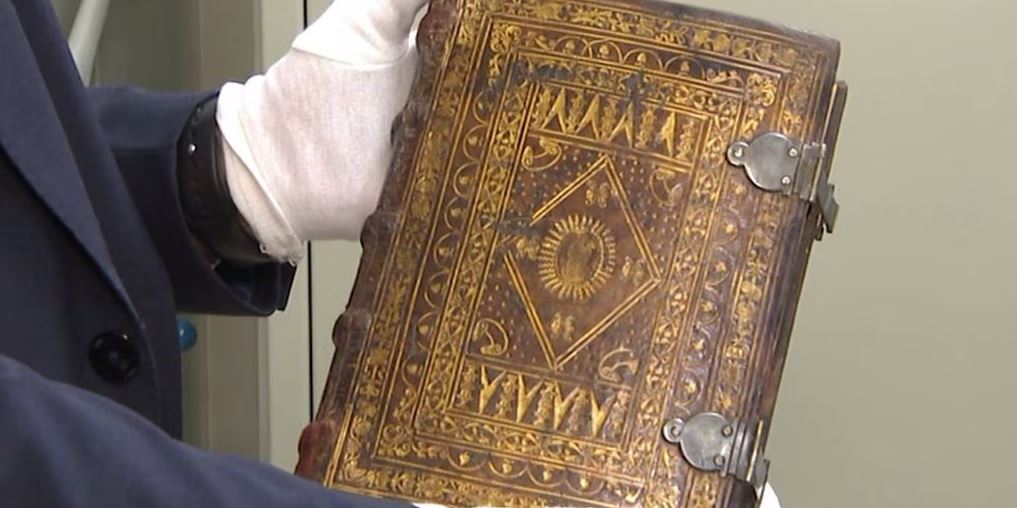
The Bureau of the Congress of Deputies has agreed to present Pope Leo XIV with a facsimile of the Liber Horarum (Book of Hours), one of the oldest and most valuable manuscripts preserved in the Lower Chamber’s bibliographic collection, on the occasion of the Pontiff’s visit to Congress scheduled for June 8.
Although parliamentary sources indicate that Leo XIV does not usually accept institutional gifts, the governing body of the Congress has decided to mark his visit with the reproduction of an exceptional work from Spain’s bibliographic heritage: a 15th-century religious codex produced before the invention of the printing press.
A prayer book reserved for kings and nobles
The Liber Horarum belongs to the tradition of the so-called books of hours, works intended to accompany the daily prayer of the faithful. For centuries they were among the most widespread instruments of devotion among the European Christian nobility, as they gathered psalms, biblical readings, Marian prayers and other texts meant to sanctify the different hours of the day.
These manuscripts were commissioned by kings, princes and members of the high aristocracy because of the enormous cost involved in their production. Each copy was unique and required the work of scribes, miniaturists and specialized illuminators, becoming true works of art as well as instruments of piety.
The copy preserved in the Congress of Deputies dates from the 15th century and was made before the appearance of Gutenberg’s printing press. Its historical value lies precisely in the fact that it was entirely handmade, at a time when every book was the result of long and careful artisanal work.
A bibliographic jewel kept in a safe
The original is preserved under strict security measures in the Congress’s storage facilities. Due to its extraordinary historical and artistic value, it remains safeguarded inside a safe alongside other notable pieces of the institution’s bibliographic heritage.
The volume has dimensions similar to those of a modern pocket book. Its leather covers enclose a wooden structure reinforced with ribs and metal clasps that allow the manuscript to be kept completely closed, a feature typical of medieval codices.
The cover itself constitutes a remarkable work of art. At the center of the frontispiece stands an image of the Virgin Mary framed by careful ornamentation, reflecting the deep religious inspiration that gave rise to the work.
Art and faith on every page
Beyond its devotional content, the Liber Horarum stands out for the richness of its illustrations. Among its pages are preserved seven illuminated plates in which the text is surrounded by elaborate decorative borders featuring human figures, vegetal motifs and mythological elements.
The pigments used for the colors, the inks, the ornamental details and even the Gothic calligraphy were all produced by hand, testimony to an era in which the creation of a book demanded the patient work of true artists.
The choice of this work as a gift for Leo XIV also carries a marked religious symbolism. Books of hours were for centuries one of the most characteristic expressions of Western Christian spirituality and helped bring the Church’s liturgical prayer closer to the daily life of the faithful.
With this gesture, Congress has sought to link the Pontiff’s visit to one of the most representative pieces of its historical heritage, a manuscript that reflects the profound mark Christian faith has left on European culture over the centuries.