


I
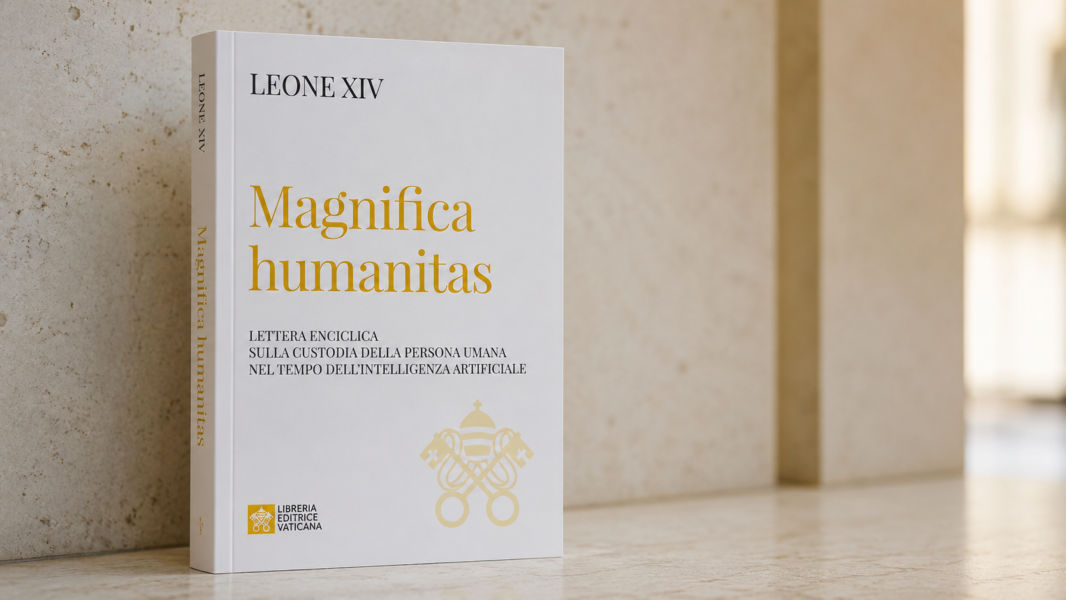
I have read with great interest this first Encyclical of the Holy Father, largely to determine the extent to which his pontificate does or does not intend to continue the doctrinal line—controversial for its revolutionary character (both in substance and in form)—of his predecessor, Francis. From the heart, I hoped to glimpse a new direction, removed from Francis’s innovations in doctrinal matters (the death penalty, Marian apparitions…), moral matters (Amoris Laetitia or Fiducia Supplicans), or liturgical matters (Traditionis Custodes or Desiderio Desideravi), which in my judgment have divided Catholics even more than they already are. Curiously, the central axis of Pope Leo XIV’s document is the contrast between the building of the Tower of Babel (the fruit of pride) and the rebuilding of the walls of Jerusalem ordered by the governor Nehemiah in the time of Artaxerxes (which involved the solidary collaboration of all the Jews). And since, in my humble judgment, we can in some way associate the previous pontificate with the episode of the confusion of tongues at Babel, one might have expected Leo to embrace Nehemiah’s cooperative spirit (though obviously not his outright xenophobia; see Neh. 13:23-25).
The truth is that the previous pontificate is very present—perhaps too present—in the development of this Encyclical, which mentions the Argentine pope on numerous occasions and even adopts his distinctive maxim and the guiding principle of his pontificate: “time is greater than space.” Nor could the controversial path of synodality be absent, as we see in point 10 and elsewhere in the text:
“And in this shared work, Christians find their own way of building: directing action toward God, so that, under His light, pluralism does not disperse into disorder, but rather, through the practice of synodality, becomes the space in which humanity recovers its solid foundations and its ultimate end. In the Apocalypse, John sees the new Jerusalem ‘coming down out of heaven from God’ (Rev 21:2) as a gift for all humanity. And this vision of grace is for us, Christians, a call to work together, cultivating a peaceful, just, and dignified common life in the ‘cities’ of today.”
The biblical citation introduced to link humanity and synodality is surprising, for the New Jerusalem that descends from heaven (Rev 21:1 ff.) is an eschatological event after the Last Judgment and therefore is not linked to humanity as a whole, but exclusively to the elect, so that—as John immediately adds—“the cowardly, the unbelieving, the depraved, the murderers, the fornicators, the sorcerers, the idolaters, and all liars will have their share in the lake that burns with fire and sulfur, which is the second death” (Rev 21:8).
Hence, if by humanity we mean the human race, we cannot honestly call it magnificent. The ABC of our Catholic faith teaches us that this same humanity, unless it accepts the only redemption Christ offers, is—literally and not metaphorically—under the power of the devil (1 Jn 5:19); they are not children of God, but children of wrath (Eph 2:3). “Whoever believes and is baptized will be saved; whoever does not believe will be condemned” (Mk 16:16). Humanity will only be magnificent (and far more than one can imagine) if it recognizes, with head and heart, Jesus as the sole Lord of the life of each of its members.
On the other hand, in an exercise of false humility (very much in keeping with the previous pontiff), the Encyclical states that “the Church does not wish to raise the banner of possessing the truth, because truth is not a territory to be defended but a good to be shared” (25). The phrase is not only naïve and unfortunate; it is—and it pains me to say it—cowardly and fallacious. How can the Pope (head of the Church on earth) not have to defend the Truth? The Church of the living God, of Christ, and of His vicar on earth can never renounce being “the pillar and foundation of the Truth” (1 Tim 3:15). And never in the history of Christendom has the Truth (with a capital T) been more attacked than it is today—even, and this is the dramatic novelty of our unfortunate times, from within the Church itself—so that the battle is unavoidable and a matter of life or death, since the salvation of many is at stake. The Pope cannot say such things; he must preach the good news of Jesus “in season and out of season” and has the grave obligation—as his predecessors did until the Second Vatican Council—to “fight the good fight of the faith” (1 Tim 6:12). Of course, “being shrewd as serpents and gentle as doves” (Mt 10:16).
It is the Church that must “evangelize the poor” (no. 5 of Sacrosanctum Concilium of Vatican II), and not, as the document says, “allow itself to be evangelized by the poor with whom it shares history” (41).
In any case, these “courteous” concessions of Leo XIV to his predecessor on the Chair of St. Peter should not lead us to view the rest of the text with suspicion; rather, we should apply the wise and kind rule of St. Ignatius of Loyola to “save the neighbor’s proposition.” Therefore, after reading and meditating on it in its entirety, I believe we are faced with a magnificent document, a light to guide us Catholics in the new world already upon us, marked by the advances of global information and by AI.
II
First of all, I am pleased that the Pope once again recalls the classical doctrine of the difference between ontological dignity (which all human beings possess equally simply by being rational beings, “willed, created, and loved by God” (52), and operative dignity (social, existential, and moral (52), which can indeed grow or diminish in each person (St. Teresa of Calcutta has the same ontological dignity as ZP, although the operative dignity of one is light-years ahead of the other). Only by affirming this crucial distinction can we understand that, unfortunately, conflict, the unceasing struggle between good and evil, and the so-called just war cannot be excluded among men, even though Leo expresses as a desideratum that “today more than ever it is important to reiterate the overcoming of the theory of the ‘just war,’ invoked too often to justify any war, without prejudice to the right to legitimate defense, understood in the strictest sense” (192). Perhaps it would have been opportune here to cite the biblical text that only “Christ is our peace” (Eph 2:14), “not as the world gives peace” (Jn 14:27).
It is also positive and courageous that he once again recalls that the first human right is the right to life “from conception to its natural end” (56).
It is very didactic and useful that he presents the historical milestones of the Social Doctrine of the Church (SDC), from Leo XIII’s Rerum Novarum (1891) to Francis’s Encyclical on ecology (Laudato Si’, 2015) (59-84), developing their guiding principles: human dignity, the common good, solidarity (especially with the poor, migrants, refugees, internally displaced persons, victims of violence, people living in urban or existential peripheries…), subsidiarity, the universal destination of goods, social justice, and integral human development, which includes integral ecology. An intense and praiseworthy reminder, although with a conclusion that is, in my judgment, debatable, since it once again insists on a path that leads nowhere—in my personal opinion—namely, the inevitable path of synodality:
“Social doctrine is not only a word addressed to society; it is also an examination of conscience for the Church, house and school of communion, always called to verify that the principles set forth in this chapter are lived above all within her. The common good, in the ecclesial sphere, takes the face of a synodal style for the mission at the service of the Kingdom. The Church, in fact, is ‘the communal and historical subject of synodality and mission.’ This requires attention to the way decisions are made and responsibility is exercised. The Final Document of the Synod identifies, among the decisive practices for missionary transformation, the culture of transparency, accountability, and evaluation” (86).
In any case, the most important aspect of the Encyclical is that it casts a profoundly Catholic gaze, in accordance with the core principles of the SDC, upon novel phenomena of our time such as the irruption of AI into our lives, the implementation of the digital age in all spheres, and the need for adequate discernment to approach these realities. The Encyclical starts from something that, although it seems obvious, is not understood by many. I transcribe this paragraph in full because, in addition to being brilliant, it is key to understanding what we are talking about:
“What we can say is that we must avoid the mistake of equating this ‘intelligence’ with the human. These systems imitate certain functions of human intelligence. In doing so, they often surpass it in speed and breadth of calculation, offering concrete benefits in numerous fields. Yet this power remains linked exclusively to data processing: so-called artificial intelligences do not live an experience, do not possess a body, do not go through joy and pain, do not mature in relationships, nor do they know from within what love, work, friendship, and responsibility mean. Nor do they have a moral conscience: they do not judge good and evil, they do not grasp the ultimate meaning of situations, nor do they assume the weight of consequences. They can imitate languages, behaviors, valuations; they can simulate empathy or understanding, but they do not know what they produce, because they do not dwell in the affective, relational, and spiritual horizon in which the human being becomes wise. Even when such instruments are presented as capable of ‘learning,’ they do so differently from the human person. It is not the experience of one who allows himself to be shaped by life and grows in time through decisions, errors, forgiveness, and fidelity; it is rather a statistical adaptation based on data and feedback, which can be very effective, but does not imply inner growth” (99).
Only man has a soul; the machine will never have one. From this clarifying text, the Pope will remind us of the three serious dangers of an excessive and imprudent use of AI: (1) becoming accustomed to seeking quick answers, at the expense of personal judgment and creativity; (2) a false sense of security and objectivity in rapid responses, which makes us forget that they reflect the cultural parameters of those who designed and trained them (I would add that this can therefore be an extremely effective weapon of manipulation); and (3) the fact that words of empathy, friendship, and even love from AI, although they may be gratifying, are deceptive, because behind them there is no true personal subject. “When the word is simulated, it does not build a relationship, but an appearance. (…) The risk is not so much that a person believes he is speaking with another person, but that he loses the very desire to truly seek the other” (100).
For all these reasons, “asking for prudence, rigorous controls, and at times also a slowdown in the adoption of AI does not mean being against progress but exercising responsible care for the human family” (106). And Leo uses the forceful word “disarm,” which
“means removing it from the logic of the arms race, which today is no longer only military but also economic and cognitive. It is the race for the most effective algorithm and the broadest data bank to consolidate a geopolitical or commercial advantage over everyone else. To disarm means to break that equivalence between technological power and the right to govern. Disarming does not mean renouncing technology, but preventing it from dominating the human” (112). Because, ultimately, “the capacity of a civilization is measured not by the power of its means, but by the care it knows how to offer, by the ability to recognize a face in the other and not a function” (114).
The Pope’s words on transhumanism and posthumanism also deserve to be read and meditated upon—disturbing concepts that do not represent a legitimate attempt to overcome the limitations inherent in the human condition, but rather aspire to a perverse beyond, “a hybridization between the human being, the machine, and the environment” (116); that is, entering a new evolutionary stage, although we are still in a merely speculative phase. Nevertheless, with immense perspicacity, the Holy Father warns of the inevitable corollary of such follies:
“If the human being is treated as matter to be perfected or surpassed, then it becomes easier to accept that some are considered less useful, less desirable, less worthy. In the name of progress, one can come to think of ‘necessary sacrifices’ and make the most vulnerable pay the price of a supposed optimization of the species” (117). Nothing new under the sun, only with greater technology. Probably something similar, according to some theologians, to the hybridization that men attempted in Gn 6, which brought as a consequence the punishment of the universal flood.
Not in vain does Leo conclude this section by pondering the beauty and dignity of the human condition, for, even in its limitations, the greatness of our Catholic faith is such that it can transform them into wisdom and salvation:
“Today our relationship with life seems to be in crisis. Everything that represents a ‘limit’—incapacity, illness, old age, suffering, vulnerability—tends to be read primarily as a defect to be corrected, rather than as a space in which the human being matures and opens to relationship. On the contrary, we must remember that the human being does not flourish in spite of the limit, but often through the limit. A vision of reality in the light of faith helps to recognize what we call the ‘contingency’ of the things of this world. While on the one hand it is necessary to try to eliminate the suffering that marks human life, on the other it is wise to recognize our constitutive finitude, knowing that ‘religious experience, in particular the Christian faith, proposes inhabiting without simplifications this ambivalence between the greatness and the limit of the human, interpreting it in the light of the original and founding relationship with God’” (118).
A great truth! And above all, he will recall that the only authentic elevation of man is that of the Christian who welcomes Grace: “as St. Thomas Aquinas taught, this process of elevation and transformation ‘surpasses the capacity of human nature’ because there is an infinite distance between our nature and the life of God. Nevertheless, it is possible to be introduced into the bosom of that inexhaustible life, even while we walk within the limits of this world. And the only one who can make this path possible is the Infinite who gives Himself: it is God Himself who overcomes the ‘infinite’ disproportion. Thus the re-creation of the human is accomplished: ‘The one who lives in Christ is a new creature: the old has passed away; a new being has come’” (2 Cor 5:17) (127). Amen.
III
From the final section of the Encyclical, I wish to highlight, first of all, the reflection the Holy Father makes on democracy and truth. In my judgment, I believe the Pope here displays a surprising naïveté, because if there is anything history has shown, it is that the most important truths of man and of society (and of science) are not and have never been the fruit of consensus (among other reasons because decisive truths require from the common man efforts and renunciations that he by principle refuses to make, and although one man may be an ascetic, a society never will be). Consensus, of course, is necessary to live together in society without the strongest destroying or oppressing the weakest, and in that sense democracy, understood in the formal sense as a political system of popular participation in the election of rulers, of temporary mandates, and of controls through the separation of powers, is undoubtedly an instrument suited to peaceful coexistence. Nothing more… and nothing less. But Truth cannot be the object of public opinion and plebiscite (see the referendums on abortion in Catholic countries such as San Marino or Ireland, or, more gravely still, recall that public consultation viva voce two thousand years ago in which the people rejected a King and replaced Him with a Caesar). To affirm, as the Encyclical does, that
“The search for truth is an essential element for democracy, which is in itself an instrument of participation in the common good,” is, in my judgment, a contradiction. If democracy intends—in fact it does—to transform itself into a not merely formal but material democracy and decides on matters by their very nature non-consensual, such as Truth, it will only reach error. And from there opens a drain toward the abyss of tyranny. What democracy must prevent is that we kill one another, and that is all. With that alone it will have achieved much—everything. The Truth has already been given to us by Him who said of Himself that He was “the Way, the Truth, and the Life.” He was not precisely a democrat, and moreover He made it clear to us that “His kingdom is not of this world.”
And the Holy Father continues:
“When the question of what is true loses interest and a pragmatism that settles for what seems useful or effective prevails, democratic life weakens. It, in fact, is not sustained solely by norms and procedures, but above all by a loyal relationship with facts and by a real orientation toward the good of persons and of society as a whole. Disinterest in the truth leads slowly but inexorably toward totalitarianism, for which, as the philosopher Hannah Arendt wrote, the ideal subjects are not so much those ideologically convinced, but ‘those for whom the distinction between fact and fiction (that is, the reality of experience) and the distinction between true and false (that is, the norms of thought) no longer exists’” (134).
The question about truth is of course essential, but democracy is not the appropriate framework for answering it. The great handicap of democracy, as Aristotle already noted (who looked upon it with contempt), lay in the inevitable transformation of the common good into the bastard interests of demagogues, and finally into anarchy. Democracy, in short, is useful, but please do not link it to truth. Oil and water.
Very accurate, however, is Leo’s pessimistic judgment on our times, where only Christian hope—the triumph of the Risen One—has the definitive answer:
“The construction of a world in a state of permanent belligerence is an evil, and it must be called by its name. This way of describing the reality we live in may seem gloomy or pessimistic, but I consider it a necessary denunciation. The Christian perspective, however, is not exhausted in the denunciation of evil. We look at history in the light of the Crucified and Risen One, to whom the Father has given ‘all power in heaven and on earth’ (Mt 28:18). We do not interpret the present as a closed destiny, but as a field open to personal and collective conversion” (210).
Although I also observe with astonishment—and a certain indignation—his positive judgment on the (current) UN:
“International organizations, in particular the UN, remain essential instruments for promoting a civilization of love (sic), by supporting dialogue among nations, the peaceful resolution of conflicts, the integral development of peoples, the protection of the most vulnerable, disarmament, and the care of creation” (226).
I would like to think that the Holy Father is sufficiently informed that the (current) UN—following precisely the AI—: “actively promotes access to abortion as a fundamental human right (…) the WHO advocates eliminating restrictions, arguing that penalizing it constitutes a form of violence and discrimination.” Regarding “gay marriage,” it “urges States to legislate to guarantee equal rights and prevent discrimination, including legal recognition of same-sex marriage and access to adoption.” And regarding “gender ideology,” the UN has “a mandate of the Independent Expert (sic) on sexual orientation and gender identity (…) and also promotes comprehensive sexual education and the recognition of gender diversity in its development guidelines.”
“A civilization, more than of love, of polyamory,” as we see. And this crew is the one in charge of watching over world peace.
I conclude this analysis by noting that, beyond these incomprehensible globalist concessions and short of the due reverence to his controversial predecessor on the Chair of St. Peter, the truth is that as a whole we are faced with a magnificent Encyclical (the encyclical, not humanity), which brilliantly reviews the various developments of the SDC and at its core enlightens the understanding of us Catholics with clear guidelines on very important phenomena that we have already examined.
The pity is that because of these specific defects one could also say, with the pessimistic wisdom of Qoheleth, “a dead fly spoils a good perfume” (Eccl 10:1).
Note: Articles published as Opinion express the views of their authors and do not necessarily represent the editorial line of Infovaticana, which offers this space as a forum for reflection and dialogue.