


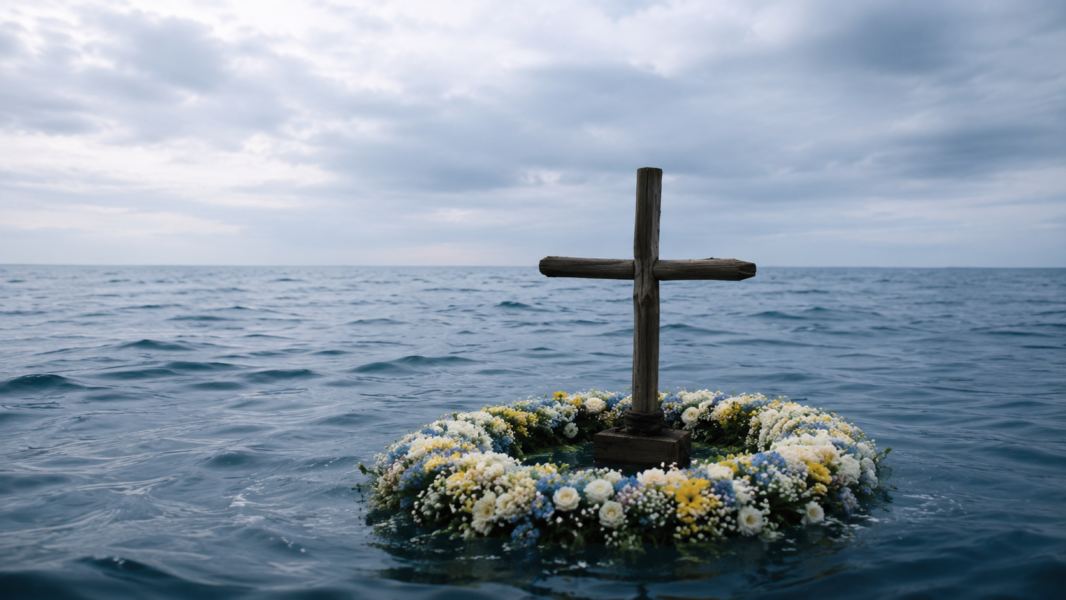
On June 11, Pope Leo XIV will visit the dock of Arguineguín, in Gran Canaria, one of the emblematic sites of the migration crisis that has affected the Canary Islands archipelago for years. There, he will listen to the testimony of several migrants, take part in a tribute to those who died trying to reach Europe, and bless a cross built with wood from cayucos that arrived on Spanish shores.
The visit aims to recall the human drama behind one of the world’s most dangerous migration routes. However, it also comes at a particularly sensitive political moment, marked by the debate over irregular immigration, the mass regularization promoted by the government, and attempts to present the Pontiff’s presence in the Canaries as moral confirmation of certain migration policies.
The “dock of shame”
Arguineguín became a symbol of the migration crisis in 2020. For several months, more than 2,600 people remained crammed into a space designed to hold only a fraction of that number.
The port came to represent the collapse of administrations unable to respond to a situation that, although foreseeable, found institutions without sufficient infrastructure or a clear strategy for action. Those images of hundreds of people sleeping on concrete went around the world and turned the site into a reference point for the European migration crisis.
It was also the place where parishes, volunteers, and church organizations began an intense assistance effort that continues to this day.
The tribute to the victims of the Atlantic
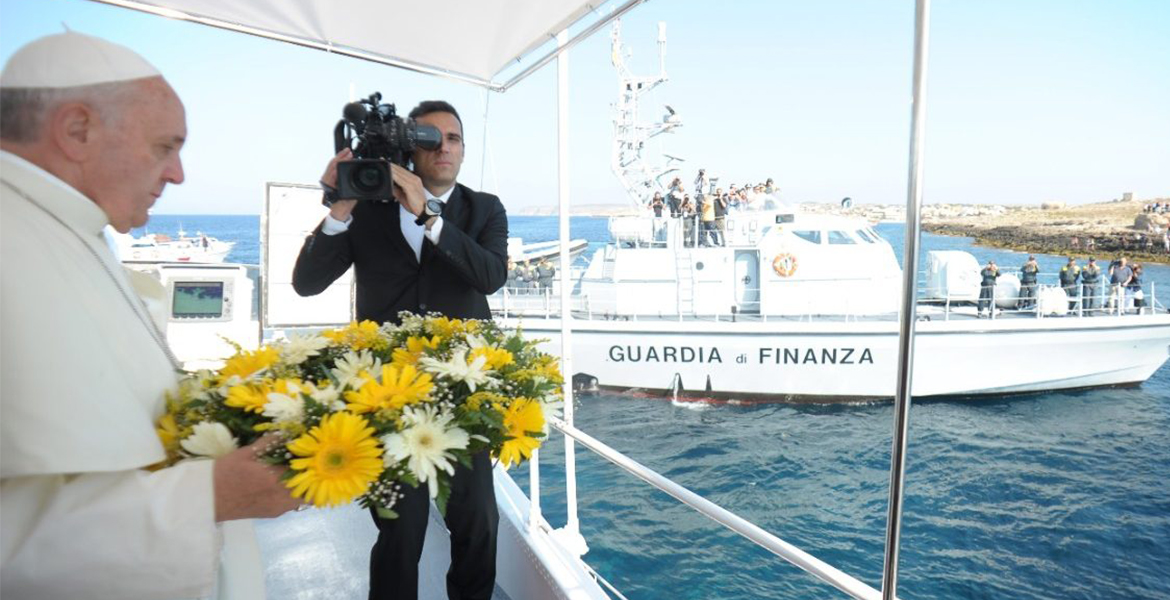
One of the central moments of the visit will be the casting of a floral wreath into the sea in memory of those who lost their lives trying to reach the Canaries.
The gesture echoes the one made by Francis in Lampedusa and seeks to put a face to a tragedy that continues to claim thousands of victims. According to various organizations that monitor migration routes, the Atlantic route remains one of the deadliest in the world.
Alongside the tribute, several migrants will share their testimonies before the Pope, and a human chain will be formed in memory of those who disappeared during the crossing.
The visit will also conclude with the blessing of a cross built with wood from boats that arrived in the Canaries, already a symbol of the local Church.
The political appropriation of the visit
Just hours after meeting with Leo XIV, Pedro Sánchez stated that immigration is “an issue on which the Catholic Church and the Spanish government have quite a high level of agreement,” presenting it as an opportunity for countries of origin and destination and highlighting the Pope’s sensitivity to this reality.
The prime minister’s words reveal the extent to which the visit to the Canaries is already being interpreted in political terms even before it takes place.
This is not surprising. For years, various church bodies have publicly supported initiatives such as the extraordinary regularization of migrants promoted by the government. Although the motivations may differ, the convergence between certain ecclesial positions and the government’s migration policies is a fact that is hard to deny.
That is why any papal gesture related to immigration runs the risk of being used as moral backing for specific political decisions.
Between compassion and instrumentalization
The cross built with wood from cayucos will remain at the dock as a reminder of those who died trying to reach Europe. The tribute is understandable. What is more debatable is the political use that may be made of that symbolism.
Because while the government pushes for mass regularization of migrants and presents immigration as an economic and moral opportunity, the Atlantic route continues to claim thousands of lives and enrich the mafias that control human trafficking. In this context, Pope Leo XIV’s visit already clearly runs the risk of being used as symbolic legitimization of political and ideological agendas.
Today it is difficult to ignore that Pedro Sánchez’s government is trying to present the papal visit to the Canaries as moral confirmation of its own migration agenda—an agenda that also enjoys the explicit support of broad sectors of the Spanish Church.
The real question is not how many flowers will be thrown into the sea or how many photographs the event will produce. The real question is whether, in a year’s time, fewer people will be boarding cayucos bound for the Canaries or whether, on the contrary, Arguineguín will have been incorporated into that symbolic geography of irregular immigration where human drama, politics, and religion ultimately merge into the same narrative.