


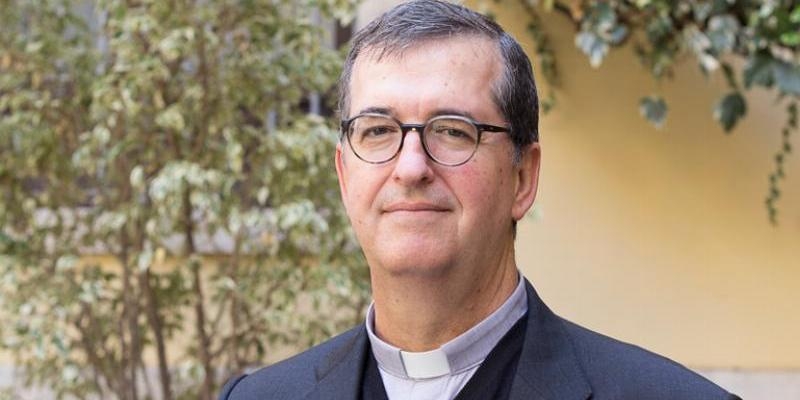
Pope Leo XIV has appointed Monsignor Santiago Ignacio De Wit Guzmán, a discreet Spanish veteran diplomat with classical training and extensive experience in complex territories, as apostolic nuncio to the Netherlands. After years representing the Holy See in Africa and the Caribbean, the Valencian archbishop now lands in one of Europe’s most secularized societies.
The Holy See announced on Monday the appointment of Monsignor Santiago Ignacio De Wit Guzmán as the new apostolic nuncio to the Netherlands. Until now, the Spanish prelate served as apostolic nuncio in several Caribbean countries—including Trinidad and Tobago, Jamaica, the Bahamas, and Barbados—as well as apostolic delegate to the Antilles.
Rome is sending to the Netherlands—a country experiencing a profound religious crisis, with a numerically reduced Church facing strong ideological and social pressures—a career diplomat trained in classical Vatican diplomacy and experienced in multicultural contexts.
A Valencian formed in Rome’s diplomatic school
Born in Valencia on 5 September 1964, Santiago Ignacio De Wit Guzmán was ordained a priest in 1989 for the Archdiocese of Valencia. He studied Theology at the San Vicente Ferrer Faculty and later earned a doctorate in Canon Law at the Pontifical University of Saint Thomas Aquinas in Rome.
His time at the Pontifical Ecclesiastical Academy—the historic school for diplomats of the Holy See—definitively shaped his career. Since 1998 he has belonged to the Vatican diplomatic service and has worked in nunciatures across Africa, Europe, and Latin America.
Before becoming a nuncio, he served in the pontifical representations of the Central African Republic and Chad, the Netherlands, Paraguay, Egypt, the Democratic Republic of the Congo, and Spain.
Francis promoted him and Leo XIV confirms him
Pope Francis appointed him titular archbishop of Gabala and apostolic nuncio to the Central African Republic in March 2017. Days later, Chad was added to his diplomatic responsibilities.
His episcopal consecration took place in Valencia and was presided over by Monsignor Paul Richard Gallagher, Vatican secretary for Relations with States and one of the key figures in pontifical diplomacy.
In 2022, Francis transferred him to the Caribbean, where he ended up managing one of the territorially largest nunciatures in the entire diplomatic network of the Holy See. There he consolidated an image of a close, Marian man with the ability to maintain good relations both with local bishops and with the governments of the region.
A sober doctrinal profile, without stridency
Unlike other Spanish bishops or diplomats, De Wit has never stood out for controversial interventions or for participating in internal ecclesial conflicts. He does not belong to the group of media prelates, nor is he publicly known for any affinity with aggressive progressive currents.
However, his discourse does reveal some clear lines.
In homilies delivered in the Caribbean, he warned against contemporary moral relativism and stressed the need to preserve Christian identity in the face of secularization. He has also repeatedly insisted on the humility of the episcopal ministry and on the Church’s evangelizing mission.
His language aligns with classical ecclesial diplomacy: doctrinal firmness expressed in an institutional tone and without a confrontational spirit. Throughout his ministry he has frequently repeated the idea that the Church must “build bridges” and work for reconciliation without diluting its Catholic identity.
At the same time, he has adopted the vocabulary promoted during Pope Francis’s pontificate on synodality, listening, and dialogue, though always within a clearly ecclesial framework and without sliding into rupture-oriented positions.
The importance of the Dutch destination
The Netherlands represents one of the most advanced places of secularization in Europe. The Dutch Catholic Church has for decades experienced a sharp decline in vocations, religious practice, and public presence. Added to this is the constant pressure of the progressive agenda on moral and anthropological issues.
De Wit already knows the country: between 2001 and 2004 he worked precisely at the apostolic nunciature in the Netherlands as a diplomatic secretary. He is therefore not arriving in unfamiliar territory.
With this appointment, Monsignor Santiago Ignacio De Wit Guzmán returns to a country he already knows and now assumes the representation of the Holy See in one of the most complex ecclesial scenarios in Western Europe.