


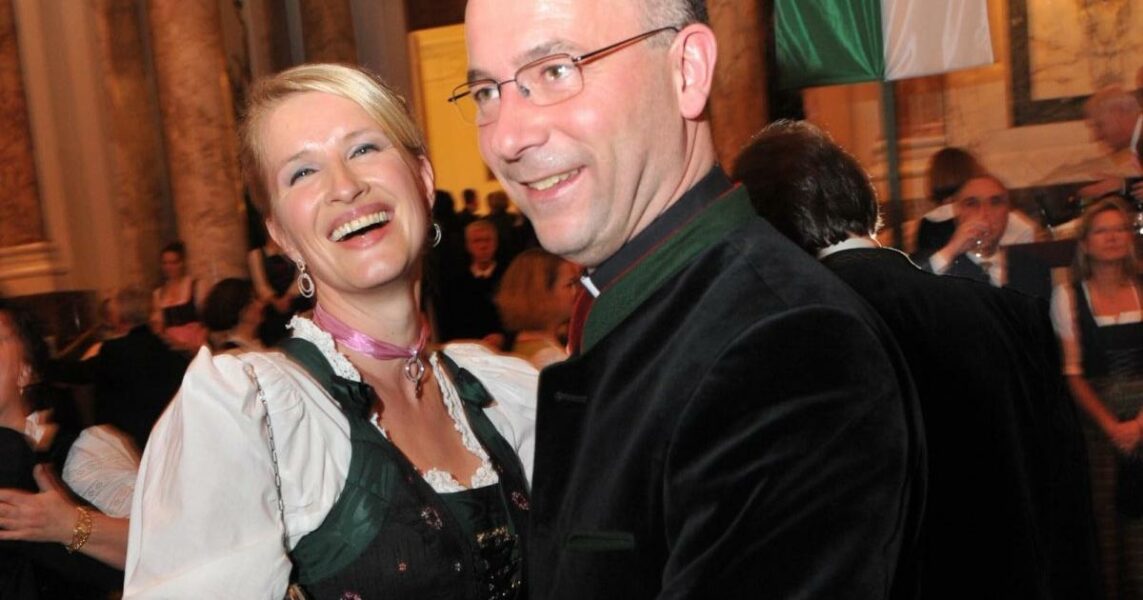
The Austrian priest Toni Faber, parish priest at St. Stephen’s Cathedral in Vienna for nearly three decades, may be living his final months at the head of one of Europe’s most emblematic parishes. According to the German media outlet Katholisch.de, the Archdiocese of Vienna is holding talks about the priest’s future, a figure who has been marked for years by controversy, media appearances, and critical statements on sensitive issues within the Church.
Read also: Grünwidl admits problems with the celibacy of the famous parish priest Toni Faber
The Archdiocese spokesperson confirmed that Vienna’s Archbishop, Josef Grünwidl, has been in dialogue with Faber for some time about the future of the parish and of the priest himself, although he avoided going into details. A possible departure would also mark a shift from the episcopal pontificate of Cardinal Christoph Schönborn, who for years publicly supported the well-known “priest of Viennese high society.”
A media-savvy and controversial priest
Toni Faber became a regular figure in Austrian public life not only through his pastoral work, but also through his constant presence at social and media events. The priest attends the famous Vienna Opera Ball each year accompanied by Natalie Nemec, whom he describes as a “very good friend,” although his statements about the relationship have generated ongoing speculation.
This aspect in particular appears to have made the new Archbishop Grünwidl uncomfortable, who shortly after taking office acknowledged feeling uneasy about the “solution” Faber had found regarding priestly celibacy.
The situation is not insignificant, especially since Faber himself has repeatedly been critical of the mandatory nature of celibacy for Latin-rite priests.
Open criticism of mandatory celibacy
In recent statements to the Austrian public broadcaster ORF, Faber directly questioned the necessary link between priesthood and celibate life.
“Must the Catholic priestly way of life necessarily remain tied to celibacy forever?”, the priest asked.
While he affirmed that he remains faithful to the celibate life he assumed with his priestly vocation, he also downplayed the automatic spiritual value attributed to celibacy, considering the idea that someone is holier simply for living without a family to be “completely overrated.”
Paradoxically, Archbishop Grünwidl himself shares some of these positions. The prelate has publicly defended that the possibility of married priests should be examined, recalling that celibacy was not always mandatory in the history of the Church.
Doctrinal similarities, differences in style
The differences between both men seem not to reside so much in ideological issues as in the way they exercise the priestly ministry and present themselves to the public.
Faber has been involved in numerous controversies over the past decades. In 2009 he lost his driving license after being caught driving under the influence of alcohol. On another occasion he authorized the installation of a work by a Scientology sympathizer as a Lenten cloth in St. Stephen’s Cathedral, a decision that was later corrected by the cathedral chapter.
This is compounded by controversial statements during the pandemic, comments about European Catholics, and frequent appearances in Viennese high-society circles, which led to Austrian media nicknaming him “the lion of the jet set.”
Faber always rejected that label and preferred to define himself as a “city pastor” rather than a “society priest.”
The end of an era in Vienna
Ordained priest and appointed head of St. Stephen’s parish in 1997, Toni Faber became over the years one of the most recognized faces of contemporary Austrian Catholicism. His defenders highlight his ability to attract people distant from the Church and to favor returns to religious practice. According to his own data, he accompanies between 80 and 100 people each year in processes of return to the Church.
However, the arrival of Grünwidl appears to mark a new stage for the Vienna Archdiocese. According to Austrian press, Faber’s possible retirement could coincide with the 30th anniversary of his appointment as parish priest, in July 2027.
The priest himself has recently admitted that he is already considering the possibility of retiring early, although he hopes to continue carrying out pastoral duties as an ordinary priest within the cathedral.