


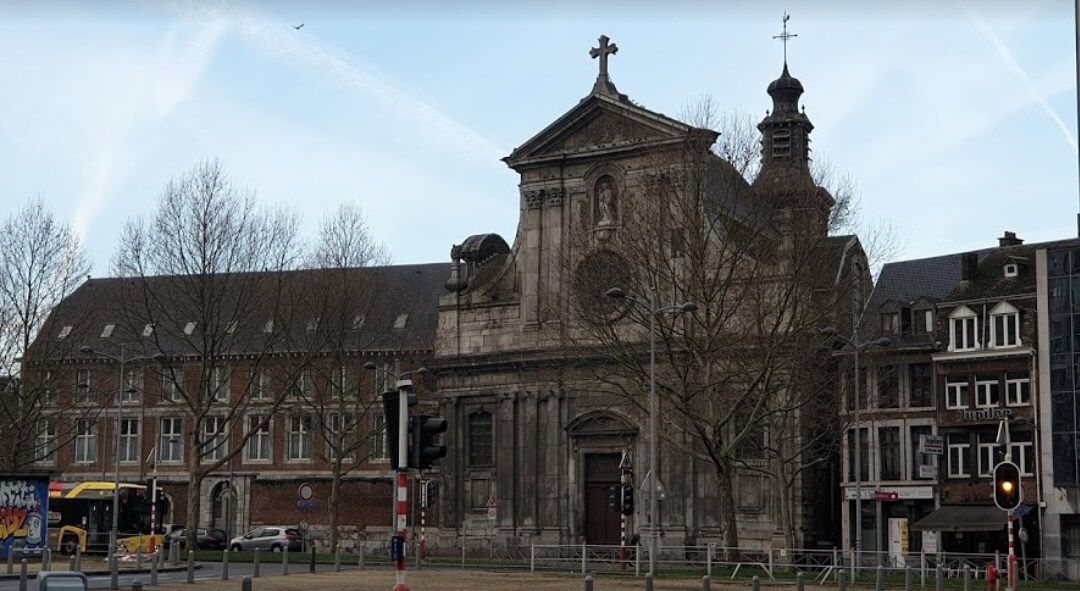
The Society of Jesus will leave the Belgian city of Liège after more than four and a half centuries of uninterrupted presence. According to statements from both the order and the local diocese, the Jesuit community established on Rue Saint-Gilles will close permanently at the end of the current school year.
The official farewell will take place on June 13 with a Mass of thanksgiving that will mark the end of a historic presence that has deeply shaped the religious, educational, and social life of the region.
The Diocese of Liège publicly acknowledged the sorrow caused by the Jesuits’ departure. “This departure was not our wish. We accept it with sadness, but also with deep gratitude,” the bishopric stated in a communiqué released on Monday. The diocese added that “with this, a chapter in the history of our local Church is closed.”
More than four centuries of educational and spiritual influence
Over more than 450 years, the Jesuits played a significant role in the academic and spiritual formation of generations of Catholics in Liège. The bishopric especially highlighted their influence in the educational, social, and pastoral spheres of the region.
Despite the closure of the religious community, some of the works initiated by the Society of Jesus will remain active. Among them is the Saint-Benoît-Saint-Servais educational center, one of the most important schools in the area, which currently has more than 2,000 students.
Likewise, the Youth Eucharistic Movement (YEM), traditionally linked to Ignatian spirituality, will continue its activities within the diocese.
The gradual withdrawal of the Jesuits in Europe
The departure of the Jesuits from Liège is part of a broader phenomenon affecting numerous religious congregations in Western Europe: the aging of their members, the decline in vocations, and the progressive closure of historic communities.
In traditionally Catholic countries such as Belgium, France, or Germany, several religious orders have had to reorganize their presence in recent decades due to the lack of generational renewal and the growing secularization of society.
Although the Society of Jesus maintains a strong international presence, especially in Latin America, Africa, and Asia, the closure of historic European communities reflects the profound transformation currently underway in religious life on the continent.