


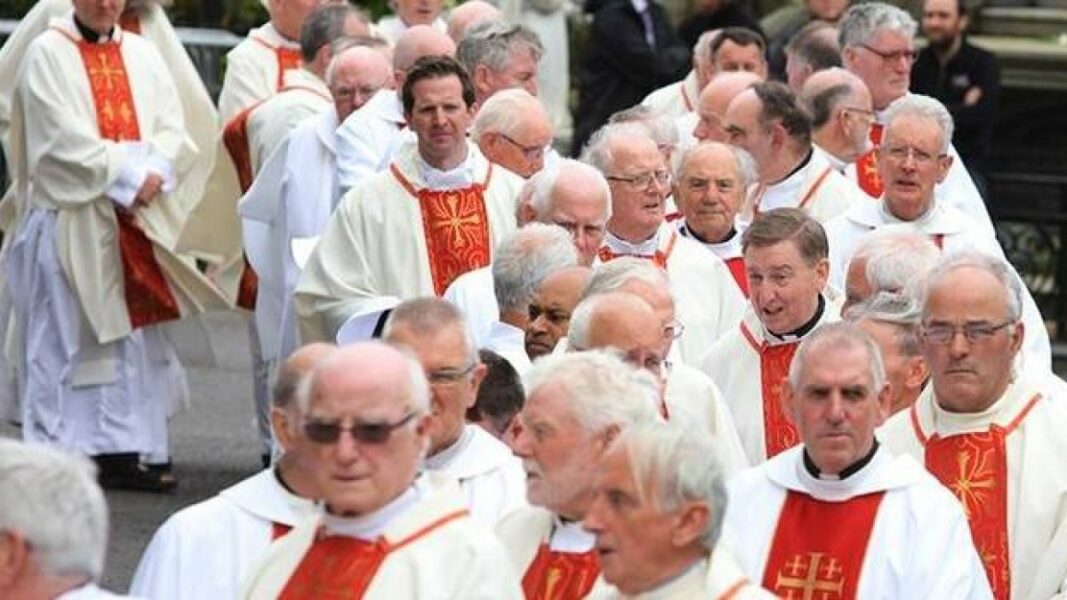
Ireland will ordain nine new diocesan priests this year, compared to six the previous year, representing a 50% increase in a country that for decades was considered one of the major laboratories of religious decline in the West.
The figure remains modest when compared to the historical weight the Catholic Church once held in Ireland, but it acquires special symbolic value in a context marked by secularization, the decline of religious practice, and the crisis of vocations.
According to Irish media reports, the increase is distributed across various dioceses. The Archdiocese of Armagh will ordain three priests; Down and Connor, two; and the dioceses of Clogher, Cloyne, Derry, and Dromore will each have one ordination.
A sign of hope in a Church battered by secularization
For much of the 20th century, Ireland was one of the great sources of priests and missionaries for the universal Church. However, in recent decades it suffered a vocational collapse caused by the decline of religious practice, abuse scandals, and an accelerated cultural transformation.
Today, some dioceses barely have young priests. For this reason, although nine ordinations may seem like a small number, the change in trend has been received as a sign of hope.
Monsignor Phonsie Cullinan, Bishop of Waterford and Lismore and president of the Irish Bishops’ Council for Vocations, stated that it is “a joy” to see young people—and also men who are not so young—respond to the call of Jesus Christ to the priesthood.
A new generation of priests
Among the new priests is Father Stephen Sherry, recently ordained for the diocese of Clogher. With 30 years of age, he is one of the youngest priests currently in ministry in Ireland.
His story reflects the profile of many current vocations: long discernment processes, born in a largely secularized social environment and not in a dominant Catholic culture like that of other times.
Sherry studied English and history before entering the seminary and began to consider his vocation while preparing his final secondary school exams. According to his explanation, a “small voice” kept repeating to him: “We need more priests”.
Seminary numbers also rise
The upturn is not limited to ordinations. Thirteen new candidates entered Irish seminaries in September, bringing the total number of diocesan seminarians to 77.
In addition, in 2024, 21 men entered priestly formation, the highest figure recorded in more than a decade.
The profiles of these new seminarians also show a sociological change. Many have attended university, have worked professionally, and even experienced a period of distance from the faith before returning to the Church.
Vocations born in a de-Christianized society
These new vocations no longer arise in a culturally Catholic Ireland, but in an environment where Christianity has often been reduced to a minority presence.
Precisely for this reason, many of these young priests seem to assume their ministry with a more missionary awareness: not to administer an inherited Catholic society, but to proclaim the Gospel in a more de-Christianized country.