


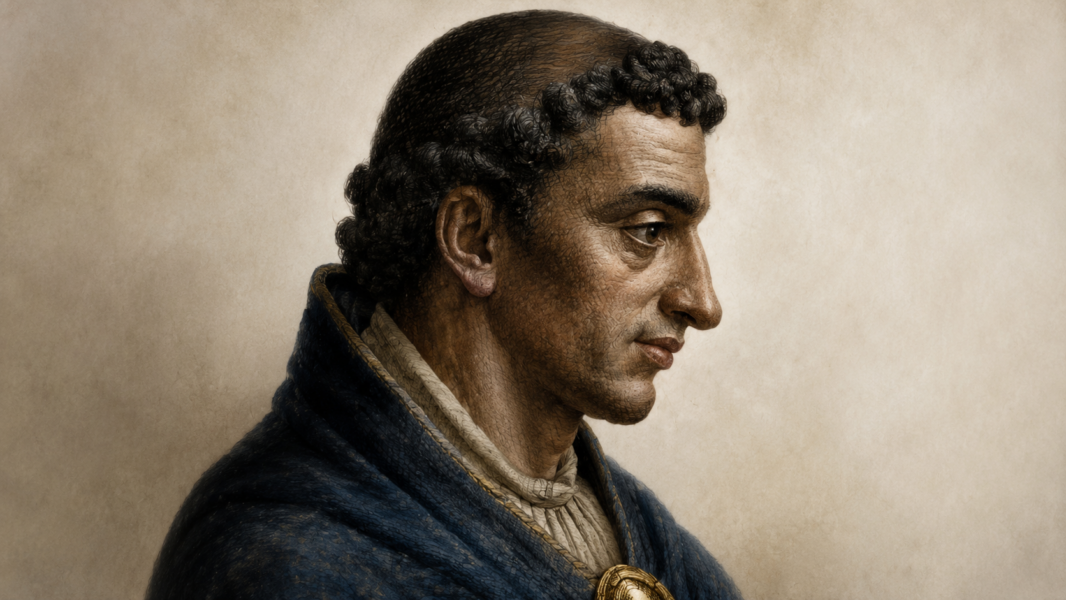
Series “The Lions of the Church” – 5. Leo V
Pope Leo XIV, formerly Cardinal Robert Prevost, has chosen a name loaded with history. No less than thirteen popes preceded him with that name, many of them in turbulent times, and several worthy of being among the great shepherds of the Church.
In this series titled “The Lions of the Church”, we remember those thirteen predecessors. Not for mere archaeological contemplation, but to discover what living teachings we can inherit today from their example, at a time when the Church needs clarity, firmness, and hope.
A Pope About Whom We Know Almost Nothing
Leo V is one of those pontiffs almost erased by history. His pontificate, situated in the year 903, lasted only a few weeks or a few months, according to the different sources. Very little is known about him: that he probably came from Priapi, near Ardea; that he did not belong to the great Roman families; and that, upon being elected Pope, he entered one of the murkiest eras of the medieval pontificate.
He was not a Leo the Great facing Attila, nor a Leo III crowning Charlemagne, nor a Leo IV raising walls around St. Peter. Leo V was, rather, a Pope trapped by a Rome poisoned by factions, family ambitions, internal coups, and the decomposition of papal authority.
Tradition preserves from his government barely one act: a bull in favor of the canons of Bologna, to whom he would have granted an exemption from tributes. Little more. His pontificate left no great doctrinal documents, nor memorable synods, nor lasting reforms. History barely granted him time to govern.
Rome in the Hands of Factions
The drama of Leo V cannot be understood without the context of Rome at the beginning of the 10th century. The city was far from the Rome of the martyrs and the great doctors. The spiritual power of the Pope remained immense due to its apostolic origin, but his human, political, and institutional power was increasingly conditioned by families, ambitious clerics, and local networks of influence.
The episode that marked his brief pontificate was his fall at the hands of Christopher, a Roman cleric who deposed him, imprisoned him, and took his place. For centuries, Christopher was included in some pontifical lists, but today he is generally considered an antipope, precisely because of the violent and illegitimate nature of his access to power.
Leo V then disappears from the scene. The sources do not allow us to state with absolute certainty how he died. Some accounts speak of murder; others consider it more likely that he died in prison or in a monastery. The obscurity of his death reflects the obscurity of his time: a legitimate Pope reduced to a hostage; an apostolic see shaken by intrigues; a Church that seemed, humanly speaking, at the mercy of its internal enemies.
When the Papacy Hit Rock Bottom
Leo V is situated on the threshold of what historians have called the saeculum obscurum, the dark century of the papacy. Not because the Church had ceased to be the Church, nor because Peter had lost Christ’s promise, but because the Roman see remained for decades subjected to pressures, miseries, and maneuvers that show how far human degradation can go within sacred institutions.
This is precisely the interest of Leo V. His life does not teach through splendor, but through the historical poverty of his pontificate. It teaches that not all Popes are great. That there can be weak pontificates, very brief ones, annulled by circumstances or devoured by cliques. It also teaches that the Church does not survive because all its pontiffs are up to the task, but because Christ sustains His Church even when its ministers are overthrown, imprisoned, or silenced.
Leo V could not raise walls, nor condemn heresies, nor crown kings. But his pontificate, precisely because of its fragility, reminds us of an uncomfortable truth: the see of Peter can be occupied by saints, by giants, by mediocres, by men overwhelmed by their time, and even by victims of a corrupted structure. And yet, the Church endures.
What Leo V Tells Us Today
Leo V was a Pope with almost no visible work, but his pontificate reminds us that the Church can go through stages of humiliation, moral captivity, and domination by factions without ceasing to be the Church of Christ.
His case also teaches that it is not enough to legitimately occupy the see of Peter: it is necessary that this see not be hijacked by cliques, worldly interests, or internal cowardice. When the Pope is neutralized, imprisoned, or reduced to an impotent figure, it is not only he who suffers: the entire Church suffers.
May God grant Leo XIV not the historical impotence of Leo V, but the grace to restore what is weakened in dark times.