


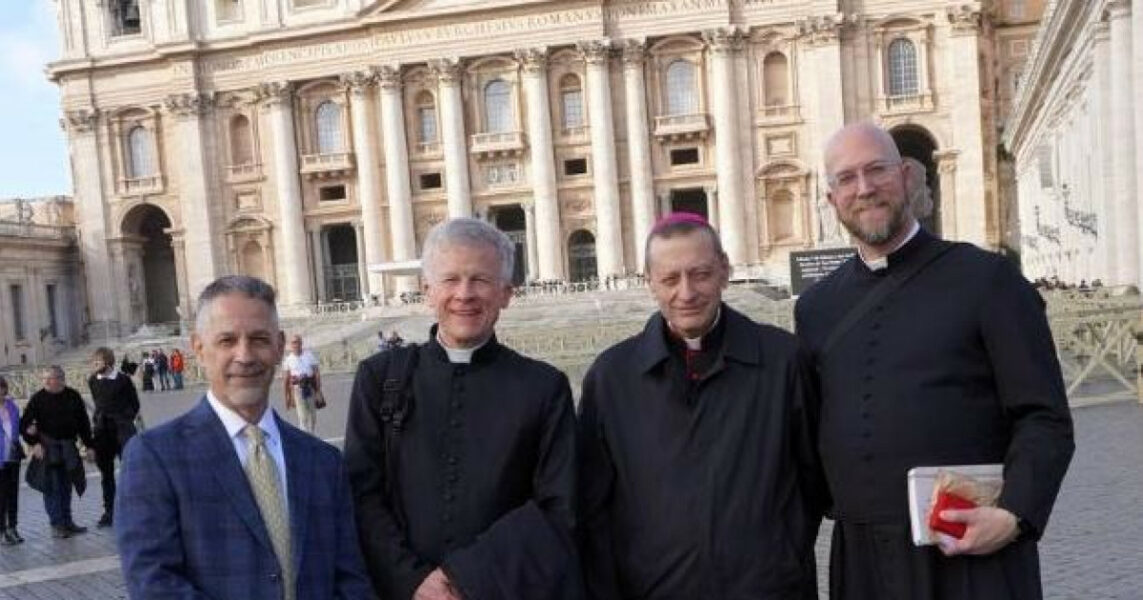
The apostolate Courage International responded to the recent report from the synodal study group on controversial doctrinal and pastoral issues, accusing the Synod’s General Secretariat of presenting a “false and unjust” image of its pastoral work with people who experience same-sex attraction. In a statement published on May 8, the organization described the Vatican document as “slander” and an “infamy,” particularly rejecting insinuations about alleged “reparative therapies” and denouncing that the report is based solely on the negative testimony of a single person.
Courage International’s Response to the Synodal Report
On Tuesday, May 5, 2026, the Synod’s General Secretariat published the final report of study group number 9, on “Theological Criteria and Synodal Methodologies for a Shared Discernment of Controversial Doctrinal, Pastoral, and Ethical Issues.” As several media outlets have reported, the document refers to the Courage apostolate in an unfavorable manner. Additionally, an “annex document” provides the testimony of an individual and their negative experience with Courage.
First, Courage considers this report to be slander and an infamy against the organization and its members. Slander, because the report misrepresents Courage’s work. The Courage apostolate is not, nor has it ever been, involved in “reparative therapies,” as alleged. The study group could have clarified this point simply by contacting Courage’s board of directors. However, instead, the report presents the experience and opinion of a single person as part of an official ecclesiastical document.
Second, it is unfair to our members for the Synod to publicly present Courage’s meetings and members in a negative light based on the experience of a single person. This individual describes the meetings they attended as “secret and hidden.” Courage members understand that the meetings are confidential and safe—precisely so that they can speak frankly from their fragility without fear of
someone exposing them. That is what this individual is doing by describing the meeting participants as “isolated, hopeless, and often depressed” people. If their assessment is correct, we do not know. But it is precisely because they often feel alone, hopeless, and depressed that we gather with these people to provide them support, and we insist on confidentiality because it allows them to speak freely about
their struggles.
Courage has suffered slanders and infamies in the past, but usually from secular sources. It is a great sadness and an additional wound for our members that this false and unjust representation comes from a Vatican document. If the synod organizers wish to learn more about Courage and the pastoral work it has carried out for over 45 years, our chaplains and members would be delighted to meet with them.