


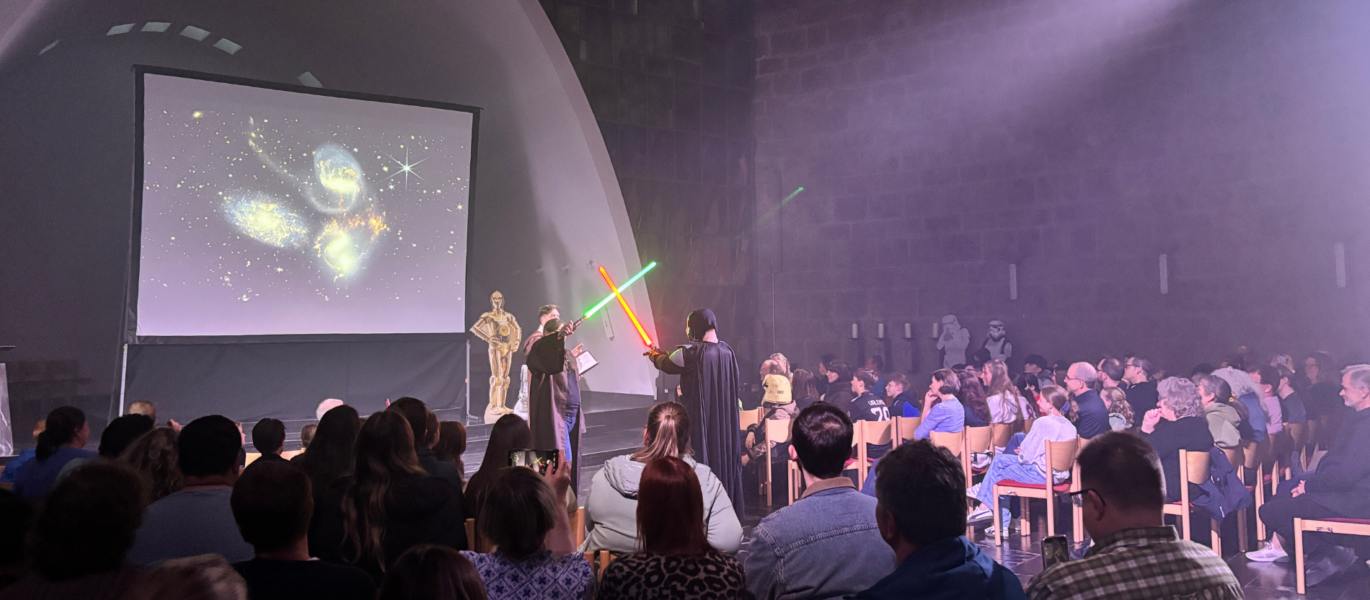
A church in Germany has incorporated scenes and characters from Star Wars into a religious celebration as part of its «strategy» to attract young people who are increasingly distant from the Church. The initiative took place in Burg Feuerstein, in Bavaria, and was driven by the priest in charge of youth pastoral care, Gerd Richard Neumeier,
according to the German media outlet Katholisch, e, the event was not a mass, but a “gottesdienst” —a German term that generically designates an act of worship— in this case a Word Celebration, that is, without Eucharist.
Darth Vader in the Temple as a Pastoral Resource
The celebration began with a scene inspired by the film saga: characters like Darth Vader and imperial soldiers burst into the celebratory space in search of good to combat it. The scene culminated with the appearance of a Jedi knight and a lightsaber duel in which good triumphed.
According to the responsible priest, this scenic resource was intended to introduce the central theme of the event: the struggle between good and evil, light and darkness. From there, it transitioned to the elements proper to the Word liturgy, such as biblical readings, psalms, and Gospel.
The Strategy: Connecting with Youth Imagery
Neumeier himself frames the initiative within a broader pastoral strategy. As he explains, the goal is to respond to the growing disconnection of young people from the Church, especially among those preparing for confirmation.
According to his approach, using cultural references like Star Wars allows for creating a “bridge” to faith, by leveraging themes present both in the saga and in the Bible, such as the opposition between good and evil or the victory of light over darkness.
The priest justifies this approach by appealing to documents like Christus vivit and the guidelines of the German Episcopal Conference, which encourage developing a “creative” youth pastoral adapted to the current context.
Between Creativity and Trivialization
The initiative has sparked diverse reactions. Although the priest assures that the response has been mostly positive and attendance was high, he also acknowledges the existence of criticisms.
However, he has pointed out that the format has been designed so that other parishes can replicate it, even without having the same material resources. The intention, he maintains, is to offer a model that allows reaching young people distant from religious practice.
The Loss of Sacramental Sense
When the Church adopts foreign languages and turns worship into a staging, it loses what makes it unique. Young people seek truth, meaning, and a proposal that challenges and transforms them. Everything else, far from bringing them closer, contributes to emptying the content of faith and confusing the message of the Gospel.
Recent cases, like the protest by young Argentinians after the techno show in Plaza de Mayo, have made it clear that young people do not demand adaptation to the world, but doctrine, clarity, and fidelity to the Church’s identity.