


This Saturday, May 2, Hakuna Group Music lands in Venezuela for the first time. It will be at the Fórum de Valencia (Carabobo), with a 360-degree setup, more than fifty artists on stage, between 8,000 and 9,000 tickets with the same motto repeated without blinking: «kneeling before the Eucharist and standing before the world».
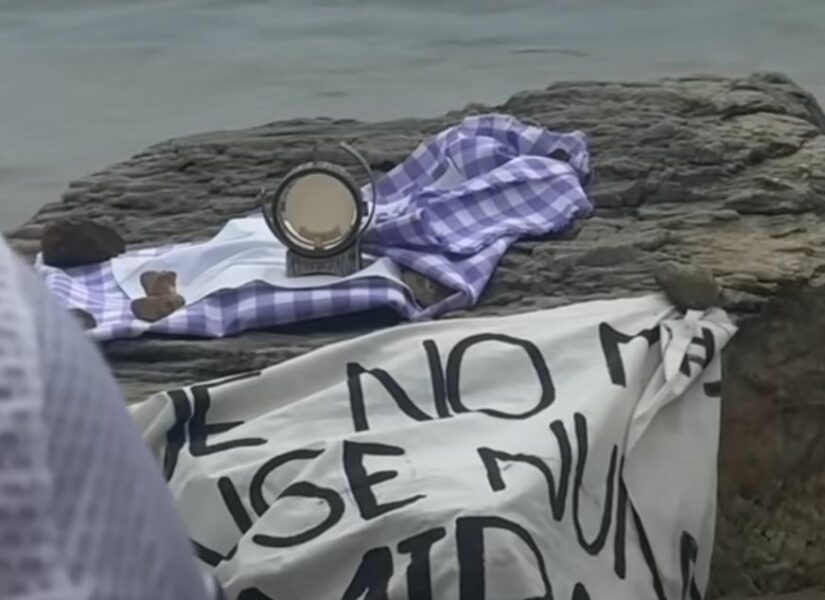
It is advisable, before the lights come on, to watch the video we link. What appears in it is not some defamatory campaign by an enemy of the movement: it is material produced and disseminated by Hakuna’s own environment and it happened during these days in Venezuela. What is seen is this: the Most Holy Sacrament exposed on a beach rock, more or less covered with a checkered domestic tablecloth, the monstrance placed as if setting the tablecloth for a snack, a graffiti banner stretched at the feet, and not a single identifiable priest or deacon on stage. Only a nun.
From there, the questions are inevitable and demand a public response:
Was there permission from the Ordinary of the place? Because the public exposition of the Most Holy requires it (c. 942 CIC; Redemptionis Sacramentum 137).
Was there an ordained minister? Because exposition in a monstrance with Eucharistic blessing is reserved to the priest or deacon (1973 Ritual, n. 91). A nun does not fulfill that function.
Where is the altar, the candles, the incense, the minimum dignity of the place? Because Redemptionis Sacramentum 138 states it clearly: nothing that could obscure the centrality of the Eucharist should distract the attention of the faithful. A rock is not an altar. A pareo is not a liturgical cloth. A photo session is not adoration.
Hakuna has been selling its «charism» for years as an argument that excuses everything: youthful freshness, closeness, spontaneity. But no charism authorizes treating the Most Holy with less care than would be given to handling an object of moderate material importance. When the monstrance becomes stage prop for advertising—in reels, posters, viral images to sell tickets—we are no longer dealing with an ecclesial movement: we are dealing with an experiential marketing operation that uses the Most Holy as a brand asset.
And here a stop must be put. The faith of the Church is demanding it, not anyone’s rigorism. If we truly believe that in the Eucharist Christ the Lord is present in a real, true, and substantial way, the material signs with which that presence is treated are not an aesthetic detail. They are the public proof of the faith that is claimed to be professed. And when those signs are systematically degraded—and this is systematic in Hakuna, not an isolated slip—what is eroded is not the liturgy: it is the faith itself of the thousands of young people that the movement claims to want to evangelize.
Venezuelan youth ministry, the bishops who deal with Hakuna, and in this specific case the Ordinary of Valencia have a clear duty before May 2: to demand explanations about what will be done with the Most Holy around this concert, with what authorization, with what minister, and under what conditions.
Hakuna arrives in Venezuela with a good motto and a very bad application. Anyone who truly believes that one must be kneeling before the Eucharist should start by reviewing exactly what they understand by «being kneeling.» It is not a posture for the reel. It is the concrete way—material, ritual, safeguarded by the Church—of treating God that includes avoiding feel-good worldliness that generates painful confusion.