


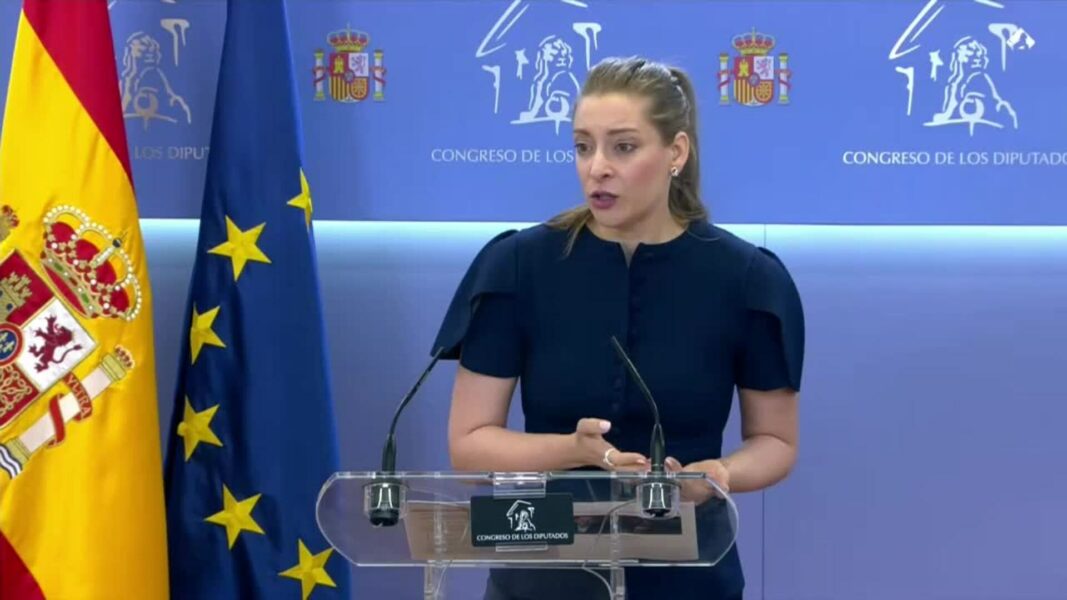
The spokesperson for the Popular Party in Congress, Ester Muñoz, assured this Tuesday in a press conference that abortion “is not a problem for Spaniards” and that no woman has difficulties accessing it in Spain. However, these statements—which confirm the acceptance of abortion within the main opposition party—have not merited even a single mention on COPE, the broadcaster of the Spanish Episcopal Conference.
Muñoz also insisted that “the Government is lying when it says that with this reform it is going to make the right to abortion a fundamental right,” reducing the debate to a purely legal issue.
The speech is part of a consolidated line in the Popular Party, which for years has assumed both abortion and euthanasia within its dominant political consensus. There is no real opposition, but rather a de facto acceptance accompanied by legal nuances.
Up to this point, the political landscape. But what is truly significant is not only in what is said, but in what is omitted.
A few days ago, Argüello pointed out that the Executive was assuming a role that goes beyond political management, setting criteria on essential issues such as life, marriage, or sexuality from “ideological faith criteria,” without relying on reason or common experience. There, they do point it out and declare it. But when the PP says it… it is a silence that speaks for itself.
In other areas, such as immigration, the intervention of the ecclesiastical hierarchy has been direct. In the latest CEE press conference, García Magán warned that “the Church does not operate at the level of slogans, neither this one nor any other”, he stated, insisting that its vision is “much broader and richer.”
In this sense—and when directly questioned about Vox—he distanced himself from specific political approaches, including those that seek to establish exclusive priorities based on nationality.
The comparison is inevitable.
On issues where legitimate prudential discussion is possible, they raise their voices. On issues where the Church’s doctrine is clear, constant, and unequivocal—like abortion—they opt for silence depending on who says it.
That is the true double standard.
The biblical tradition uses a severe expression to refer to those who do not fulfill their duty to warn: “mute dogs,” incapable of barking when the danger is evident. This is not a rhetorical image, but a warning about the responsibility of those who must speak.
Because on fundamental issues, silence is not prudence.