


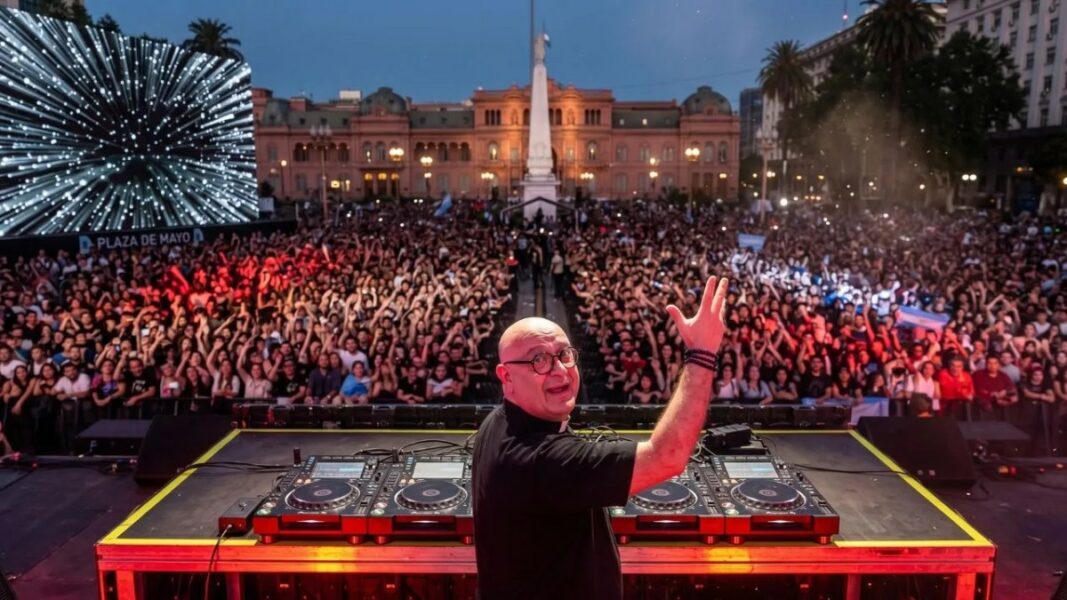
The reaction has not been long in coming. Days after the controversial act held in Plaza de Mayo —a massive event with electronic music in homage to Pope Francis that had already generated criticism—, a group of young Argentine Catholics has publicly expressed their discomfort.
They have done so through a letter published in the newspaper La Prensa, in which they denounce the “grave scandal” caused by what happened on April 18 and express their bewilderment at the positive assessment that some ecclesiastical authorities would have made of the event as a way of “reaching the youth.” Far from feeling represented by that approach, the signatories maintain that this image does not correspond to the reality of many believing young people.
A generation that does not recognize itself in the banalization
The text is not a simple one-off complaint, but a deeper stance. The young people openly reject the idea that evangelization should involve reproducing dynamics typical of nightlife or mass entertainment, and they question identifying youth with that type of proposals.
On the contrary, they claim a demanding faith without concessions. In their letter, they make it clear that they do not seek a Church that adapts to the world’s criteria, but one that maintains its identity and transmits the Christian message without ambiguities, even when it is countercultural.
“What attracts us is the full truth”
From there, the letter becomes a direct petition to the pastors. With a firm but respectful tone, the young people demand something they consider basic: to receive the Church’s doctrine in its entirety, without omissions or reinterpretations.
In that sense, they explicitly mention doctrinal and moral issues that, in their view, are not being transmitted clearly: the existence of sin, sexual morality, the need for conversion, the meaning of salvation, or the reality of spiritual combat. It is not, they say, about hardening the discourse, but about avoiding confusion.
Liturgy, sacraments, and coherence
The concern is not limited to the doctrinal realm. The signatories also denounce what they consider a loss of meaning in liturgical life, and they ask for more dignified and reverent celebrations, far removed from forms that, in their opinion, blur the sacred character of the Mass.
In the same vein, they insist on the need to maintain clarity in sacramental discipline, especially regarding the reception of communion, emphasizing that it cannot be detached from the conditions established by the Church itself.
A call that challenges the Church
Beyond the specific case that motivated the letter, the underlying message points to a broader issue: what kind of Church is capable of attracting young people today. Against the temptation to adapt the message to make it more accessible, the signatories maintain that what truly challenges is not the lowering of demands, but authenticity.
“What reaches us is Christian radicality,” they affirm, in one of the central ideas of the text. They do not ask for a more flexible Church, but a more coherent one, capable of proposing the path of faith without ambiguities, even when it demands renunciation and sacrifice.