


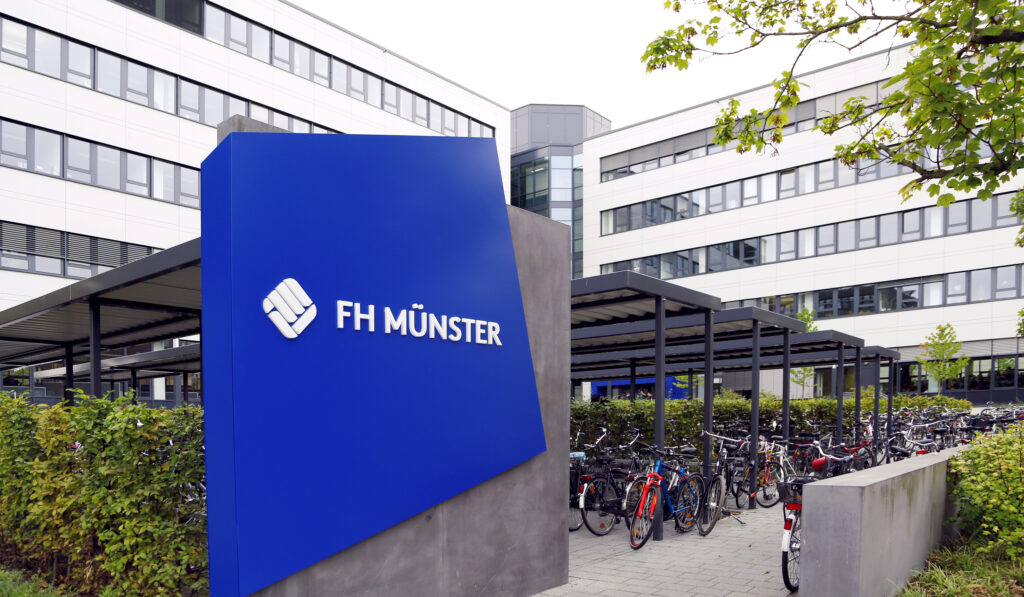
The University of Münster will transform its current Center for Islamic Theology into a fully recognized faculty within its academic structure. According to German media reports, it would be the first faculty of this type in Germany and, according to the university itself, also in Europe.
This is the first time that a European public university grants Islamic theology the same rank as that already held by Catholic and Protestant faculties, a fact that has been presented by its promoters as an advance in the “equality” between religions.
From experimental project to consolidated structure
The current center for Islamic theology was created in 2012 as a modest initiative. In just over a decade, it has grown to have hundreds of students and dozens of employees, which has allowed the university to justify its transformation into a faculty.
With this change, the new institution acquires full competencies: it will be able to grant doctorates, intervene in the selection of professors, and design its own study plans, placing itself on the same level as Christian faculties.
Formal equality, substantive differences
Academic authorities have insisted that the goal is to work “on an equal footing” with Catholic and Protestant theology. However, the comparison presents substantial differences.
Unlike the Church, Islam in Germany does not have a unified doctrinal authority. To address this lack, the model adopted in Münster relies on an advisory council composed of Islamic organizations, including Ditib or the Central Council of Muslims.
This body will have the capacity to intervene in key religious issues, such as the appointment of professors, which introduces an element of external control that does not exist in Catholic faculties in the same terms.
A model that seeks to influence beyond the university
The new faculty is not limited to the academic sphere. Its promoters aspire to train imams, professors, and religious leaders within Germany, with the stated objective of reducing dependence on foreign influences.
Additionally, the institution intends to intervene in social debates such as integration or the prevention of extremism, using tools like social networks to spread its vision of Islam.
Two opposing models of relationship with religion
Münster’s decision highlights a deeper contrast than a simple lack of reciprocity. In Muslim-majority countries, Islam remains the structural axis of public life and does not consider diluting its identity or doctrinally equating other religions in its institutions.
Europe, on the other hand, seems to be moving in the opposite direction: it tends to relativize its own Christian roots while promoting the institutional equating of other religious traditions within its structures.
Therefore, it is not a matter of the Islamic world not offering the same, but of the fact that it does not renounce its own religious identity, while in Europe a growing difficulty is observed in affirming one’s own.