


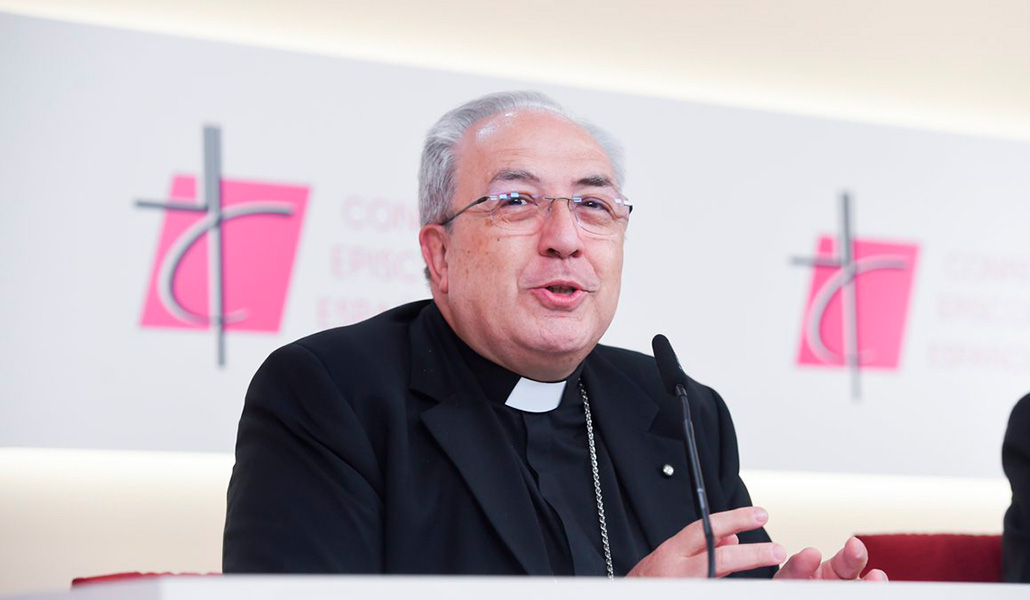
The Spanish Episcopal Conference has responded to the political proposals that prioritize nationals over immigrants in access to basic services, emphasizing that the Church is not guided by “slogans” and that its fundamental criterion is the dignity of every person, in line with the recent approach of Pope Leo XIV on the migration issue.
Message from Leo XIV after his trip to Africa
The words of the general secretary of the Episcopal Conference, Mons. Francisco César García Magán, come after Pope Leo XIV addressed the migration debate after his trip to Africa, where he emphasized the complexity of the phenomenon and recalled that States have the right to regulate their borders, but without losing sight of the dignity of each person and the root causes of migration.
The Church rejects the logic of “slogans”
García Magán warned that the current debate is marked by a dynamic of polarization based on simplistic slogans. “The Church does not operate at the level of slogans, neither this one nor any other,” he affirmed, insisting that its vision is “much broader and richer.”
In this sense—and when directly questioned about Vox—he distanced himself from specific political approaches, including those that seek to establish exclusive priorities based on nationality.
Neither exclusion nor elimination of the other
The episcopal spokesperson was clear in rejecting proposals that imply marginalizing certain groups: “When one side wants to annul, exclude, eliminate the other, the Church is not in that, nor can it be, nor will it ever be.”
In contrast, he recalled that the Church’s action in public life is based on two essential principles: the dignity of the human person—“untouchable and non-negotiable”—and the pursuit of the common good of the entire society.
The Gospel as the ultimate criterion
García Magán insisted that the Church’s criterion is not political, but evangelical. “The neighbor is not only the one from my party, my country, or my religion,” he stated, evoking the parable of the Good Samaritan as a central reference.
Likewise, he recalled the passage from the Gospel of Saint Matthew on the final judgment—“I was hungry and you gave me food, I was a stranger and you welcomed me”—as the definitive criterion of Christian action.