


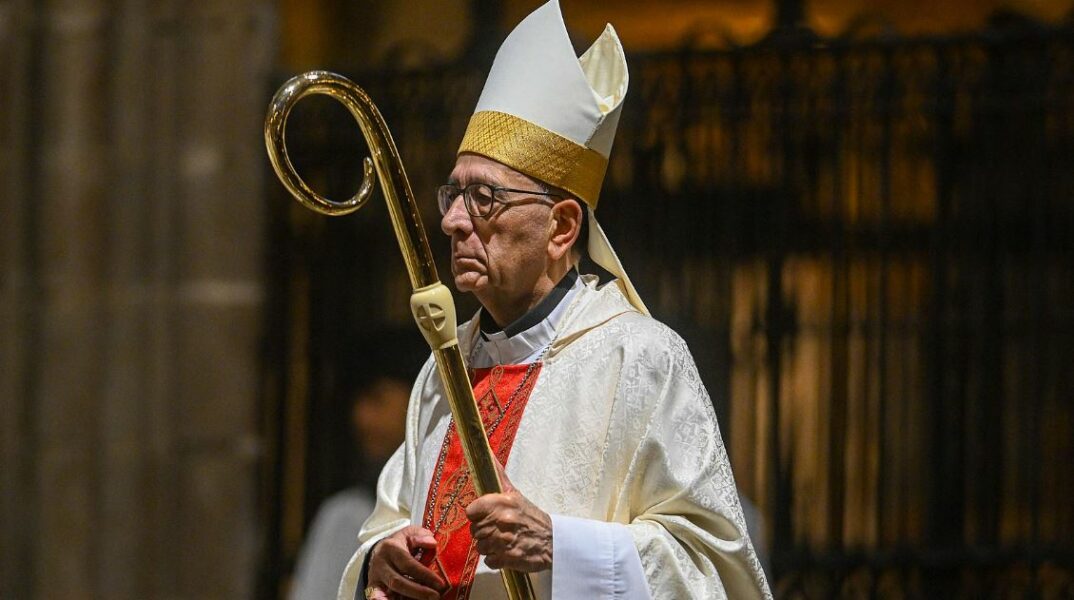
Cardinal Juan José Omella, Archbishop of Barcelona, turns 80 on April 21 and thus reaches the age limit at which he loses the right to participate in a potential conclave, leaving Spain with Cobo as the only cardinal elector and confirming the loss of influence of the Spanish episcopate in the universal Church.
From Aragon to the episcopate: the early years
Born in 1946 in Cretas, in Aragon, Juan José Omella studied Philosophy and Theology in Zaragoza, Louvain, and Jerusalem. He was ordained a priest in 1970 and developed his ministry for years in his diocese of origin.
His appointment as auxiliary bishop in 1996 marked the beginning of his episcopal career, which continued in various dioceses in northeastern Spain before his arrival in Barcelona.
The rise with Francis: Barcelona and the cardinalate
The decisive turn in his career came with the pontificate of Pope Francis. It was he who appointed him Archbishop of Barcelona in 2015 and created him a cardinal in 2017, also incorporating him into the Council of Cardinals, one of the Pope’s main advisory bodies.
Since then, Omella has been identified as one of the Spanish prelates closest to the line promoted by Francis, characterized by a commitment to dialogue and institutional presence.
Presidency of the Episcopal Conference: dialogue without results
Between 2020 and 2024, he presided over the Spanish Episcopal Conference in a particularly complex context, marked by significant social and legislative changes.
During those years, the Church in Spain maintained a relationship of interlocution with the government of Pedro Sánchez. However, that strategy of dialogue coexisted with the approval of relevant laws on sensitive matters, such as euthanasia in 2021.
Far from strengthening the public presence of the Church, that period left a sense of institutional weakness and a lack of response to the main cultural challenges.
A conciliatory profile in a context of tension
Omella has habitually been described as a bishop with a moderate and conciliatory profile. In Catalonia, during the years of the independence challenge, he tried to maintain a position of balance, avoiding further polarization.
That style has marked his public action, focused on mediation and understanding, in an increasingly demanding ecclesial and social context.
The visit of Leo XIV and the horizon of succession
Omella’s departure from the conclave coincides with the upcoming visit of Pope Leo XIV to Spain, scheduled from June 6 to 12. The Pontiff will be in Barcelona on the occasion of the centenary of the death of Antonio Gaudí and the inauguration of the tower of Jesus of the Sagrada Familia.
The trip could also serve to prepare the replacement in the Archdiocese of Barcelona. Among the names mentioned is that of the Archbishop of Pamplona, Florencio Roselló, although there is no official confirmation.
Read also: Does Roselló strengthen his profile in the succession horizon of Omella in Barcelona?
The end of an era
Omella ceases to be an elector, but he remains a relevant figure for understanding the Spanish Church of recent years: close to Francis, inclined toward institutional pact, and marked by a strategy of moderation that did not always bear fruit. His departure from the conclave certifies the end of an era and opens another more important unknown: who will occupy Barcelona and what course they will set for a decisive diocese in the Spanish ecclesial landscape.