


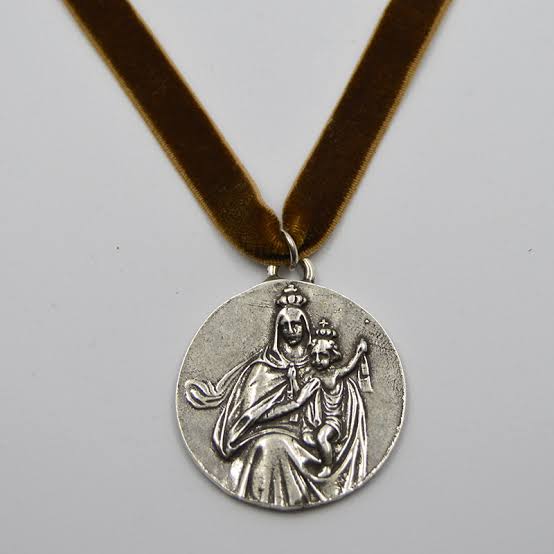
Fr. José Juan Sánchez Jácome / ACN.- In other times, some critics complained that Baroque art, especially in Mexico, insisted too much on scenes of suffering, because it depicts Jesus, certain biblical episodes, the saints, and the Blessed Virgin Mary with expressions of pain, and in those Baroque images there is no shortage of wounds, tears, and blood.
Some said it was exaggerated to insist so much on the suffering, as if we were a people stuck on Good Friday and never reached the Resurrection; as if we were a people who remained at the Cross and never reached the light of Jesus.
However, our situation as a people who suffer, who continue to live in injustice and violence, has not changed, so these images remain a reference that instills comfort, strength, and hope, to respond in a Christian way to this reality of pain.
Our people, in a special way, have identified closely with the Blessed Virgin Mary, from whom we receive help and inspiration. We all need help; we are not perfect, we are not finished, but we require others. Even in the most basic things we need help.
Unfortunately, some feel self-sufficient and live as if they did not need others. They think they can solve their needs on their own and close themselves off from recognizing the much-needed support of others. But very soon necessity brings us back to reality, since the collaboration of others is always required.
In our daily needs, thanks be to God, we find people who support us, who care, and who are attentive to offer their help. These people make our lives lighter. That is why we must foster charity and humility so as to be available to the needs of others.
However, there is a more urgent and pressing help that is also offered in life. There are moments when we need not only help, but rescue, prompt assistance; we need someone to rescue and defend us urgently. We need someone to hold us so we do not keep falling; someone to wipe away our tears and strengthen us so that, despite the greatest pain, we do not lose the meaning of life.
In emergencies and tragedies it becomes most evident that we cannot do it alone, that we trust unconditionally in the other, that we urgently need a refuge and that we lie in search of shelter.
We recognize this in Mary, for when we no longer know where to go, when our strength has run out, there is the Mother to rescue us and sustain us in the struggle of life. Mary welcomes us and makes us see that we are safe in her hands.
The Marian titles and advocations deepen in her suffering and in the strength she offers us in those moments of pain. That is why we invoke her as: the Virgin of the Abandoned, Our Lady of Refuge, the Virgin of Solitude, Perpetual Help, the Virgin of Sorrows, and Help of Christians, among so many other titles.
The people of God have contemplated Mary through her tears and sufferings, calling her with these titles that establish an intimate connection with a people who continue to suffer, yet maintain their hope in the Lord.
Mary, naked and stripped of her dignity, held the Child Jesus in Bethlehem. And, naked and stripped of his humanity and dignity, she held Jesus on Calvary. In one of his works, Fr. José Luis Martín Descalzo refers to her as: “Virgin expert in sorrows, wise in pains, teacher in suffering, knower of all swords.”
Mary is a mother who is moved by our pain and never leaves us alone. As she did with Jesus, she continues to stand by her children in times of suffering and darkness. Because that is the faith we have inherited, the testimony that so many generations and Christian communities give us about Mary.
Therefore, never stop turning to her; never hesitate to touch Mary’s heart and lay your pain in the blessed hands of Mary, who is “Virgin expert in sorrows, wise in pains, teacher in suffering, knower of all swords.”
Besides exalting and recognizing her as a queen, we recognize and seek her as our refuge, help, defense, and perpetual and eternal aid. Thus we turn to her, thus we recognize and celebrate her.
Chesterton said: “Each generation instinctively seeks its saint, and it is not what the people want, but what the people need.” God allowed that, in the early history of the Church, when there was much hatred and persecution, martyrs arose—men and women who denied Christ nothing and were willing to shed their blood for the Gospel.
At another time, when corruption, decay, and disorder reigned in society, God raised up a host of men and women who stood up to society and went to live in the desert, becoming the Desert Fathers and Mothers. By going to the desert, amid so much corruption and disorder, they made people come to them and become discontented with living in corruption and lies. Thus they became spiritual guides and a great stimulus to return to the Christian faith.
There was another time when there was much ostentation and luxury, and the Church was forgetting the poor. In such a time God raised up St. Francis of Assisi and the mendicant orders, who renewed Christian life and turned their gaze to the poor, the sick, and the needy. Because every generation instinctively seeks the saints.
Our generation instinctively seeks those saints who are compassionate, close, kind, merciful, always ready to help in critical times, precisely like Mary. Our generation has such need of this mother. Before these sorrows and sufferings we have a woman with whom we identify and who does not pass by the suffering of her children.
Francisco Fernández-Carvajal says: “Our sorrows and pains lose their bitterness when they are lifted up to Heaven. Poenae sunt pennae, sorrows are wings, says an ancient Latin saying. An illness can sometimes be wings that lift us up to God.”
Mary lifts us from our falls, sufferings, and discouragements and raises us to the things of God. May we be a generation that seeks Mary more, that does not forget it has a mother, and that in moments of despair we turn to her as our refuge, help, and protection.
In his characteristic witty way, Cardinal Albino Luciani, who became Pope John Paul I, referred to the names and titles we give to the Virgin Mary to highlight above all what is most important in our devotion to the Blessed Virgin Mary: the imitation of her virtues:
“One day I was asked—how curious these pious souls are!—‘Which Virgin do you prefer? The one of Mount Carmel? Because, you see, I am devoted to the Virgin of Mount Carmel.’ They are simple people, and I replied: ‘If you will allow me a suggestion, I recommend the Virgin of the plates, bowls, and soups.’ Note that the Virgin became a saint without visions, without ecstasies; she became a saint through the small things of domestic work. What I mean is that we must have great devotion to the Virgin; pray the Rosary, trust in her, but we must also imitate her virtues. So do not tire of recommending devotion to Mary.”
As in practically every month of the year, this month of July we once again encounter the Blessed Virgin Mary, through the immense affection our people express to her, celebrating the Virgin of Mount Carmel who reigns in our homes, processes through the streets, and sails across our seas.
Cardinal Gomá refers to the special affection the Church professes for the Virgin of Mount Carmel, stating: “The Christian people have venerated the Virgin of Mount Carmel particularly through the holy scapular as the Mother of God and our Mother, who presents herself to us with these credentials: ‘In life, I protect; in death, I help; and after death, I save.’”
Of the scapular it is also said:
“Strong armor
Of the combatants,
The war is raging:
Extend the help
Of your Scapular.”
May these verses by José María Pemán dispose our hearts to celebrate the Virgin of Mount Carmel:
“Load-bearers of the Island,
rock her gently,
for you carry on your shoulders
the Queen of the sea!…”
You, load-bearer, who do not know
how to pray the Salve, perhaps:
if when you carry her, you rock
your step in good rhythm,
even if you do not know the Salve,
God will forgive you…,
for rocking the Virgin thus
is already a way of praying!”