


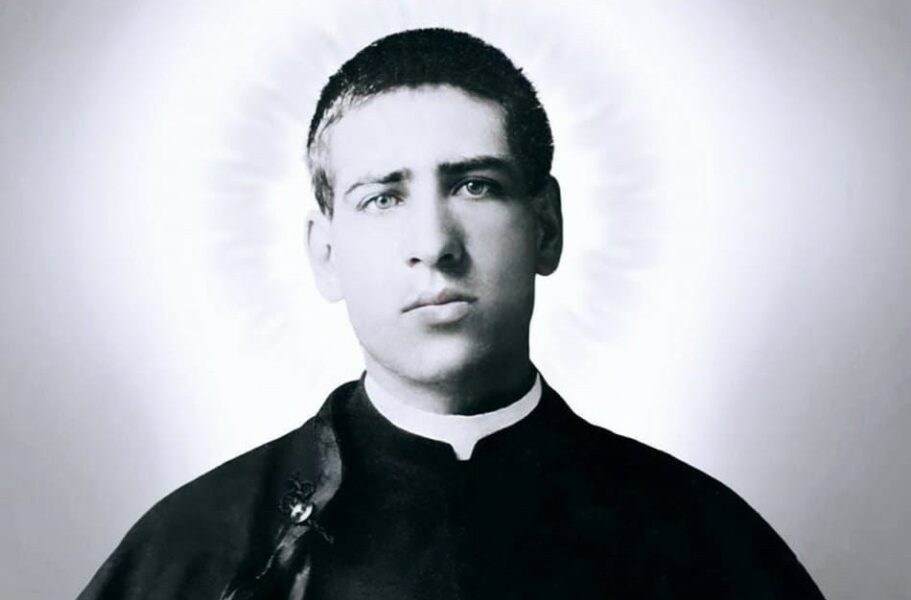
The bishop of Cuernavaca and president of the Mexican Episcopal Conference (CEM), Ramón Castro Castro, offered a new installment of the catechesis series “Witnesses of the Kingdom,” centered on the figure of Saint Toribio Romo González, martyr of forgiveness and patron of migrants. Under the title “The forgiveness that heals and liberates,” the prelate presents the priest from Jalisco as a concrete testimony that Christian love does not stop even in the face of betrayal and that authentic freedom is born of forgiveness.
The catechesis is part of the series begun in July 2026, which recovers the memory of the Mexican martyrs within the framework of the centenary of the institution of the solemnity of Christ the King by Pius XI. Castro recalls that many people live locked in “a prison without bars”: resentment. In the face of that inner prison, the bishop contemplates a priest who “always lived free because he always lived forgiving” and who today “walks with those who cross deserts.”
The Gospel message of Jesus, who “loved to the end,” finds a clear update in Pope Leo XIV: that love does not stop in the face of betrayal because forgiveness is “the concrete face of hope.” Castro strongly emphasizes that Christian forgiveness “is not forgetting or weakness,” but a gift that is first offered freely, as God forgives. “Where sin abounded, grace abounded all the more. To forgive is not to deny evil, but to prevent it from having the last word.” And he adds a decisive pastoral clarification: forgiveness heals the one who receives it, but above all liberates the one who gives it, because it takes him out of the prison of hatred.
Toribio Romo was born in 1900 in Santa Ana de Guadalupe, Jalisco. A priest during the height of religious persecution, he always forgave: those who treated him harshly and those who forbade him to celebrate Mass. Hidden in Tequila, he prepared a group of children for their first communion and offered his life to the Lord with a prayer that sums up his surrender: “Will you accept my blood that I offer you for the peace of the Church?” On February 25, 1928, the soldiers killed him. He died like Christ, repeating the Master’s words: “Father, forgive them, for they know not what they do.”
The most beautiful thing, the bishop highlights, is what happened afterward. That priest who offered his blood for the peace of the Church is today, for the people, the patron of migrants. There are thousands of testimonies of those who, lost in the desert, were helped by a young man with clear eyes who gave them water, showed them the way, and asked them: “Look for me in Santa Ana de Guadalupe.” His sanctuary receives nearly a million pilgrims each year who leave letters, backpacks, and bottles of water. “He who gave his life goes out to meet the one who risks his own,” because Christ said: “I was a stranger and you welcomed me.”
Castro connects this memory with the current teaching of Pope Leo XIV in Magnifica Humanitas, where he calls for building an unarmed peace and safeguarding the person, especially the weakest. In Saint Toribio the two demands come together: “There is no peace without forgiveness and no justice without welcoming the one who knocks at our door. Forgiving the heart and opening the house are the same love that does not give up.”
The catechesis concludes with two very concrete questions directed at each listener: “Whom do I need to forgive? Whom do I need to welcome?” It may be a man or a woman who has been avoiding each other for years, or a stranger waiting for a glass of water. Saint Toribio teaches that forgiveness liberates and that hospitality saves.
In a Mexico marked by open wounds, violence, and the permanent drama of migration, the figure of the Jalisco martyr is recovered not as a nostalgic memory, but as an urgent invitation to live free from resentment and open to welcome. The series “Witnesses of the Kingdom” thus continues its itinerary of forming disciples capable of giving witness in times of fragile fidelities.
The full episode can be viewed here: