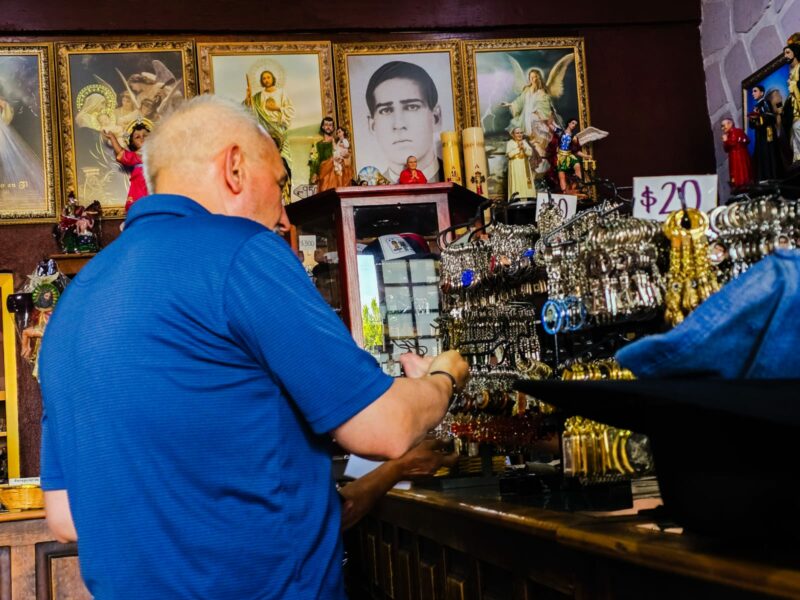
He is in Mexico promoting social and charitable works as part of the Catholic group he represents and getting to know the Catholic faith of Mexico. The former secretary of the Prefecture for Economic Affairs of the Holy See during the pontificate of Pope Francis, Ángel Lucio Vallejo Balda, pilgrimaged through the Highlands of Jalisco to learn about the testimony and life of faith in that region of the country on the centenary of the Cristiada.
Housed in Tepatitlán de Morelos since Friday, April 10, Vallejo Balda visited the emblematic places where the Mexican martyrs shed their blood, witnessing the local piety on the eve of the festivities of the Lord of Mercy.
The priest born in La Rioja, Spain, in 1961, and a deep connoisseur of religious architecture, toured the shrines and temples of Tepatitlán, including the one of San Francisco de Asís, a temple from 1775 whose towers give identity to the so-called “Pearl of the Highlands” and where the urn containing the remains of Saint Tranquilino Ubiarco, hanged outside Tepatitlán on October 5, 1928. That visit was an opportunity for Vallejo Balda to acquire some relics of the martyr, expressing his admiration for being a diocesan saint priest that reminded him of the Spanish martyrs of the civil war.
A mandatory stop was the Sanctuary of the Lord of Mercy, the enclosure that houses the precious image to which the people of the highlands pay special adoration, found in Las Varas, Cerro Gordo, on September 6, 1839, whose festivities are among the most representative in the Highlands and will extend until April 30. He also visited the brand-new temple dedicated to the martyr Tranquilino Ubiarco, consecrated just on October 5, 2023. Vallejo Balda was impressed by the dimensions of the enclosure that houses the first-degree relics of the vicar priest of Tepatitlán, built right on the spot where the dry tree still stands where Father Tranquilino was hanged, now dedicated as a space for meditation.
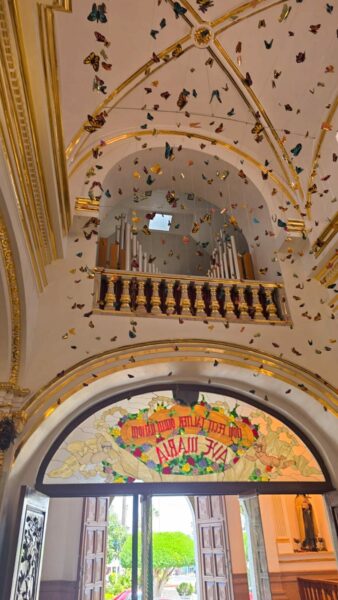
Likewise, thanks to the members of the “La Guadalupana” organs, Bob Knight and Manuel Escoto, the visitor, a scholar of sacred music and liturgical instruments, got to know the magnificent organ in the parish church of San Ignacio, municipality of San Ignacio Cerro Gordo, neighboring Tepatitlán, which marked a milestone in the region’s history since, for more than 30 years, no instrument of monumental dimensions had been built. Vallejo Balda recognized it for its approximately three thousand eight hundred pipes that form 72 registers or sound combinations; brought from San Diego, it was erected thanks to contributions from migrants from that locality in the United States, in a little more than a year, and inaugurated in January 2022.
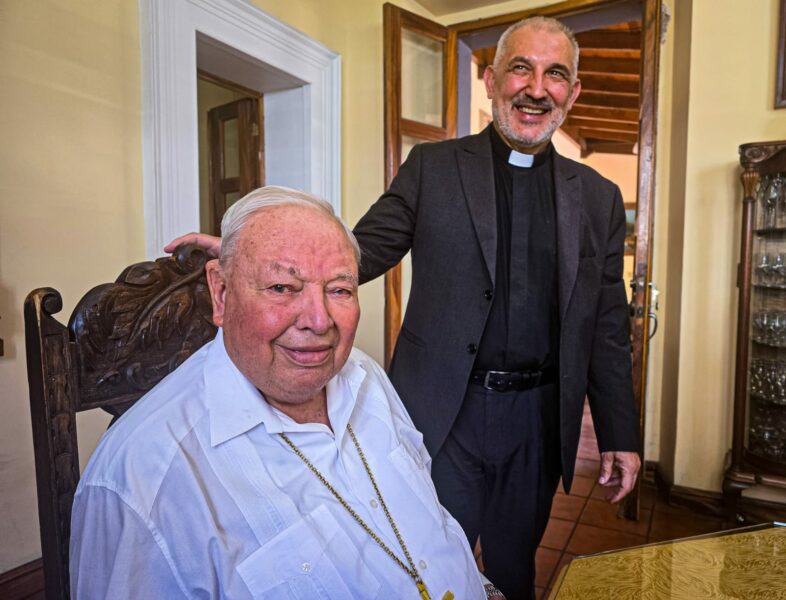
Father Ángel Vallejo, now dedicated to promoting social works after his Vatican journey, made a courtesy visit to the emeritus archbishop of Guadalajara, Cardinal Juan Sandoval Íñiguez, who turned 93 on March 28. The lunch, at the prelate’s home—the same one inhabited by the archbishop of Guadalajara Francisco Orozco y Jiménez, who faced the harsh years of religious persecution—was an occasion to converse and exchange opinions on the pastoral situation of the Church, Father Vallejo’s work in Mexico, and to recall anecdotes from Cardinal Sandoval’s life, such as his trip to Angola or when he was called to «sing» the votes in the conclave that elected Pope Francis. Those present at that meeting included Juan Manuel Reyes Brambila, a personal friend of the prelate and author of the book El verdadero rostro del cardenal Juan Sandoval Íñiguez; Guillermo Gazanini Espinoza, director of the Catholic News Agency and correspondent for InfoVaticana in Mexico, Father José de Jesús Gálvez Amezcua, parish priest of San Miguel Arcángel Tlaquepaque and friend of the emeritus archbishop, as well as the seminarian from the diocese of Cuernavaca, Juan José Gutiérrez Llamas. After the meal, Ángel Vallejo took a brief tour of the Guadalajara Cathedral.
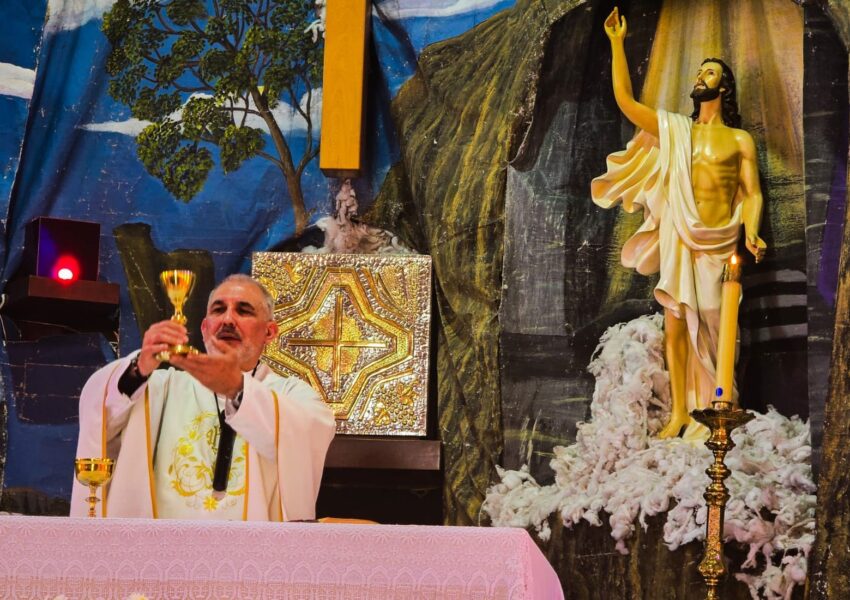
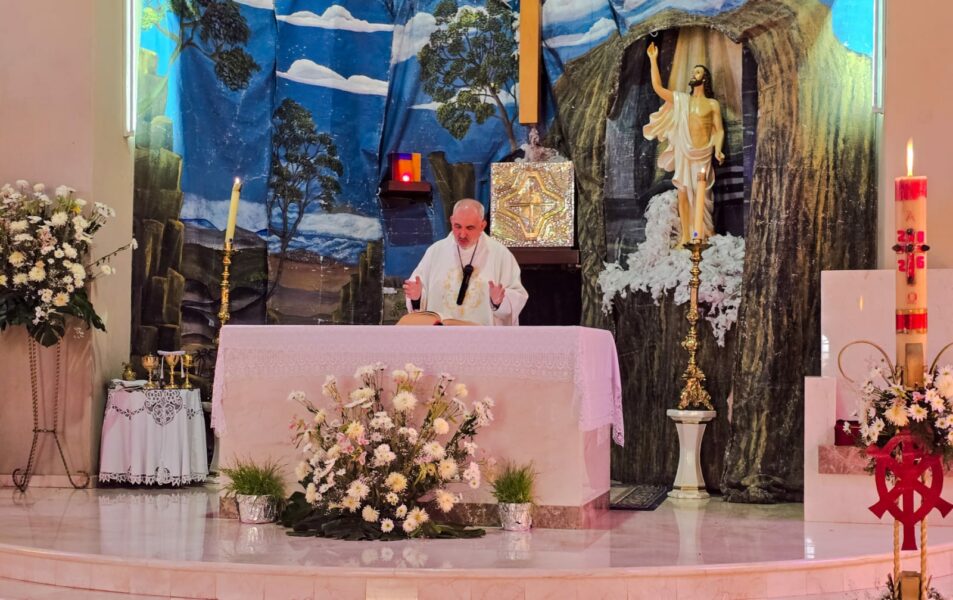
Back in Tepatitlán, he visited the “Espacio Grato para la Tercera Edad” asylum, entrusted to the community of the Reparadoras del Corazón Eucarístico de Jesús en el Corazón Inmaculado de María religious for the care of about twenty elderly people. On the second Sunday of Easter, thanks to the hospitality of the nuns and the permission of the local parish priest, Father Vallejo presided over the Eucharist in the open chapel that gathered a good number of the faithful, family members, and friends of the people in the nursing home. In his homily, the celebrant delved into the meaning of Quasimodo Sunday, also known as the Sunday of “Saint Thomas” or “Low Sunday” and “Dominica in albis,” a reference to the custom that those baptized in the Easter Vigil participated for the first time after removing their white garments—albs—on Saturday, at the vespers of the Octave.
After the celebration, he pilgrimaged to another of the emblematic places, now turned into an essential point on the Cristero route: the sanctuary of Saint Toribio Romo, martyred in Tequila, Jalisco, on February 25, 1928. Located in Santa Ana, Jalostotitlán, birthplace of the saint who has been recognized as patron of migrants—especially for the favors and miracles granted to those who go irregularly to the United States—, Vallejo toured the avenue of the 25 Mexican martyrs and the sanctuary complex, the chapel where the relics of Saint Toribio are kept and where his family members are buried, including his heroic sister “Quica,” María Marcos Romo, and the simple chapel located on the grounds of the house where the Cristero martyr was born, “La Mesita,” now a place of devotion and hope.
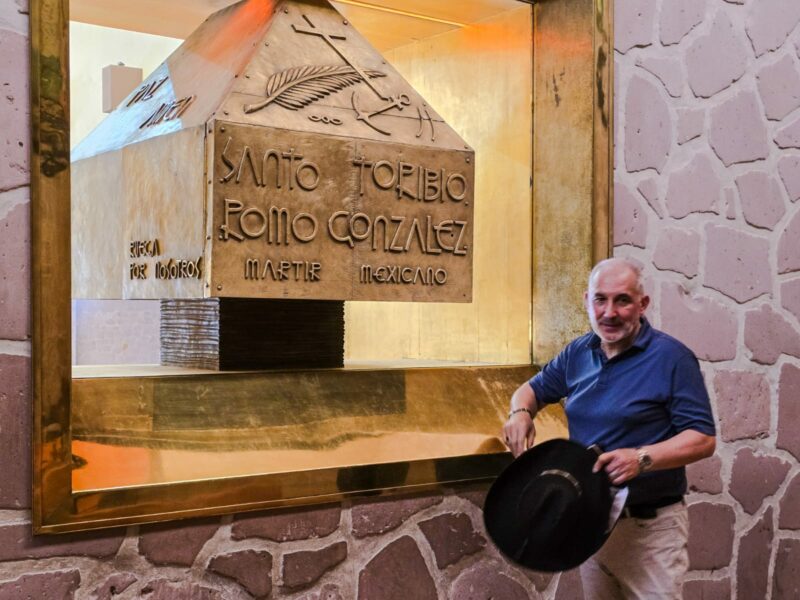
He did not hide his admiration and astonishment for the great sanctuary, a work in which the architect of God participated, Fray Gabriel Chávez de la Mora, consecrated and dedicated in October 2012. He took the opportunity to be at the foot of the urn that holds the relics and to pay a gesture of devotion, giving a kiss as a sign of respect and faith to the martyr of Christ the King.
Vallejo’s pilgrimage to the sanctuary of Saint Toribio concluded in the afternoon of Sunday, April 12. After spending the night again in Tepatitlán, the former Vatican secretary returned to Mexico City on Monday morning to begin his return home, concluding his visit to the Highlands of Jalisco on the centenary of the Cristiada.