


Four Years for Peacebuilding
ACN Editorial
On June 20, 2022, the murder of Jesuit priests Javier Campos Morales and Joaquín César Mora Salazar, along with layman Pedro Palma, at the San Francisco Javier parish in Cerocahui, Chihuahua, not only shocked the country: it opened a deep wound that revealed the fragility of Mexico’s social fabric and the inadequacy of institutional responses to structural violence.
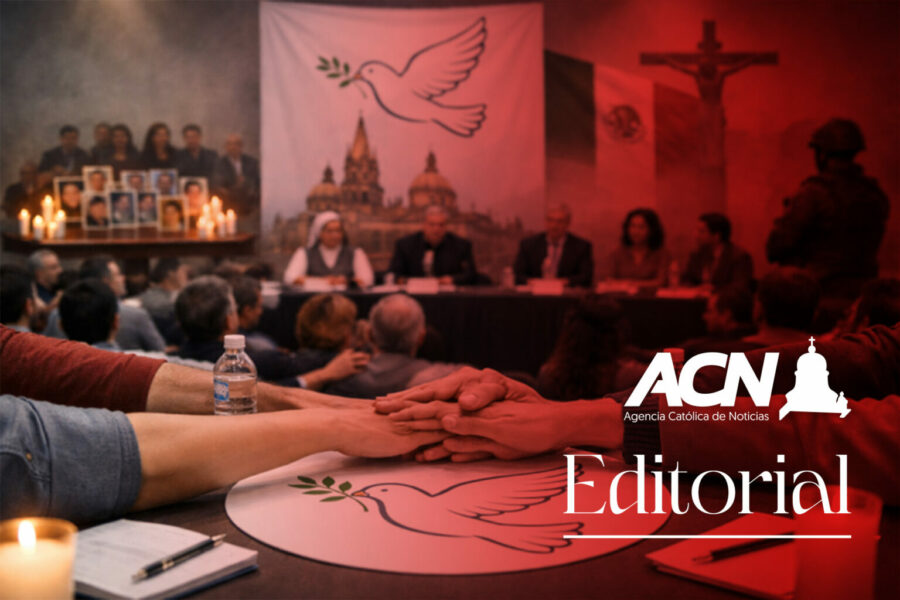
From that pain was born the National Dialogue for Peace, a plural movement that, in four years, has moved from lament to concrete proposals. What began as a cry from churches, families, and communities of the Sierra Tarahumara has become a national itinerary that today includes systematized methodologies, territorial networks, and two national encounters whose results are gradually being implemented.
The path traveled has clear stages whose implementation has not been simple. First, the broad listening that gave rise to the National Agenda for Peace. Second, the identification of good practices and the building of bridges between sectors. Third, the development of operational tools. Fourth, the Second National Dialogue, which seeks to link local projects with public narrative to achieve real territorial impact.
One of the fruits, among many of this process, is the document Methodologies for Peacebuilding (January 2026), which presents 18 concrete proposals for 14 local actions. Among them stand out the Circles of Peace in the penitentiary system, the Circles of Peace in schools, the Family Circles to heal conflicts and rebuild trust, Businesses for Peace (codes of ethics, conflict protocols, fair wage scales, mental health), the Manresa Program (VIVA Project, Outpatient and Residential Centers, Magis Houses and Connection Network) which has already served more than 8,000 people in mental health in the Sierra Tarahumara, the Municipal Units for Attention to Victims and Search for Persons, the Program for Strengthening Police Functions and Community Linkage, Community Policing, Community Mediation, the Integral Care of Creation and the Spaces for Recognition and Transformation for people in contexts of mobility.
These methodologies are not declarations of good intentions: they are protocols, steps, institutional and human conditions, symbolic objects and dynamics tested in concrete territories. Their delivery to the federal government, state authorities and nine mayors during the Second National Dialogue represents a milestone: organized civil society places verifiable tools on the table while calling for shared responsibility.
However, the balance after four years cannot be complacent. The National Dialogue for Peace has succeeded in bringing together the Mexican Episcopal Conference, the Mexican Province of the Society of Jesus, Cáritas, foundations, businesses, local governments, search collectives and faith communities from diverse traditions. It has shown that peace is built through listening, restorative justice, the dignification of municipal police, comprehensive care for victims and a culture of care, but fractured Mexico persists: thousands of disappeared persons, families without justice, orphans of violence, disintegrated communities and a future of uncertainty for millions of young people for whom scholarships have not restored horizon or belonging.
The central critique is structural and moral. Those who hold the legitimate monopoly on security—the State at its different levels—have not shown sufficient humility to recognize that violence has deep causes that neither the deployment of force nor welfare programs can heal. The methodologies of the National Dialogue insist that peace requires rebuilding the social fabric, listening to victims, real reintegration and community co-responsibility. Without that disposition, the tools remain on the shelf of good practices while the wound stays open.
The peace Mexico needs is not the one decreed or bought with public money. It is the one built in an orderly way, as Saint Augustine recalled in the quote that Pope John XXIII collected in Pacem in Terris (n. 165): “Does your soul wish to be able to overcome the passions? Let it submit to the one above and it will overcome the one below and peace will be made in you; a true, certain, ordered peace. What is the order of this peace? God commands the soul, the soul commands the flesh; there is no better order.”
Four years after Cerocahui, the National Dialogue for Peace has sown valuable seeds and has shown that another path is possible. What remains is for those who hold the power of security and justice to recognize that without humility, without listening and without renouncing the illusion of total control, that ordered peace will remain a distant aspiration.