


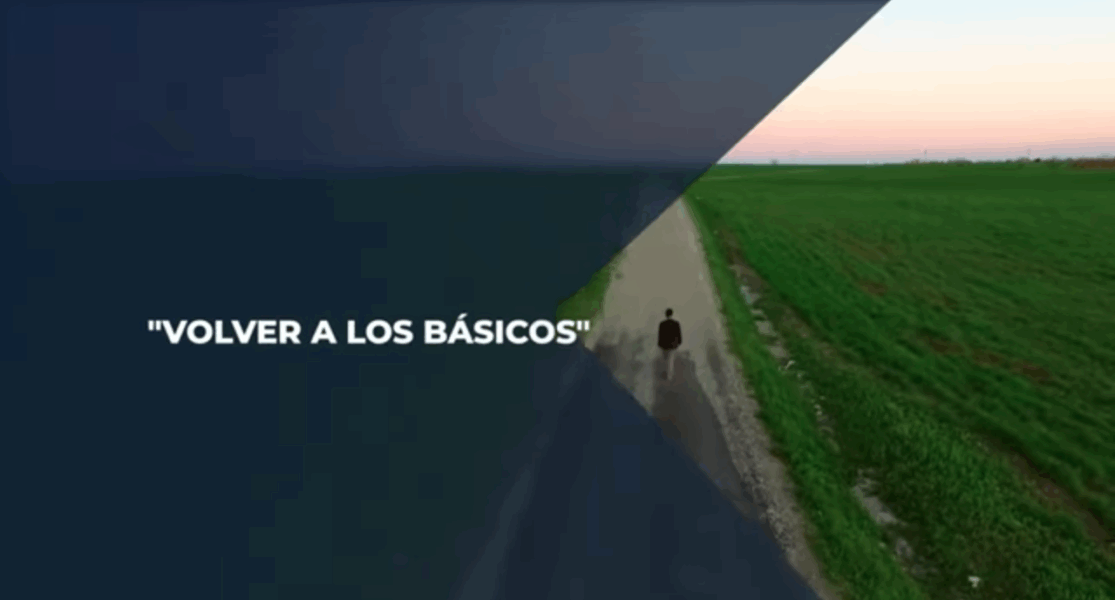
In the midst of a nation marked by violence, corruption, and political polarization, the bishop of Cuernavaca and president of the Mexican Episcopal Conference (CEM), Ramón Castro Castro, called on the faithful to return to the fundamentals of the Gospel to build the Kingdom of God. In the tenth chapter of the Venga a Nosotros tu Reino catechesis series, titled «Back to Basics«, the prelate emphasizes human dignity, fraternity, and authentic freedom as essential pillars to heal Mexico’s social wounds.
The catechesis, recently broadcast through the CEM’s digital platforms and framed within a series promoted by the Mexican Episcopate to reflect on the Lord’s Prayer in the current context of the country. Launched several months ago, the initiative seeks to inspire concrete commitment from Catholics to social justice, recalling the centenary of Pope Pius XI’s encyclical Quas Primas, which instituted the feast of Christ the King.
«To build the Kingdom of God, we need to return to the fundamentals, to the basic values that unite us as a human family: the dignity of each person, fraternity, and authentic freedom», affirms Castro Castro in his preaching, directed to the «faithful people of Mexico». The bishop clearly denounces the evils that threaten this dignity: extreme poverty, discrimination, attacks against women, labor exploitation, and corruption that «steals opportunities from our youth» in a nod to the current political crisis, where «many have lost trust in institutions», emphasizing that «all power must serve the people, not serve itself from the people».
The message resonates strongly in a Mexico that grapples with the institutionalization of violence, impunity that protects the powerful and the pain of thousands of families affected by kidnappings and disappearances. «Christ the King calls us to denounce everything that threatens human dignity», proclaims the prelate, evoking the need for social changes that guarantee fundamental rights such as life, health, education, and citizen participation. For Castro Castro, these are not abstract ideals, but urgent demands that require «honest politicians, committed citizens, and a society that seeks the common good».
A central axis of the catechesis is fraternity, especially in times of political polarization and migration crisis. The bishop reminds us that «we are children of the same Father, brothers in Christ, united by the Holy Spirit», and extends this call to the most vulnerable: undocumented migrants, families separated by migration policies, and those persecuted for their Latin origin. «Being fraternal means being respectful, empathetic, and supportive», he says, citing the works of mercy such as feeding the hungry, visiting the sick, or forgiving offenses. This brotherhood, he insists, must transcend selfish political affinities and embrace «the nearest and the farthest» in a «great Mexican and Christian family».
No less important is the reflection on freedom, which Castro Castro describes as «a right and a demand of our dignity, but it must be responsible». He rejects «selfish freedom» that is based on personal interests and distances us from God and others, to promote an authentic one that «seeks personal good and the common good, strengthens family life, and improves social coexistence». In a country where hopelessness overwhelms amid suffering and institutional crisis, the bishop presents Christ the King as «our hope», not as a distant utopia, but as a reality that is built day by day.
The preaching culminates with an invocation to the Virgin of Guadalupe, patroness of Mexico, asking for her intercession to «eliminate the enmities that divide us and work together, as brothers». «May peace overcome violence, justice overcome corruption, honesty overcome lies, and love overcome what is alive», concludes Castro Castro, closing with the emblematic prayer: «Thy kingdom come».
This catechesis, the tenth in a series that has addressed topics such as the Church as the germ of the Kingdom and the role of the laity, arrives at a key moment for the Mexican Church, which seeks to recover the trust of a skeptical society. Experts in social theology highlight its prophetic tone, aligned with Pope Francis’s magisterium on the preferential option for the poor. For the faithful, it represents not only a spiritual reflection, but a call to action in the polls, the streets, and parish communities.
The CEM invites those interested to watch the full catechesis on its official channels, fostering a dialogue that transforms prayer into concrete commitment. In the words of the bishop: the Kingdom of God can already begin to be built, if we return to the basics.